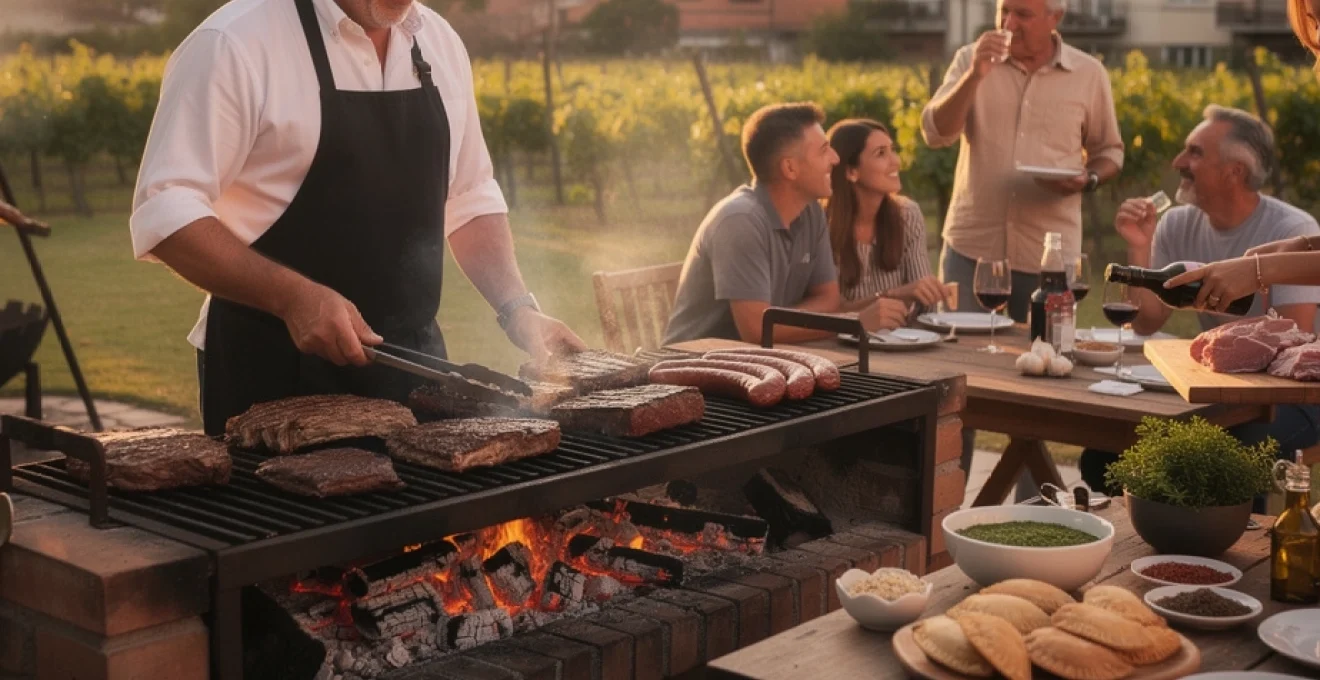
The Argentine asado transcends mere cooking, evolving into a profound social ritual that binds communities together through shared flames, conversation, and tradition. This culinary ceremony represents more than grilling meat; it embodies Argentina’s cultural DNA, where relationships are forged over glowing embers and stories are passed down through generations. Unlike quick barbecue sessions found elsewhere, the asado demands patience, respect for ritual, and deep appreciation for communal dining experiences that can extend for hours.
At its core, the asado functions as Argentina’s most democratic social institution, where neighbours become family and strangers transform into lifelong friends around the sacred parrilla. The tradition creates natural hierarchies based on skill rather than social status, whilst fostering genuine human connections that modern technology often fails to replicate. Understanding why the Argentine asado remains such a powerful social phenomenon requires examining its intricate construction methods, cultural protocols, regional variations, and contemporary adaptations.
Traditional parrilla construction and fire management techniques
The foundation of every authentic asado experience lies in the meticulous construction of the parrilla and the masterful management of fire elements. Traditional parrilla construction follows time-tested principles that prioritise both functionality and social interaction, creating a focal point that naturally draws people together. The design emphasises accessibility from multiple angles, allowing participants to gather around the cooking area whilst maintaining safe distances from intense heat zones.
Cross-hatch grill positioning for optimal heat distribution
Professional asadors understand that cross-hatch grill positioning creates the most effective heat distribution patterns across the cooking surface. This technique involves arranging metal grates in intersecting patterns that allow precise temperature control through strategic meat placement. The cross-hatch design enables simultaneous cooking of different cuts at varying temperatures, accommodating the diverse preferences of large social gatherings.
Master parrilleros position thicker cuts like asado de tira over moderate heat zones whilst placing thinner items such as morcilla and chorizo over more intense areas. This systematic approach ensures that all guests receive perfectly cooked portions regardless of their preferred doneness levels. The technique also facilitates continuous cooking throughout extended social sessions, maintaining food availability as conversations naturally ebb and flow.
Quebracho colorado wood selection and charcoal preparation methods
The selection of quebracho colorado wood represents a crucial decision that influences both flavour profiles and social dynamics during asado gatherings. This dense hardwood burns slowly and consistently, producing the steady heat necessary for extended cooking sessions that can last six to eight hours. The wood’s natural properties create minimal smoke production, allowing participants to gather closely around the parrilla without experiencing discomfort.
Proper charcoal preparation begins hours before guests arrive, with experienced asadors building fires that gradually transform wood into perfectly glowing embers. This preparatory phase often becomes a meditative ritual that signals the beginning of the social experience. The steady rhythm of wood feeding and ember management creates natural conversation breaks, encouraging participants to share stories whilst waiting for optimal cooking conditions.
Temperature zone creation using brick and steel configurations
Creating distinct temperature zones through strategic brick and steel configurations allows skilled asadors to accommodate various cooking requirements simultaneously. Traditional setups incorporate fire-resistant bricks arranged to direct heat flow and create graduated temperature areas across the cooking surface. These configurations enable precise control over cooking conditions whilst maintaining the open, accessible design essential for social interaction.
Steel components complement brick arrangements by providing adjustable height mechanisms that allow real-time temperature modifications throughout the cooking process. The combination of permanent brick structures and moveable steel elements creates flexible cooking environments that adapt to changing social dynamics. As guest preferences emerge during conversations, experienced asadors can quickly adjust cooking zones to accommodate special requests without disrupting the overall flow.
Chimichurri preparation stations and communal workspace organisation
Communal workspace organisation extends beyond the parrilla itself to include dedicated preparation areas where guests can actively participate in food preparation activities. Traditional asado setups incorporate multiple chimichurri preparation stations that encourage collaborative cooking experiences. These designated areas feature cutting boards, herb gardens, and ingredient storage systems that invite guests to contribute their own touches to the meal.
The preparation process becomes a natural icebreaker, with newcomers learning traditional techniques from
the more experienced cooks and sharing family secrets for the perfect balance of parsley, garlic, oil, vinegar, and chilli. In many homes, preparing chimichurri is the first truly collaborative moment of the day, where guests chop, taste, and adjust seasoning together. This transforms a simple sauce into a shared creation and gives even first-time visitors a tangible role in the asado. By the time the first meats come off the parrilla, everyone already feels invested in the meal’s success.
Asador social hierarchy and ritual responsibilities
While the Argentine asado is inclusive and relaxed, it follows a surprisingly structured social hierarchy that keeps the ritual running smoothly. Roles emerge organically, shaped by tradition and mutual respect rather than formal rules. Understanding this subtle hierarchy helps explain why an asado feels so organised despite its leisurely pace. Each participant, from the maestro parrillero to the youngest helper, contributes to the harmony of the event.
Maestro parrillero leadership role in group dynamics
At the centre of every asado stands the maestro parrillero, the person entrusted with complete authority over the fire and the meat. This role combines technical mastery with social leadership, as the parrillero manages not only temperature and timing, but also expectations and conversations. Guests may offer suggestions, but in traditional etiquette, final decisions about when to serve each cut rest solely with the grill master.
The maestro parrillero acts almost like a conductor in an orchestra, reading the mood of the group and pacing the meal accordingly. If discussions are animated and glasses are full, the parrillero may deliberately slow the service of the main cuts, extending the anticipation. During quieter moments, they might advance a round of chorizo or provoleta to reenergise the social flow. This leadership role reinforces trust: guests relax because they know someone is fully dedicated to their collective experience.
Guest participation protocols during meat selection process
Despite the parrillero’s authority, guests actively participate in the meat selection process, especially in more intimate gatherings. Early in the day, close friends or family members may accompany the host to the butcher, discussing preferred cuts such as vacio, tira de asado, or entraña. This ritual shopping trip sets the tone for the day and invites collaborative decision-making long before the first ember is lit.
Once at home, a subtle protocol governs how guests express preferences. Rather than demanding specific doneness or cuts, they typically share general likes—more fat, leaner options, or a taste for offal like mollejas. The parrillero then interprets these cues, adjusting portions and placement on the grill. This approach maintains respect for the grill master’s expertise while ensuring that everyone’s tastes are considered, reinforcing the idea that the asado is built around collective enjoyment.
Traditional timing sequences for morcilla and chorizo service
The order in which different meats appear is one of the clearest examples of ritualised structure in an Argentine asado. Traditionally, the first items to be served are the quicker-cooking sausages like chorizo and morcilla, along with cheese such as provoleta. These “openers” play a crucial social role: they bridge the gap between arrival and the main courses, giving guests something to snack on while conversations warm up.
Typically, chorizo comes off the parrilla first, often served as choripán—sausage in crusty bread with chimichurri—around 60–90 minutes after the fire is started. Morcilla follows shortly after, sliced and shared as a communal appetiser. By staggering these early servings, the parrillero keeps hunger at bay without overshadowing the later arrival of ribs, flank steak, and other star cuts. This careful sequencing transforms the meal into a narrative, each course a chapter in the unfolding social story.
Wine pairing responsibilities and malbec selection customs
Just as the parrillero oversees the fire, a designated person—often an enthusiast or knowledgeable guest—takes charge of wine pairing and service. In many households, this role involves selecting bottles in advance, balancing budget with quality, and ensuring a natural progression from lighter reds to fuller-bodied Malbecs. The “wine steward” coordinates with the parrillero, timing openings and pours to align with the arrival of specific cuts.
Malbec holds a near-symbolic place at the Argentine asado, thanks to its robust character and affinity for grilled beef. Customarily, simpler table wines may accompany the early choripán stage, with more structured Malbecs introduced when ribs and steaks are served. Sharing bottles becomes another social ritual: guests offer to refill each other’s glasses, compare tasting impressions, and debate favourite labels. Rather than rigid rules, these customs foster an atmosphere of shared discovery, where wine deepens the communal experience of the asado.
Regional asado variations across argentine provinces
Although the basic principles of Argentine asado remain consistent nationwide, each region infuses the ritual with its own ingredients, techniques, and social nuances. From the windswept plains of Patagonia to the vineyards of Mendoza and the colonial streets of Salta, local customs shape how people gather around the fire. Exploring these regional asado variations reveals how a single culinary tradition can adapt to diverse landscapes while preserving its social core.
Patagonian cordero al palo techniques in bariloche and el calafate
In Patagonia, particularly around Bariloche and El Calafate, the quintessential asado experience often centres on cordero al palo—whole lamb cooked vertically on metal crosses beside an open fire. Instead of a conventional parrilla, large iron frames hold the lamb spread open, angled toward embers that radiate gentle heat for several hours. The slow, even roasting yields crisp skin and tender, smoky meat that reflects the rugged environment of the southern Andes.
These Patagonian gatherings are as much about landscape as they are about food. Guests typically assemble outdoors with sweeping views of mountains or lakes, sharing mate or local wine as the lamb slowly transforms. Because cordero al palo requires constant attention to wind direction and flame intensity, multiple people often assist the main cook, turning the process into a shared performance. The result is a communal spectacle where the rhythm of the fire mirrors the unhurried social pace.
Porteño urban asado adaptations in buenos aires neighbourhoods
In Buenos Aires, space constraints and apartment living have given rise to distinct urban asado adaptations. Many homes feature compact brick parrillas on balconies or rooftops, optimised for smaller groups but still faithful to traditional techniques. In porteño neighbourhoods, it is common to see embers glowing in inner courtyards on weekends, with aromas of tira de asado and vacio floating between buildings.
These city asados emphasise ingenuity and resourcefulness. Hosts use narrower grills, smaller cuts, and carefully managed wood or charcoal quantities to avoid excessive smoke. Socially, the dynamic remains the same: neighbours drop by unannounced, children run between tables, and the parrillero manages both conversation and coals. Urban asados may be more compact, but they preserve the essential spirit of inclusion and long, meandering conversations that define the Argentine barbecue experience.
Mendoza wine country integration with vineyard asado experiences
In Mendoza’s wine country, the asado has evolved into a sophisticated yet relaxed showcase of local produce and winemaking. Many vineyards host outdoor grills where guests can enjoy ojo de bife, costillas, and vegetables grilled among the vines. Here, the natural pairing of Malbec and beef is elevated into a curated experience, with sommeliers and parrilleros working side by side.
These vineyard asados highlight deliberate wine pairing strategies, such as serving fresher, fruit-forward Malbecs with starters and more complex, oak-aged versions with richer cuts. Visitors are often invited to walk through the vines between courses, turning the meal into a sensory journey that links soil, grape, and grill. Socially, the setting encourages conversation between locals and international visitors, making Mendoza a hub for global appreciation of Argentine asado culture.
Northern empanada and locro accompaniment traditions in salta
In northern provinces such as Salta, the asado integrates Andean influences and heartier side dishes that reflect cooler highland climates. While beef and sausages still play central roles, the table is rarely complete without regional staples like empanadas salteñas and locro, a slow-cooked stew of corn, beans, and meat. These accompaniments add depth and variety, turning the gathering into a broader celebration of regional cuisine.
Empanadas are often served before or alongside the first grilled meats, hand-passed as people chat around the fire. Locro, by contrast, simmers for hours in heavy pots, echoing the long cooking times of the parrilla itself. Both dishes extend the social arc of the asado, ensuring that there is always something to share while guests wait for the main cuts. The combination of grilled meats and traditional northern dishes underscores how flexible the asado format is while remaining unmistakably Argentine.
Contemporary asado social media documentation and digital community building
In recent years, Argentine asado culture has expanded from patios and backyards onto digital platforms, where images and stories travel far beyond national borders. Social media documentation has turned the asado into a visual narrative, with photos of flaming parrillas, perfectly charred ribs, and group tables circulating on Instagram, TikTok, and YouTube. This online presence not only preserves tradition but also invites new generations and international audiences into the experience.
Digital communities dedicated to asado share techniques, fuel recommendations, and grill designs, often blending ancestral knowledge with modern innovation. Aspiring parrilleros can watch tutorials on building ember beds, learn about quebracho alternatives available in their region, or compare cross-hatch grill configurations. Comment sections become virtual patios, where people swap tips, argue (good-naturedly) about the best doneness for bife de chorizo, and even arrange in-person meetups. In this way, technology amplifies rather than replaces the social dimension of the asado.
Of course, there is a balance to strike: excessive filming can disrupt the relaxed, present-moment atmosphere that makes an asado special. Many hosts adopt an informal rule—capture a few snapshots of the fire and the first plate, then put phones aside. When used thoughtfully, however, social media serves as a digital extension of the long-standing tradition of storytelling around the grill. It allows the essence of Argentine BBQ as a social experience to resonate from local neighbourhoods to global food communities.
Economic impact of asado culture on argentine tourism and hospitality sectors
The cultural power of the Argentine asado has tangible economic consequences, particularly in tourism and hospitality. According to data from Argentina’s Ministry of Tourism, food-related experiences rank among the top motivations for international visitors, with grilled beef and asado events frequently cited. Restaurants specialising in parrilla-style cooking, from rustic parrillas to high-end steakhouses, form a significant part of urban and rural economies alike.
Beyond restaurants, asado experiences structure entire tourism offerings: estancias near Buenos Aires organise day trips centred on horseback riding and traditional barbecues, while Patagonian lodges advertise cordero al palo as a signature attraction. These packages generate employment for cooks, farmers, butchers, and guides, creating a value chain that extends from pasture to plate. Even small-scale guesthouses in wine regions or the northwest rely on home-style asados to differentiate themselves in a competitive market.
The demand for authentic Argentine BBQ has also fuelled growth in related industries, including grill manufacturing, firewood distribution, and culinary education. Workshops teaching asado techniques attract both locals and foreign visitors, monetising cultural transmission in a way that supports artisans and experts. As global interest in live-fire cooking continues to rise, Argentina’s deep-rooted asado tradition positions the country as a reference point, reinforcing its brand as a destination where social connection, gastronomy, and craftsmanship converge around the parrilla.