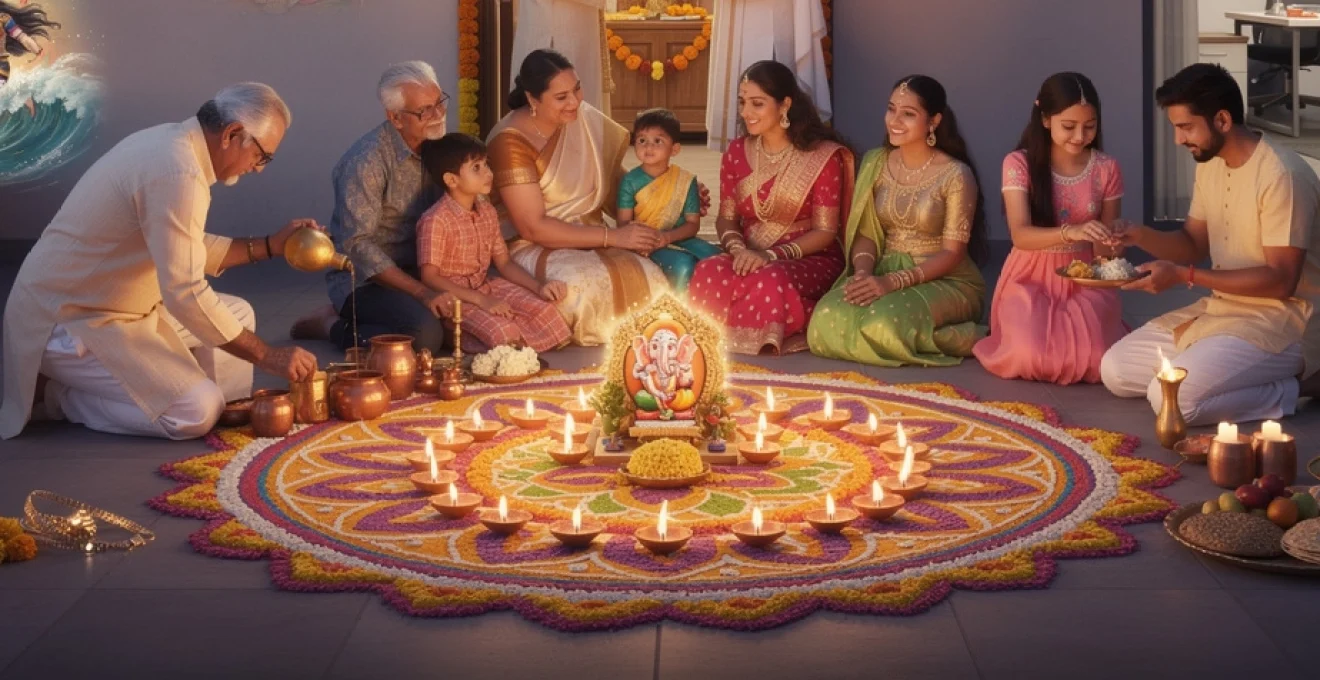
Across India and beyond, when autumn arrives, millions of homes begin to glow with the warm light of countless oil lamps, marking the arrival of Diwali, the festival of lights. This extraordinary celebration transcends religious boundaries, uniting over a billion people worldwide in a magnificent display of cultural heritage, spiritual devotion, and communal harmony. From the bustling streets of Mumbai to the quiet villages of rural India, Diwali represents far more than just a religious observance—it embodies the eternal human aspiration for light to triumph over darkness, knowledge to overcome ignorance, and good to prevail over evil.
The festival’s profound significance stems from its ability to weave together ancient mythological narratives, diverse religious traditions, and contemporary cultural practices into a seamless tapestry of celebration. Whether you witness the spectacular rangoli designs adorning doorsteps, the aromatic sweetness of traditional mithai filling the air, or the brilliant fireworks illuminating night skies, Diwali demonstrates how ancient wisdom continues to resonate in modern times.
Historical origins and religious significance of diwali in hindu scriptures
The roots of Diwali extend deep into India’s ancient scriptural traditions, with the earliest mentions found in texts dating back over two millennia. The Kamasutra of Vatsyayana from the 3rd century CE references a festival called Yaksharatri, dedicated to nature spirits and wealth deities, establishing the foundation for what would evolve into the modern Diwali celebration. The Puranas, composed between 400-1500 CE, provide the most comprehensive accounts of autumn lamp festivals, describing elaborate rituals where devotees honour various deities through illumination ceremonies.
Archaeological evidence suggests that light-based festivals during the autumn harvest season were prevalent across the Indian subcontinent long before formal religious codification. Ancient agricultural communities recognised this period as crucial for ensuring prosperity through the winter months, leading to elaborate ceremonies seeking divine blessings. The festival’s evolution from local harvest celebrations to pan-Indian religious observance reflects the dynamic nature of Indian spiritual traditions, where local customs gradually integrated with broader mythological narratives.
Lord rama’s return to ayodhya after 14-year exile in ramayana
The most widely recognised Diwali narrative centres on Prince Rama’s triumphant homecoming, as detailed in Valmiki’s Ramayana. After fourteen years of forest exile imposed by political intrigue, Rama, accompanied by his devoted wife Sita and loyal brother Lakshmana, finally returns to Ayodhya following his victory over the ten-headed demon king Ravana. The citizens of Ayodhya, overjoyed by their rightful king’s return, illuminated the entire city with rows of oil lamps, creating a spectacular welcome that has inspired Diwali celebrations for millennia.
This narrative resonates particularly strongly in northern India, where elaborate Ramayana recitations and dramatic performances mark the festival. The story emphasises themes of dharma (righteous duty), sacrifice for family honour, and the ultimate victory of truth over falsehood. Modern celebrations often include community readings of relevant Ramayana passages, with families lighting diyas to symbolically recreate Ayodhya’s joyous illumination, connecting contemporary devotees with their ancestral heritage.
Krishna’s victory over narakasura in bhagavata purana
Southern Indian Diwali traditions predominantly celebrate Lord Krishna’s defeat of Narakasura, the tyrannical demon king who had terrorised the earth and imprisoned sixteen thousand women in his palace. According to the Bhagavata Purana, Krishna, aided by his consort Satyabhama, engaged in fierce battle with Narakasura, ultimately liberating the captives and restoring peace to the realm. This victory is commemorated on Naraka Chaturdashi, the second day of Diwali, when devotees perform special purification rituals and light lamps to celebrate freedom from oppression.
The Narakasura narrative particularly resonates in states like Tamil Nadu, Karnataka, and Andhra Pradesh, where elaborate temple ceremonies recreate the battle through classical dance performances and dramatic presentations. The emphasis on
the destruction of arrogance, cruelty, and ignorance is central to this Diwali legend. Many households in these regions rise before dawn on Naraka Chaturdashi to take an auspicious oil bath, symbolically washing away inner negativity just as Krishna removed Narakasura from the world. Firecrackers that burst at daybreak are said to announce the end of darkness and the arrival of a new, more virtuous beginning.
Goddess lakshmi’s emergence during samudra manthan cosmic event
Another powerful strand in Diwali’s religious meaning comes from the legend of Samudra Manthan, the cosmic churning of the ocean described in the Vishnu Purana and other texts. In this myth, gods (devas) and demons (asuras) join forces to churn the primordial ocean in search of amrita, the nectar of immortality. Among the many treasures that emerge from the depths is Goddess Lakshmi, radiant and golden, who chooses Lord Vishnu as her consort and becomes the embodiment of wealth, prosperity, and auspiciousness.
For many Hindu communities, Diwali marks Lakshmi’s arrival into the world and her ongoing presence as the bestower of both material and spiritual abundance. This is why the festival of lights is closely linked with financial prosperity, new business ventures, and household wellbeing. Lighting rows of lamps, keeping homes clean, and opening doors and windows during Lakshmi Puja are all meant to welcome the goddess, much like preparing a home for a revered guest. In a broader sense, however, Lakshmi also represents inner virtue, ethical wealth, and the prosperity that flows from right conduct.
In traditional Vaishnava teachings, Diwali becomes a reminder that true wealth is not merely monetary but also moral and spiritual. Just as Lakshmi emerged from the churning of the cosmic ocean, our own patience, discipline, and resilience amid life’s challenges can yield blessings that last far beyond a single festive season. When families balance their focus on gold, gifts, and sweets with charity and compassion, they mirror this deeper scriptural message of Diwali’s light bringing enduring fortune.
Jain community’s celebration of lord mahavira’s moksha achievement
Diwali is not limited to Hindu scriptures; it also holds profound significance in Jainism. Jain tradition commemorates Diwali as the day in 527 BCE when Lord Mahavira, the 24th and last Tirthankara, attained moksha—liberation from the cycle of birth and death—at Pavapuri in present-day Bihar. Historical Jain texts describe how celestial beings illuminated the dark night with countless lamps to honour Mahavira’s enlightenment, a scene that resonates strongly with the modern image of Diwali’s glowing cities and villages.
For Jains, the festival is less about material prosperity and more about spiritual liberation and ethical discipline. Temples are adorned with lamps, and devotees engage in intense reflection, fasting, scriptural study, and acts of forgiveness. Rather than focusing on fireworks or large feasts, many Jain families choose a more contemplative Diwali, emphasising ahimsa (non-violence), aparigraha (non-possessiveness), and inner purification. You could say that where Hindu Diwali often celebrates the victory of divine heroes over demons, Jain Diwali celebrates victory over the inner enemies of anger, ego, greed, and attachment.
This shared symbolism of light across traditions—Rama’s return, Krishna’s triumph, Lakshmi’s emergence, and Mahavira’s liberation—explains why Diwali has become one of India’s most celebrated festivals. Despite different theologies, all these narratives converge on the same core idea: when we remove ignorance and selfishness, our lives and societies naturally become brighter, more peaceful, and more prosperous.
Five-day diwali festival calendar and regional ceremonial variations
Although we often speak of Diwali as a single day, it is in fact a five-day festival with distinct rituals and regional variations across India and the global Indian diaspora. The Diwali calendar follows the Hindu lunisolar system, typically falling between mid-October and mid-November, with each day holding its own spiritual and cultural purpose. Understanding this five-day structure helps explain why Diwali is such a powerful anchor for family traditions, community gatherings, and even business practices.
From the auspicious purchases of Dhanteras to the joyous sibling rituals of Bhai Dooj, each day adds a new layer of meaning to the festival of lights. While the essence of Diwali—light over darkness and good over evil—remains constant, the way you experience it in Varanasi, Chennai, Mumbai, or London can feel very different. Regional rituals, local legends, and community preferences all shape how these five days unfold, making Diwali both a shared national celebration and a deeply personal family event.
Dhanteras gold purchase traditions and yamadeep lighting customs
The first day of the Diwali festival, known as Dhanteras (from dhan, meaning wealth, and teras, the thirteenth lunar day), focuses on prosperity, health, and protection. Traditionally, families clean and decorate their homes and business premises, believing that a well-maintained space invites the blessings of Lakshmi and Kubera, the god of wealth. Purchasing precious metals—especially gold and silver jewellery or new utensils—is considered highly auspicious, as it symbolises invoking abundance for the year ahead. In fact, jewellery retailers across India often report that Dhanteras delivers some of their highest sales volumes of the year.
Alongside these shopping customs, Dhanteras is associated with the Yamadeep ritual, a poignant reminder of Diwali’s spiritual depth. Families light a small oil lamp and place it near the entrance of their home or at the back of the house dedicated to Yama, the god of death, praying for protection from untimely demise and misfortune. This act of lighting a lamp for Yama blends reverence with reassurance, acknowledging mortality while seeking safety and wellbeing. In many ways, Dhanteras asks us: how can we pursue wealth responsibly while still honouring life’s fragility and the need for ethical living?
In contemporary urban India, Dhanteras has also become a key date for big-ticket purchases like vehicles, electronics, and real estate bookings. Yet even as consumer behaviour modernises, the underlying belief remains rooted in the idea that starting new ventures on this day aligns human effort with divine favour. Whether you are buying a simple brass utensil or a new car, the cultural message is the same—prosperity is welcome, but it should be accompanied by gratitude and humility.
Naraka chaturdashi oil bath rituals in south indian states
The second day of the Diwali cycle is Naraka Chaturdashi, also known as Choti Diwali in much of North India. In the south, however, this day often takes precedence as the primary Diwali celebration. Rooted in the legend of Krishna’s victory over the demon Narakasura, Naraka Chaturdashi symbolises the destruction of evil tendencies and the cleansing of accumulated negativity. To embody this symbolism, families in states like Tamil Nadu, Karnataka, Andhra Pradesh, and Telangana perform an early-morning oil bath ritual that is both practical and deeply spiritual.
Before sunrise, elders anoint children and other family members with warm, fragrant oils infused with herbs, sometimes described as a symbolic armour against illness and misfortune. After this ritual oil massage, everyone bathes, puts on new clothes, and offers prayers, often followed by bursting firecrackers at dawn to mark Narakasura’s defeat. You might think of this practice as a combined spiritual detox and joyful reset—like rebooting both body and mind for the coming year. The belief is that by cleansing ourselves externally and internally, we can face life’s challenges with renewed strength and clarity.
In many South Indian homes, traditional savoury snacks and sweets such as murukku, adhirasam, and mysore pak are prepared in large quantities and shared with neighbours and relatives. Temples hold special abhishekams (ritual baths of the deity) and alankaram (decorations), presenting Krishna or Vishnu in victorious forms. While the rest of India may treat this as a quieter prelude to the main Diwali day, in the south Naraka Chaturdashi often feels like the true heart of festivities.
Lakshmi puja main celebration with rangoli mandala designs
The third day, commonly referred to simply as Diwali or Lakshmi Puja, is the festival’s central highlight in most regions of India. As the new moon night arrives and the sky turns its darkest, homes, temples, and city streets burst into radiant light from diyas, candles, and colourful electric decorations. Families perform elaborate Lakshmi Puja rituals, worshipping not only the goddess of wealth but also Lord Ganesha, the remover of obstacles, to ensure a smooth and prosperous year ahead. Business owners often close their old account books and ceremonially open new ones, aligning their financial year with this sacred moment.
One of the most visually striking aspects of this day is the creation of intricate rangoli designs at house entrances and courtyards. These temporary artworks, crafted from coloured powders, rice flour, flower petals, or even pulses, often take the shape of geometric mandalas, lotus motifs, or auspicious symbols like conch shells and footprints of Lakshmi. Beyond decoration, rangoli are meant to invite positive energy and welcome guests—both human and divine. Have you ever noticed how a beautifully designed threshold instantly changes the mood of a space? In that sense, rangoli are like visual prayers, transforming the mundane act of walking into a daily encounter with beauty and intention.
As evening falls, families gather for aarti (a ritual of waving lamps before deities), share festive meals, and exchange gifts and sweets. Children and adults alike step outside to light sparklers and watch fireworks, though in many cities today, communities are shifting towards quieter and more eco-friendly options. The combination of sacred ritual, artistic expression, and communal joy on Lakshmi Puja explains why many people describe this night as the emotional peak of the Diwali festival of lights.
Govardhan puja food mountain offerings in northern india
The fourth day of Diwali, known as Govardhan Puja, Padwa, or Annakut depending on the region, draws its inspiration from another beloved Krishna legend. According to the Bhagavata Purana, Krishna lifted the Govardhan Hill on his little finger to protect the people of Vrindavan from torrential rains unleashed by the storm god Indra. This story is often interpreted as a lesson in humility, with Krishna encouraging villagers to honour the nourishing power of nature—the hill, the cows, the land—over a proud, wrathful deity.
To commemorate this event, many Vaishnava temples and households in North India prepare an annakut, literally a “mountain of food”. Dozens, sometimes hundreds, of vegetarian dishes are cooked and arranged in tiers before Krishna’s idol, representing the abundance of nature and the community’s gratitude. After being offered in worship, the food is distributed as prasada, sanctified offerings shared among devotees. If Diwali sweets already seem generous, Govardhan Puja takes this abundance to another level, reminding us that food is not just fuel but a sacred bond between humans, animals, and the earth.
In many parts of the Hindi-speaking belt, this day also marks the first day of the new year in traditional business calendars. Traders perform special rituals for their account books, vehicles, and tools, seeking Krishna’s protection for their livelihoods. In rural areas, people create small mounds of cow dung decorated with flowers and worship them as symbolic Govardhan hills, expressing reverence for cattle and agriculture. The message is clear: true prosperity depends on our relationship with the environment and our willingness to live in balance with natural forces.
Bhai dooj sibling protection ceremonies across hindi belt
The fifth and final day of the Diwali festival is Bhai Dooj (also known as Bhai Tika or Bhai Bij in different regions), a heartwarming celebration of the bond between brothers and sisters. Much like Raksha Bandhan, this day focuses on mutual care and protection, but it is set within the broader Diwali narrative of light and renewal. According to one popular legend, Yama, the god of death, visited his sister Yami (the river Yamuna) on this day, and she welcomed him with a ceremonial tilak, aarti, and a special meal. In gratitude, Yama blessed her and declared that brothers who receive such honour from their sisters on Bhai Dooj would enjoy long life and prosperity.
Across the Hindi belt and in many urban centres nationwide, sisters invite their brothers to their homes, apply a sacred tilak of vermilion or sandalwood on their foreheads, and perform a brief aarti. In return, brothers give gifts and promise to stand by their sisters in times of need. In modern families where siblings might live far apart, video calls, couriered gifts, and digital payments often replace in-person visits, but the sentiment remains the same. It is a day to reaffirm sibling bonds, heal old misunderstandings, and express gratitude for one another’s presence in life.
Bhai Dooj effectively brings Diwali to a close on a deeply personal note. After days focused on gods, demons, wealth, and community festivities, the festival ends by turning our attention to the relationships that sustain us every day. If Diwali begins with cleaning homes and buying gold, it concludes with something more priceless: the emotional security and warmth of family ties.
Contemporary cultural integration and modern celebration practices
As India has urbanised and globalised, Diwali has evolved from a primarily religious festival into a wide-ranging cultural season that influences everything from office culture and film releases to online shopping and social media trends. You can think of the modern Diwali period as India’s equivalent of a combined Christmas, New Year, and Black Friday season—a time when spiritual rituals coexist with commercial campaigns and digital innovations. This integration of old and new is one of the reasons Diwali remains so central to Indian life today.
In major metros, you are just as likely to see Diwali-themed pop-up markets, corporate events, and influencer campaigns as you are traditional puja ceremonies and neighbourhood gatherings. Rather than diluting the festival, many families blend modern conveniences with heritage rituals, creating a flexible but meaningful way to celebrate. From eco-friendly decorations ordered online to virtual Diwali parties with relatives overseas, the festival of lights has expanded into both physical and digital spaces, reflecting contemporary India’s dynamic culture.
Corporate diwali bonus distribution and office decoration competitions
One of the most visible markers of Diwali’s modern significance is its role in corporate and workplace culture. Many companies across India, from multinational IT firms in Bengaluru to small manufacturing units in Gujarat, distribute Diwali bonuses or gifts to employees. These may range from cash incentives and gift vouchers to curated hampers of sweets, dry fruits, and household items. For many salaried workers, the “Diwali bonus” is a key part of their annual financial planning, often used to repay debts, invest in gold, or make significant purchases.
Offices also embrace the festive spirit through decor competitions, ethnic dress days, and team lunches. Workspaces are transformed with marigold garlands, paper lanterns, diyas, and colourful rangoli near reception areas, turning otherwise formal environments into warm, welcoming spaces. HR teams frequently organise contests for the best-decorated bay or the most creative rangoli, using Diwali as an opportunity to boost morale and team bonding. In an era of hybrid and remote work, some companies have even introduced virtual decoration contests and digital gift cards to ensure employees still feel included.
From a cultural perspective, these corporate Diwali practices show how the festival has become a shared social experience that crosses religious boundaries. Colleagues from different faiths often participate enthusiastically, viewing Diwali less as a strictly religious obligation and more as a celebration of togetherness, gratitude, and renewal. For businesses, aligning with Diwali traditions also reinforces their connection to Indian values and helps nurture long-term employee engagement.
Bollywood film release strategies during diwali box office window
Another arena where Diwali plays a pivotal role is the Indian film industry, particularly Bollywood. The Diwali weekend has long been considered prime time for major film releases, much like the Christmas or summer holiday window in Hollywood. Producers schedule big-budget, family-friendly blockbusters around the festival, banking on the fact that audiences are in a festive mood, have time off work, and are more willing to spend on entertainment. Over the years, some of the Hindi film industry’s highest-grossing movies have premiered during the Diwali season.
This strategic timing shapes the content of many Diwali releases. Filmmakers often emphasise themes that resonate with the festival—family unity, moral dilemmas, triumph over adversity, and vibrant song-and-dance sequences that mirror the celebratory atmosphere outside the cinema halls. Multiplexes and single-screen theatres alike decorate their premises with lights and offer special promotions to attract holiday crowds. You might notice how a trip to the movies during Diwali can feel almost like an extension of the festival, with audiences arriving in ethnic wear, sharing sweets, and treating the outing as a major social event.
Streaming platforms have also entered this Diwali box office landscape, premiering new films and web series to capture viewers who prefer to celebrate at home. As a result, Diwali has become not only a cultural and religious highlight but also a crucial commercial window for India’s entertainment ecosystem, influencing release calendars, marketing campaigns, and even script choices.
E-commerce festive sales campaign by amazon india and flipkart
In the last decade, Diwali has also become synonymous with large-scale online shopping events. E-commerce giants like Amazon India and Flipkart run multi-week “festive sales” leading up to the festival, offering significant discounts on electronics, fashion, home appliances, and everyday essentials. These campaigns—often branded as “Great Indian Festival” or “Big Billion Days”—generate billions of dollars in gross merchandise value and shape consumer behaviour nationwide. For many households, planning Diwali shopping now includes comparing online deals as carefully as choosing puja timings.
These digital sales events have transformed Diwali into a key moment in India’s retail calendar. Smaller online sellers and direct-to-consumer brands also join the fray, launching their own festive offers to tap into heightened demand. The result is a nationwide surge in logistics activity, with warehouses, delivery partners, and local kirana stores partnering to ensure orders arrive before Lakshmi Puja. If you’ve ever noticed how delivery vehicles seem more frequent in your neighbourhood during October and November, that is Diwali’s economic power at work.
While some critics worry that Diwali’s spiritual essence is overshadowed by consumerism, others argue that increased spending can coexist with mindful celebration. Many families use the festive sales to upgrade necessary items—like appliances or phones—while still prioritising charity, temple donations, and gifts for domestic helpers. The key, as always, lies in balance: using the convenience of e-commerce without losing sight of Diwali’s deeper focus on gratitude and generosity.
Social media hashtag trends and digital greeting card exchanges
In the age of smartphones, Diwali celebrations naturally spill onto social media platforms and messaging apps. Popular hashtags such as #HappyDiwali, #Diwali2025, and #FestivalOfLights trend across Instagram, X (formerly Twitter), and Facebook, showcasing everything from elaborate rangoli designs and home decor ideas to outfit inspirations and dessert recipes. Influencers and brands alike craft Diwali-themed content, blending visual storytelling with cultural education and product promotion. For younger generations, documenting Diwali online has become as integral as lighting diyas at home.
Digital greeting cards and personalised WhatsApp messages have largely replaced traditional paper cards in urban India. Online platforms allow you to customise Diwali e-cards with family photos, devotional imagery, or animated fireworks, sending warm wishes instantly across continents. This shift is not just about convenience; it also reflects Diwali’s growing status as a global festival, with friends, colleagues, and clients of diverse backgrounds exchanging greetings and learning about the festival’s meaning. Have you ever noticed how even non-Indian acquaintances will often send a “Happy Diwali” message? That is a sign of how deeply the festival of lights has entered international consciousness.
At the same time, some families are consciously limiting screen time during key rituals to preserve the intimacy of in-person celebration. A common compromise is to set aside specific times for photos and posts, then put phones away for puja, meals, and conversations. In this way, digital tools become a bridge—linking dispersed relatives and global communities—rather than a barrier to genuine connection.
Economic impact and commercial significance across indian markets
Given its wide social reach, it is no surprise that Diwali exerts a powerful influence on India’s economy. The festival season, which typically runs from Navratri through Diwali and into the wedding months, accounts for a significant share of annual sales across sectors such as jewellery, automobiles, consumer electronics, apparel, and FMCG (fast-moving consumer goods). Industry estimates in recent years suggest that festive spending can contribute a sizeable bump to quarterly GDP growth, especially in consumption-driven urban markets.
Jewellers often report that up to 30–40% of their yearly sales cluster around Dhanteras and Diwali, as consumers purchase gold coins, ornaments, and investment-grade jewellery. Automakers roll out special Diwali offers and limited-edition models, knowing that many buyers consider this an auspicious time to buy vehicles. Similarly, electronics retailers witness surges in demand for televisions, smartphones, refrigerators, and air-conditioners, with Diwali discounts designed to lure both first-time buyers and upgraders. For small businesses, too, the festival provides a vital income boost—sweet shops, florists, local tailors, and artisans who craft diyas, lanterns, and decorative items often depend heavily on Diwali-season earnings.
Wholesale markets and mandis across the country stay open late into the night in the days leading up to Diwali, supplying everything from marigold garlands and sugar to firecrackers and fabrics. Logistics and delivery networks work at peak capacity, especially with the expansion of e-commerce. This intense commercial activity can also have a multiplier effect: increased employment for seasonal workers, higher demand for packaging and transportation, and greater tax revenues for local governments.
However, the economic dimensions of Diwali come with challenges as well. Rising household debt, pressure to match social expectations of gifting, and environmental concerns about waste and pollution have prompted many to rethink their spending habits. A growing “conscious consumption” movement encourages people to support local artisans, buy durable rather than disposable goods, and allocate a portion of Diwali budgets to charity. In this sense, Diwali’s commercial significance is increasingly framed not just in terms of how much we spend, but how wisely and ethically we choose to do so.
Global diaspora celebrations and international recognition patterns
Diwali’s reach today extends far beyond the Indian subcontinent, thanks to centuries of migration and the growth of Indian communities worldwide. From the streets of Leicester in the United Kingdom to Little India in Singapore and neighbourhoods in New Jersey, Toronto, and Sydney, the festival of lights now illuminates cities across Europe, North America, Africa, and the Asia-Pacific. These diaspora celebrations often blend traditional rituals with local cultural elements, creating unique expressions of Indian identity abroad.
In countries like the UK, Diwali events in cities such as Leicester and London have become major public attractions, drawing tens of thousands of participants from diverse backgrounds. Local councils support street lighting, stage performances, and food fairs, framing Diwali as a multicultural celebration of community cohesion. In the United States and Canada, Hindu temples, Sikh gurdwaras, and Jain centres organise pujas, langars (community meals), and cultural programs, while universities and corporate diversity groups host Diwali nights featuring dance, music, and food.
International recognition has also grown at the governmental level. Several countries have issued Diwali-themed postage stamps, and discussions about making Diwali a public or school holiday have emerged in cities with significant South Asian populations. In 2021, the United Nations headquarters in New York was lit in Diwali colours, symbolising the festival’s universal message of peace and hope. Such gestures reinforce Diwali’s role as not only a religious observance but also a soft-power asset that showcases India’s cultural heritage on the global stage.
For diaspora families, celebrating Diwali can be a powerful way to maintain linguistic, culinary, and ritual traditions across generations. Children who may not speak their parents’ native languages fluently still learn to light diyas, draw simple rangoli, and say “Happy Diwali” to friends and teachers. At the same time, these global celebrations are often more inclusive and interfaith than those in India, welcoming neighbours and colleagues of all backgrounds. In this way, the festival of lights becomes a bridge between cultures, encouraging dialogue, curiosity, and mutual respect.
Environmental sustainability initiatives and green diwali movement
As Diwali has grown in scale and intensity, concerns about its environmental impact have come to the forefront. Firecracker smoke contributes to spikes in air pollution levels, especially in already smog-prone cities like Delhi, while noise pollution affects elderly people, young children, and animals. Non-biodegradable decorations and excessive packaging from gifts and online orders add to the waste burden on municipal systems. These challenges have inspired a growing “Green Diwali” movement that seeks to preserve the festival’s essence while reducing its ecological footprint.
Many city administrations and courts in India have introduced regulations on firecracker sales and usage, promoting “green crackers” with lower emissions or designated time windows for bursting them. Schools, resident welfare associations, and NGOs run awareness campaigns encouraging people to replace loud firecrackers with community laser shows, musical performances, or mass lamp-lighting events. Think of it as shifting from a noisy, smoke-filled celebration to one that relies more on creativity, artistry, and shared experiences to capture the joy of Diwali lights.
At the household level, more families are opting for eco-friendly decorations: clay diyas instead of plastic lights, rangoli made from natural colours and flower petals, reusable fabric torans (door hangings), and steel or glass containers for storing sweets. Gifting trends are also slowly changing—handmade items, potted plants, organic sweets, and donations in a loved one’s name are becoming popular alternatives to mass-produced, heavily packaged hampers. These choices not only reduce waste but also support local artisans and small businesses, aligning environmental responsibility with economic empowerment.
Ultimately, the Green Diwali movement reminds us that the festival’s core symbolism is about inner illumination, ethical conduct, and harmony with the world around us. By choosing cleaner air over fireworks excess, supporting sustainable products, and practising mindful consumption, we honour that symbolism in a tangible way. The question we can all ask ourselves each year is simple yet profound: how can my Diwali shine brightly while leaving a lighter footprint on the planet? When we answer it thoughtfully, we ensure that the festival of lights remains a source of joy and renewal for generations to come.