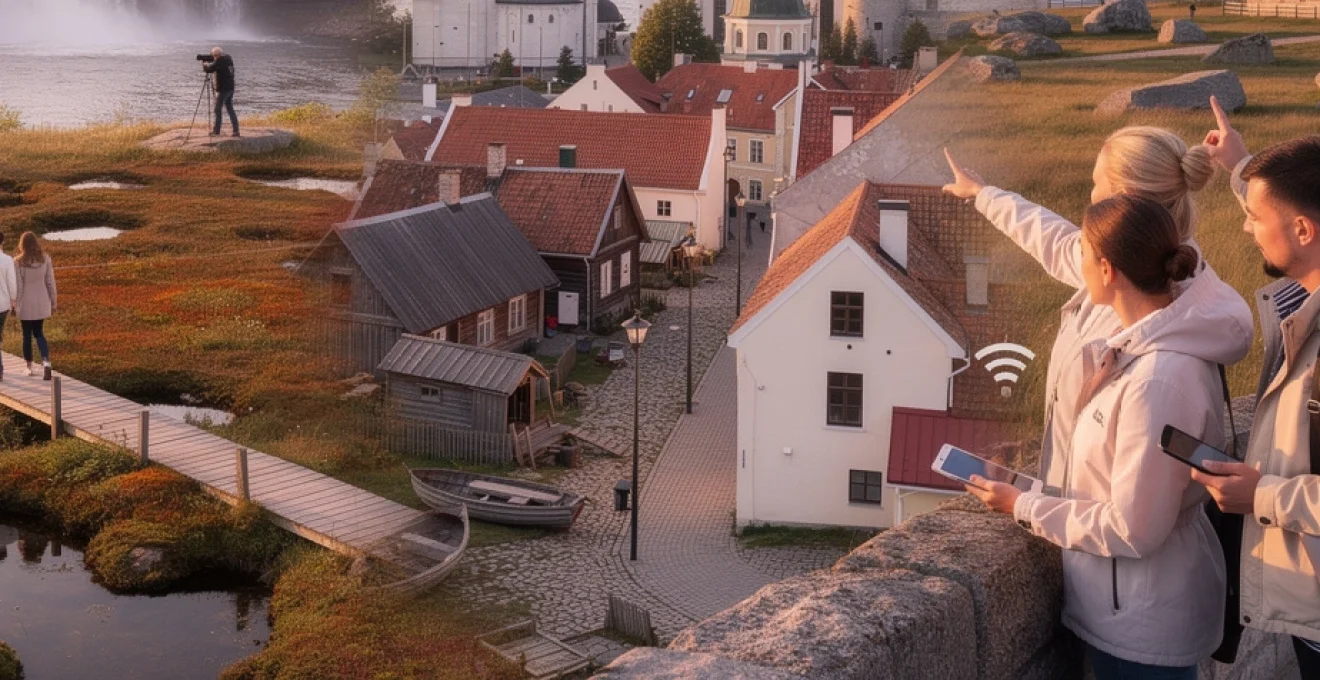
Estonia stands as Northern Europe’s best-kept secret, offering an extraordinary blend of medieval charm and cutting-edge innovation that captivates modern travellers. This compact Baltic nation provides an authentic European experience without the overwhelming crowds found in Western destinations, making it an ideal choice for discerning visitors seeking both cultural depth and digital convenience. From Tallinn’s perfectly preserved medieval Old Town to the pristine wilderness of Lahemaa National Park, Estonia delivers remarkable diversity within its modest borders. The country’s strategic position along the Baltic Sea creates unique opportunities for island-hopping adventures, whilst its pioneering digital infrastructure ensures seamless connectivity for contemporary nomads and tech-savvy tourists alike.
Estonia’s strategic position in baltic sea tourism geography
Estonia’s geographical location creates unparalleled access to Nordic and Baltic destinations, positioning it as the perfect gateway for exploring Northern Europe. Situated between Finland and Latvia, with Russia forming its eastern border, the country offers remarkable connectivity through multiple transport modes. Ferry connections to Helsinki take just two hours, whilst flights to major European cities typically require only 2-3 hours of travel time. This accessibility makes Estonia an excellent starting point for multi-country Baltic tours or extended Nordic adventures.
The country’s 3,794 kilometres of coastline along the Baltic Sea provide diverse maritime experiences, from sandy beaches perfect for summer relaxation to rocky shores ideal for dramatic photography. Estonia’s flat topography, with its highest point reaching merely 318 metres above sea level, creates excellent conditions for cycling and hiking throughout the nation. Over 1,500 islands dot the Estonian archipelago, offering countless opportunities for island exploration and unique cultural encounters with traditional maritime communities.
Climate patterns favour extended tourist seasons, with comfortable temperatures from May through September and distinctive winter experiences including Christmas markets and Nordic activities. The country’s northern latitude provides magical white nights during midsummer, when darkness barely falls, creating extraordinary conditions for outdoor adventures and cultural festivals. Estonia’s position also shields it from extreme weather patterns, maintaining relatively stable conditions that rarely disrupt travel plans.
Tallinn’s medieval architecture and UNESCO world heritage preservation
Tallinn’s Old Town represents one of Europe’s most authentic medieval urban environments, earning UNESCO World Heritage status for its exceptional preservation of 13th and 14th-century architecture. The ancient city walls, stretching over 1.9 kilometres with 26 defensive towers still standing, create an atmospheric boundary between modern Tallinn and its historical heart. Cobblestone streets wind through narrow passages that have remained virtually unchanged for centuries, offering visitors genuine medieval experiences without modern intrusions.
The authenticity of Tallinn’s medieval quarter surpasses many European destinations, providing visitors with an unparalleled journey through time whilst maintaining excellent accessibility and modern amenities.
Alexander nevsky cathedral’s russian orthodox influence
The Alexander Nevsky Cathedral dominates Tallinn’s skyline with its distinctive onion domes and represents the most significant example of Russian Orthodox architecture in Estonia. Built between 1894 and 1900 during the period of Russian imperial rule, this magnificent structure showcases intricate iconostasis work and traditional Orthodox design elements. The cathedral’s interior features stunning mosaics and religious artwork that demonstrate the complex cultural layers of Estonian history. Visitors can explore the cathedral’s architectural details and understand the Russian Orthodox community’s continuing presence in modern Estonia.
Toompea castle’s parliamentary function and historical significance
Toompea Castle serves the unique dual role of housing Estonia’s Parliament whilst maintaining its status as a historical fortress dating back to the 9th century. The pink baroque facade of the parliament building contrasts dramatically with the ancient limestone foundations, creating a visual representation of Estonia’s journey from medieval stronghold to modern democracy. The Tall Hermann tower, rising 45 metres above the castle grounds, flies the Estonian flag and offers panoramic views across Tallinn’s red-tiled rooftops. Guided tours reveal centuries of political history whilst demonstrating how historical structures adapt to contemporary governmental needs.
Town hall square’s gothic merchant architecture
Town Hall Square forms the vibrant heart of Tallinn’s Old Town, surrounded by Gothic merchant houses that showcase the wealth and influence of medieval Hanseatic League traders. The Town Hall itself, dating from the 13th
century, is the only surviving Gothic town hall in Northern Europe and forms a striking centrepiece to the square. Colourful facades with steep gables and carved doorways tell the story of wealthy guilds and merchant families who once controlled trade routes across the Baltic Sea. Today, cafés and restaurants spill out onto the cobblestones, yet strict preservation rules ensure that renovations respect the original Gothic and Hanseatic character. If you visit during winter, the famous Tallinn Christmas Market transforms the square into a fairy-tale scene, complete with a towering Christmas tree and stalls selling traditional Estonian food and handicrafts.
St. olaf’s church tower and medieval skyline dominance
Rising dramatically above Tallinn’s rooftops, St. Olaf’s Church once held the title of the tallest building in the world between the 16th and 17th centuries. Its spire, which today reaches 124 metres, served not only as a symbol of religious devotion but also as a vital navigation aid for ships crossing the Baltic Sea. Visitors willing to climb the narrow spiral staircase are rewarded with one of the most impressive panoramic views of Tallinn’s medieval skyline, including the city walls, Toompea Hill and the modern harbour district. The church’s turbulent history, marked by repeated lightning strikes and fires, reflects the resilience of Tallinn itself, continually rebuilding while preserving its historic character.
Digital innovation infrastructure for modern travellers
Beyond its medieval stone walls, Estonia has built one of the most advanced digital societies in the world, making it particularly attractive for modern travellers and remote workers. Often described as an “e-state,” Estonia delivers almost all public services online, from tax declarations to medical prescriptions, which creates a seamless environment for visitors used to digital convenience. For travellers planning a Baltic getaway, this means reliable online information, frictionless bookings and fast problem-solving when plans change. In many ways, Estonia feels like a prototype for the future of travel, where high-speed connectivity and smart services underpin every aspect of the visitor experience.
E-residency programme integration for digital nomads
One of Estonia’s most distinctive digital innovations is its e-Residency programme, which allows non-residents to establish and manage an EU-based business entirely online. While e-Residency is not a visa or a right to live in Estonia, it has become a powerful tool for digital nomads and location-independent entrepreneurs who want to run a company from anywhere in the world. Imagine finishing a day of exploring Tallinn’s Old Town, then logging into a secure portal to sign contracts, issue invoices or manage banking, all under a trusted European legal framework. For long-term travellers, this integration of travel and work can turn Estonia from a short city break into a base for building a global business.
Practically speaking, you can apply for e-Residency online, collect your digital ID card from a designated location and then access Estonia’s business ecosystem remotely. Co-working spaces in Tallinn and Tartu are used to supporting e-residents, offering mentoring, legal advice and networking events in English. If you’re already operating as a freelancer or consultant, establishing an Estonian company can simplify your structure and open doors to EU clients. For many digital nomads, Estonia is less a traditional destination and more like a digital “home port” they return to between trips.
Skype development hub and tech tourism connections
Estonia’s reputation as a tech hub began in earnest with Skype, the pioneering communication platform developed by Estonian engineers in the early 2000s. The success of Skype acted like a spark in dry tinder, inspiring a new generation of start-ups and attracting international investment into Tallinn’s growing tech ecosystem. Today, the city hosts numerous innovation hubs, incubators and co-working spaces where visitors can attend meetups, hackathons and public lectures, turning a simple holiday into an opportunity to tap into Northern Europe’s start-up culture. If you’re curious about how a country of just 1.3 million people produced more tech unicorns per capita than almost anywhere else, Tallinn offers plenty of clues.
Many guided tours now incorporate elements of “tech tourism,” highlighting former industrial districts that have been transformed into innovation campuses. Areas such as Telliskivi Creative City and the Ülemiste City business district showcase converted factories, colourful street art and sleek modern offices housing software companies and fintech start-ups. For travellers working in IT, design or digital marketing, spending a few days in these neighbourhoods can feel like stepping into a living laboratory of digital transformation. It’s the same country where you walk medieval ramparts in the morning and discuss blockchain governance over specialty coffee in the afternoon—a contrast that defines Estonia’s unique appeal.
Wi-fi coverage analytics across estonian territories
For many travellers, especially remote workers, reliable internet access is as essential as hot water or a comfortable bed. Estonia recognised this early and invested heavily in nationwide connectivity, achieving some of the most extensive public Wi-Fi coverage in Europe. Free or low-cost Wi-Fi is widely available in city centres, public transport hubs, libraries, cafés and even on many intercity buses and island ferries. In practical terms, this means you can upload photos from a Lahemaa hiking trail café or join a video meeting from a quiet corner of a small-town library without worrying about data limits.
Coverage maps from Estonian telecom providers show strong 4G and expanding 5G networks not only in Tallinn and Tartu but also across rural regions and islands. For slow travellers exploring national parks or coastal villages, this level of connectivity offers a rare combination of seclusion and security—you can “disappear” into nature without ever being completely cut off. Think of Estonia as a place where your phone signal is more likely to fail because you’ve wandered into a bog hollow than because of weak infrastructure. Even then, boardwalks and marked trails keep you oriented, and offline maps are easy to download in advance.
Contactless payment systems in hospitality sectors
Estonia’s cashless culture is another advantage for visitors used to modern payment systems. Contactless card payments and mobile wallets are accepted almost everywhere, from high-end Tallinn restaurants to small-town supermarkets and museum ticket counters. You can easily navigate a full Baltic getaway without withdrawing any cash, simplifying budgeting and reducing the need to search for ATMs. For many travellers, this feels like stepping into a future where queues move faster and minor transactions—like buying a bus ticket or a coffee—become almost invisible.
Public transport in Tallinn, Tartu and other major centres uses smart ticketing systems that integrate seamlessly with contactless cards and mobile apps. Ride-hailing services, bike rentals and even some rural guesthouses support digital payments as standard. If you’re planning to combine Estonia with visits to neighbouring countries, you’ll find that the country’s payment infrastructure sets a high bar for convenience. It also reflects a broader cultural comfort with technology, where even older generations are used to online banking and digital signatures, reducing friction for visitors at every turn.
Lahemaa national park’s biodiversity and coastal ecosystems
Just an hour’s drive east of Tallinn, Lahemaa National Park offers a complete change of pace and scenery, highlighting why Estonia is perfect for a Baltic getaway that balances city life with nature. Covering more than 700 square kilometres, Lahemaa is one of the largest national parks in Estonia and a showcase of the country’s coastal ecosystems, forests and wetlands. Here, you can wander through pine forests scented with resin, stroll along quiet Baltic beaches and explore fishing villages that feel frozen in time. For travellers seeking a slow, immersive experience, Lahemaa’s mix of biodiversity and cultural heritage is hard to beat.
The park is also a hotspot for wildlife, with healthy populations of moose, wild boar, lynx and even brown bears in more remote areas. Birdwatchers will appreciate the diverse habitats, from coastal meadows and lagoons to raised bogs and old-growth forests, which attract migratory species throughout the year. Well-marked trails and boardwalks make many of these landscapes accessible even to casual walkers, while longer routes cater to serious hikers and cyclists. Whether you join a guided nature tour or set out with a map and a daypack, Lahemaa offers a sense of space and silence that is increasingly rare in Europe.
Viru bog’s raised peat formation and boardwalk accessibility
One of Lahemaa’s most iconic landscapes is Viru Bog, a classic example of a raised bog system formed over thousands of years by accumulating layers of sphagnum moss. As the peat layer thickens, the bog surface gradually rises above the surrounding groundwater, becoming increasingly acidic and nutrient-poor—a process that creates a unique “floating” world of stunted pines, dark pools and carnivorous plants. Walking across Viru Bog can feel like crossing the surface of an enormous, living sponge, with every step cushioned by thick moss and peat. It’s an environment that rewards slow observation, from the glittering sundew leaves to the mirror-like bog pools reflecting passing clouds.
To protect this fragile ecosystem while still allowing visitors to experience it up close, the park authority has built an excellent boardwalk that winds through the bog. The route is mostly flat and accessible, making it suitable for families and less experienced hikers, and includes viewing platforms and an observation tower with sweeping views across the bog landscape. If you visit in late summer, you may find the boardwalk lined with wild blueberries and cranberries ripe for picking—a delicious bonus to the educational signage explaining bog formation. For photographers, the early morning or late evening light creates haunting reflections and rich colours that capture the otherworldly beauty of Estonia’s wetlands.
Käsmu maritime museum and captain’s village heritage
On Lahemaa’s northern coast lies the village of Käsmu, often called the “Captain’s Village” due to its remarkable maritime history. In the 19th and early 20th centuries, Käsmu produced a disproportionate number of sea captains who navigated trade routes from the Baltic Sea to far-flung ports like Hull, Newcastle and even the Mediterranean. The Käsmu Maritime Museum, housed in a former customs building beside the sea, tells this story through an eclectic collection of ship models, navigation instruments, uniforms and personal letters. Visiting feels a little like stepping into a private attic full of treasures, curated with passion rather than formality.
The surrounding village reinforces this sense of living history, with wooden captain’s houses, old boathouses and granite boulders left by the last Ice Age scattered along the shore. You can walk sandy paths through pine forest down to the beach, watch small sailing boats on the Gulf of Finland or simply sit on a driftwood log and listen to the waves. For many travellers, Käsmu embodies the charm of Estonia’s coastal culture—a place where stories of sea voyages blend with contemporary summer life, and where the pace slows almost automatically as you arrive.
Altja fishing village’s traditional coastal architecture
Further along Lahemaa’s coast, the village of Altja offers another window into Estonia’s maritime past. Here, traditional wooden fishing huts with thatched roofs line the shoreline, arranged in a narrow strip between the sea and the forest. The layout reflects a time when families depended entirely on the Baltic’s fish and needed quick access to their boats and gear. Walking through Altja today, you can trace the outlines of this way of life in the boat ramps, drying racks and simple, functional architecture that has changed little over the decades.
A marked nature trail leads from the village along the coast and into the surrounding forest, offering views of wave-battered rocks, quiet coves and the occasional seabird colony. Many visitors combine a walk with lunch at a local tavern, where traditional Estonian dishes—such as smoked fish, black bread and hearty soups—are served in rustic surroundings. If you time your visit outside the busiest summer weekends, you may find the village almost empty, with only the sound of gulls and the wind in the pines for company. It’s in such moments that the appeal of a Baltic getaway to Estonia really crystallises: simple pleasures, deep history and plenty of space.
Jagala waterfall’s geological formation and photography opportunities
Just west of Lahemaa, Jägala Waterfall adds a surprising element to Estonia’s largely flat landscape. At around eight metres high and more than 50 metres wide, it is the country’s largest natural waterfall by width and forms a dramatic curtain of water over a limestone escarpment. The Jägala River has been slowly carving this step into the landscape for thousands of years, exposing layers of sedimentary rock that tell a geological story almost as compelling as the visual spectacle itself. For travellers interested in geology, it’s a chance to see how even modest changes in elevation can create significant natural landmarks in an otherwise low-lying country.
Photography enthusiasts will find Jägala particularly rewarding in spring, when snowmelt increases the water volume, and in winter, when the falls often freeze into intricate icicles and ice walls. Paths lead to viewpoints both above and below the falls, allowing you to experiment with different angles and compositions. As always in Estonia, access is straightforward: a short walk from the car park brings you right to the main viewing areas. Whether you stop for a quick photo break en route between Tallinn and Lahemaa or plan a dedicated excursion, Jägala demonstrates how much variety Estonia packs into its compact territory.
Saaremaa island’s distinctive cultural tourism assets
Saaremaa, Estonia’s largest island, offers a distinct cultural flavour that makes it a highlight of any Baltic itinerary. Reached by a short ferry ride from the mainland, the island feels like a world apart, with stone-fenced fields, juniper groves and thatched-roof farmhouses dotting the landscape. Historically semi-isolated, Saaremaa has preserved many local traditions, from handicrafts and folk music to brewing and baking, giving visitors a sense of stepping into a slower, more self-contained version of Estonia. It’s the kind of place where village rhythms still follow the seasons, and where sunsets over the Baltic Sea provide a natural end to the day.
The island’s main town, Kuressaare, is home to one of the best-preserved medieval castles in the Baltic region. Kuressaare Castle, surrounded by a moat and parkland, houses a regional museum that traces Saaremaa’s history from prehistoric times through German, Danish and Soviet rule. After exploring the fortress walls and exhibits, you can relax in one of the town’s many cafés or modern spa hotels, which draw on Saaremaa’s long tradition of wellness tourism. Elsewhere on the island, iconic wooden windmills, limestone coastal cliffs and small fishing harbours offer endless opportunities for scenic drives and cycling tours.
Saaremaa is also known for its distinctive products, including locally brewed beer, smoked fish, rye bread and dairy specialities that many Estonians associate with childhood holidays. Visiting small producers—whether a farm shop selling cheese and honey or a microbrewery experimenting with juniper-infused ales—adds a flavourful dimension to your trip. If you travel in late June, you can experience Midsummer celebrations (Jaanipäev) in a particularly atmospheric setting, with bonfires, folk songs and dancing often taking place on beaches or in village fields. For travellers seeking authenticity without sacrificing comfort, Saaremaa’s blend of heritage and hospitality is a strong argument for choosing Estonia as a Baltic getaway base.
Estonian culinary heritage and contemporary gastronomy trends
Food is often the most memorable part of a journey, and Estonia’s culinary scene has evolved rapidly in recent years while remaining rooted in strong local traditions. Historically, Estonian cuisine centred on simple, hearty ingredients: rye bread, potatoes, cabbage, pork, dairy products and preserved fish that could withstand long winters. Today, chefs across the country are reinterpreting these staples through a modern Nordic lens, emphasising seasonality, foraging and minimal waste. The result is a dining scene that feels both familiar and surprising—comforting flavours presented with creative techniques and elegant plating.
In Tallinn, you can choose between cosy taverns serving traditional dishes like verivorst (blood sausage with barley), pickled cucumbers with blackcurrant leaves and rustic stews, and MICHELIN-recognised restaurants offering multi-course tasting menus built around wild mushrooms, game and Baltic seafood. Smaller cities such as Tartu and Pärnu are increasingly part of this movement, with young chefs opening bistros that focus on local farm produce and natural wines. If you’re the kind of traveller who plans days around meals, Estonia offers more than enough variety for a long weekend or a full Baltic tour, from street snacks at markets to refined fine dining.
One of the most distinctive aspects of Estonian food culture is its close relationship with nature. Foraging for berries, mushrooms and herbs is a common pastime, and many restaurants proudly highlight ingredients sourced directly from forests and bogs. Imagine tasting spruce-tip syrup in a dessert, sipping tea brewed with wild herbs or trying bread soup (leivasupp) made from dense rye bread, raisins and spices. These dishes tell stories of resourcefulness and seasonal living—like culinary time capsules that have been polished for modern palates. Even everyday items such as rye bread, curd snacks (kohuke) and sprat sandwiches (kiluvõileib) offer an accessible entry point into local flavours.
For visitors interested in immersive experiences, food-focused activities can easily be woven into a Baltic getaway. You might join a foraging tour in a national park, take part in a cooking workshop on an island like Kihnu or Saaremaa, or visit a smoke sauna where the rituals of heat and cold are followed by shared meals and local drinks like the rum-based liqueur Vana Tallinn. Farmers’ markets and small producers’ shops are ideal places to pick up edible souvenirs, from honey and herbal teas to artisanal cheeses such as sõir, a traditional fresh cheese from southeastern Estonia. By slowing down and engaging with Estonia’s culinary heritage, you not only eat well but also gain a deeper understanding of the landscapes and seasons that shape life in this corner of the Baltic.