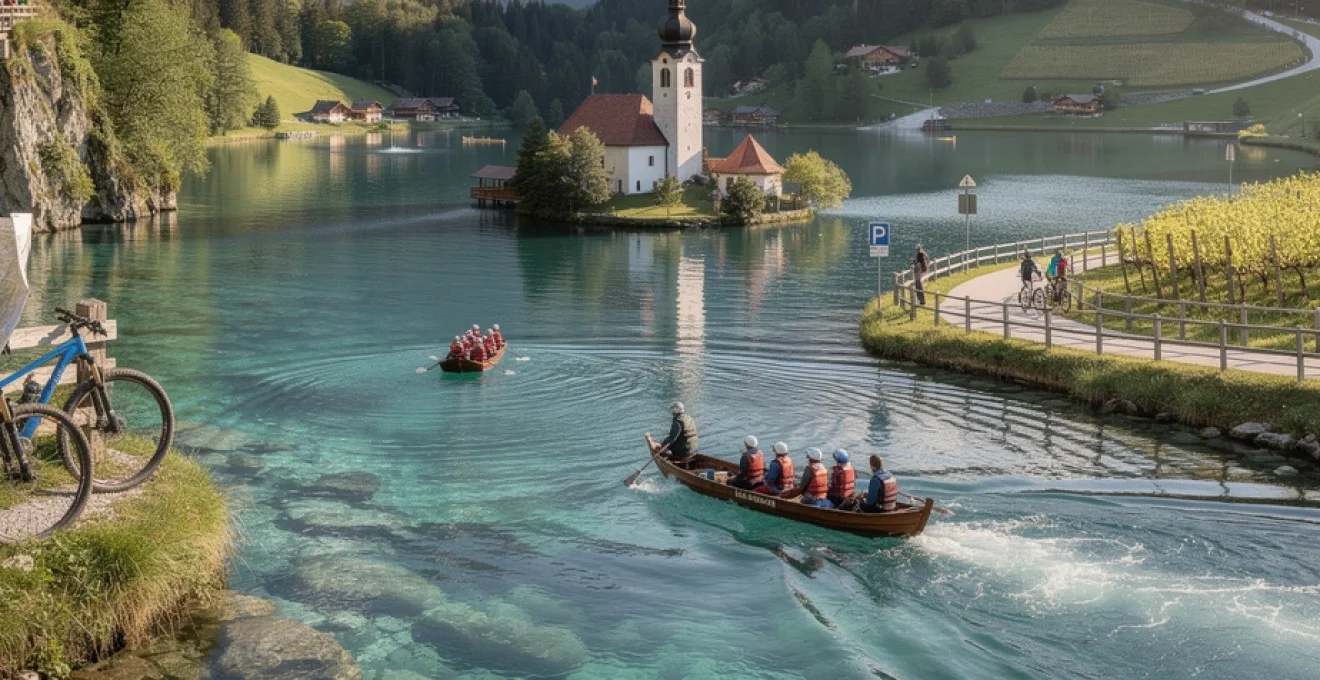
Nestled between the towering Alps and the azure Adriatic Sea, Slovenia represents one of Europe’s most compelling yet overlooked travel destinations. This compact nation, roughly the size of Wales, offers an extraordinary diversity of experiences within a remarkably small geographical footprint. From pristine mountain lakes and ancient cave systems to Mediterranean coastal towns and world-class wine regions, Slovenia delivers the quintessential European experience without the overwhelming crowds that plague its more famous neighbours. The country’s strategic position at the crossroads of Alpine, Mediterranean, and Pannonian cultures has created a unique destination where Austrian mountain charm meets Italian coastal elegance and Croatian natural beauty.
What makes Slovenia particularly remarkable is its commitment to sustainable tourism development and environmental preservation. With only 6 million annual visitors compared to Italy’s 62 million, the country offers authentic experiences and pristine landscapes that have become increasingly rare elsewhere in Europe. The tourism infrastructure has been thoughtfully developed to balance accessibility with conservation, creating a model for responsible destination management that other countries are beginning to emulate.
Slovenia’s alpine tourism infrastructure: lake bled and triglav national park accessibility
The Julian Alps region of Slovenia showcases some of Europe’s most sophisticated sustainable tourism infrastructure, anchored by the iconic Lake Bled and the expansive Triglav National Park. These destinations demonstrate how careful planning and investment in appropriate infrastructure can enhance visitor experiences whilst preserving natural environments. The region’s accessibility has been strategically improved through targeted investments in transportation networks, accommodation facilities, and visitor management systems that prioritise environmental protection.
Lake Bled’s tourism infrastructure exemplifies thoughtful destination development. The lake’s perimeter road system accommodates tour buses and private vehicles whilst maintaining strict environmental controls. Electric boat services replace traditional motorised watercraft, preserving the lake’s tranquil atmosphere and water quality. The area features a sophisticated network of hiking trails, viewing platforms, and interpretive centres that distribute visitor flows across multiple attraction points, preventing overcrowding at any single location.
Vintgar gorge wooden walkway engineering and visitor flow management
The Vintgar Gorge represents a masterpiece of sustainable tourism engineering, featuring a 1.6-kilometre wooden walkway system that allows visitors to experience the dramatic limestone canyon safely. The walkway design incorporates advanced drainage systems, anti-slip surfacing, and strategically placed rest areas that manage visitor flow whilst protecting the delicate gorge ecosystem. This infrastructure investment has transformed what was once an inaccessible natural wonder into one of Slovenia’s most visited attractions.
Visitor management at Vintgar Gorge employs timed entry systems during peak seasons, preventing overcrowding and environmental damage. The walkway’s modular construction allows for seasonal maintenance without disrupting the natural water flow or disturbing wildlife habitats. Digital monitoring systems track visitor numbers and movement patterns, enabling real-time adjustments to entry schedules and providing valuable data for long-term conservation planning.
Julian alps cable car systems: vogel and kanin ski resort connectivity
The Julian Alps cable car network demonstrates Slovenia’s commitment to four-season tourism development and high-altitude accessibility. The Vogel cable car system, serving the Bohinj area, provides year-round access to alpine hiking trails and ski slopes through advanced engineering solutions that minimise environmental impact. The system’s design incorporates wildlife corridors and seasonal operational adjustments to protect sensitive mountain ecosystems.
Kanin ski resort’s cable car infrastructure represents one of Europe’s highest ski areas, reaching elevations of 2,300 metres. The system features cutting-edge technology including heated cabins, wind-resistant support structures, and emergency rescue capabilities that ensure safe operations in challenging alpine conditions. These installations have significantly enhanced Slovenia’s winter sports tourism appeal whilst maintaining strict environmental standards.
Bohinj lake sustainable tourism model and accommodation density controls
Lake Bohinj operates under one of Europe’s most stringent sustainable tourism frameworks, with accommodation density controls that prevent overdevelopment whilst ensuring economic viability for local communities. The lake area features a carefully managed accommodation ecosystem comprising traditional guesthouses, eco-lodges, and camping facilities that maintain the region’s authentic alpine character. Development regulations strictly limit building heights, architectural styles, and environmental footprints.
Parking quotas, restrictions on motorised watercraft, and caps on day visitors during peak summer months help preserve both water quality and the lake’s serene atmosphere. Wastewater treatment standards are among the strictest in the Alpine region, and local businesses participate in certification schemes that reward low-impact operations. For travellers, this means you can enjoy Lake Bohinj’s hiking trails, kayaking, and swimming areas with far fewer crowds, while contributing directly to a tourism model that puts conservation first.
Vršič pass road infrastructure and high-altitude accessibility solutions
The Vršič Pass, reaching an elevation of 1,611 metres, showcases Slovenia’s capacity to make dramatic mountain environments accessible while mitigating risk. Originally constructed during the First World War, the road has been modernised with stone-set hairpin bends, reinforced retaining walls, and sophisticated avalanche protection systems. Seasonal closures and real-time road condition monitoring ensure that safety is prioritised over year-round accessibility, a crucial balance in an era of increasingly unpredictable mountain weather.
Traffic management on Vršič Pass reflects broader sustainable tourism strategies in the Julian Alps. Weight limits for vehicles, designated parking zones at key viewpoints, and clear signage in multiple languages help prevent congestion on the narrow road. In recent years, shuttle services and cycling initiatives have been introduced to reduce private car usage during peak months. As a visitor, planning your drive early in the day or outside high season not only makes the journey more enjoyable, it directly supports the long-term preservation of this iconic Alpine route.
Adriatic coastline development: piran and portorož maritime tourism strategies
Despite having just 47 kilometres of coastline, Slovenia has developed a remarkably diverse maritime tourism offer centred on Piran, Portorož, Koper, and Izola. Rather than chasing mass-market beach tourism, the country has positioned its Adriatic shore as a niche destination for cultural heritage, wellness, sailing, and gastronomic travel. This strategic focus allows Slovenia to compete effectively with its larger neighbours, Italy and Croatia, while avoiding the overtourism that has affected many Mediterranean hotspots.
Integrated coastal management plans coordinate port operations, beach use, and nature conservation areas such as the Sečovlje Salina Nature Park. Investment has focused on promenade enhancements, marina facilities, and heritage restoration rather than sprawling resort complexes. For travellers looking for coastal charm with a strong sense of place, Slovenia’s shoreline offers an appealing alternative to crowded Riviera destinations, combining walkable historic towns with easy access to quiet bays and marine nature reserves.
Piran medieval architecture preservation and UNESCO tentative list status
Piran, often described as a smaller, calmer cousin of Venice, is one of the best-preserved medieval towns on the Adriatic. Its compact old town features a dense network of narrow alleys, Gothic and Renaissance facades, and a hilltop church overlooking a horseshoe-shaped harbour. This urban fabric has been remarkably well maintained thanks to strict heritage protection regulations that control everything from window replacements to exterior paint colours. As a result, wandering Piran can feel like stepping into a living open-air museum.
The town’s historic core is included on Slovenia’s UNESCO Tentative List as part of broader efforts to secure World Heritage recognition for its Venetian-period architecture and maritime heritage. Conservation projects are supported by a mix of national funding, EU cultural grants, and revenues from carefully managed tourism activity. Vehicle access to the old town is heavily restricted, with visitors encouraged to use peripheral car parks and free shuttle buses. If you value authentic, pedestrian-friendly historic centres, Piran’s model shows how small coastal towns can welcome tourism without losing their soul.
Portorož thermal spa tourism integration with sečovlje salt pans
Just a few kilometres from Piran, Portorož has evolved into Slovenia’s leading spa and wellness resort, drawing on mineral-rich mud and brine from the nearby Sečovlje salt pans. Rather than developing in isolation, spa hotels in Portorož work closely with the protected salt pan landscape, using local salt, mud, and saline waters in thalassotherapy treatments. This integration of natural heritage and wellness tourism creates a distinctive value proposition that differentiates Portorož from generic beach resorts elsewhere in the Mediterranean.
The Sečovlje Salina Nature Park itself is both an industrial heritage site and an important bird habitat, managed through a sophisticated zoning system. Certain evaporation ponds remain in active use for traditional salt production, while others are dedicated to conservation and visitor education. Boardwalks, viewing platforms, and a small on-site museum allow guests to learn about centuries-old salt-harvesting techniques. When you book a wellness stay in Portorož, you are effectively supporting the continuation of this unique cultural landscape, as a portion of tourism revenue goes back into park management and restoration.
Koper port cruise ship terminal capacity and regional economic impact
Koper, Slovenia’s largest commercial port, has emerged as a boutique cruise destination in the northern Adriatic. Unlike major cruise hubs that accommodate several mega-ships simultaneously, Koper’s terminal capacity is intentionally limited. This controlled approach reduces pressure on local infrastructure and allows shore excursions to be distributed to inland attractions such as Ljubljana, the Karst region, and the wine-growing hills of Goriška Brda. For the local economy, cruise tourism provides valuable off-season business for guides, restaurants, and artisans without overwhelming the city’s historic core.
Port authorities in Koper have invested in shore power connections and strict waste management protocols to minimise the environmental footprint of visiting vessels. Cruise lines are encouraged to schedule calls outside peak summer weekends, smoothing visitor flows across the season. For travellers arriving by cruise ship, the compact size of both Koper and Slovenia itself means you can experience a medieval town centre, a wine cellar, and a coastal sunset in a single day trip. This efficient use of time is one reason why survey data shows high satisfaction levels among cruise passengers stopping in Slovenia.
Izola fishing heritage tourism and gastronomic experience diversification
Izola, once a small island settlement now connected to the mainland, has leveraged its deep-rooted fishing traditions to create a distinctive coastal tourism niche. Rather than competing directly with Piran’s heritage focus or Portorož’s spa offer, Izola emphasises slow travel, seafood cuisine, and local life. Renovated fishermen’s houses now host intimate guesthouses, and harbourfront taverns serve anchovies, sardines, and cuttlefish prepared according to family recipes passed down for generations.
Municipal authorities have worked with local cooperatives to develop experiences such as early-morning fish market tours, boat trips with local skippers, and hands-on cooking workshops. These activities diversify the gastronomic offer and encourage longer stays outside the busiest months of July and August. If you have ever wished you could experience an Adriatic fishing town before mass tourism, Izola comes remarkably close, offering a pace of life that feels decades removed from crowded Mediterranean resorts just a few hours away.
Ljubljana urban tourism ecosystem and smart city implementation
Ljubljana, Slovenia’s capital, showcases how a mid-sized European city can reinvent itself as a model for sustainable urban tourism. Awarded the title of European Green Capital in 2016, Ljubljana has implemented a wide range of smart city initiatives that benefit both residents and visitors. The historic centre is largely car-free, with electric shuttle vehicles, extensive cycling routes, and a reliable public bus network forming the backbone of urban mobility. For travellers, this translates into a safe, walkable environment where you can cross the city centre on foot in under 20 minutes.
Digital tools complement this physical infrastructure. Real-time public transport apps, smart parking systems on the city’s edge, and open data portals help manage visitor flows and reduce congestion. The Ljubljanica riverfront has been transformed into a linear public living room, lined with cafés, galleries, and cultural venues that spill onto pedestrian quays. By promoting year-round cultural programming rather than relying solely on peak-season tourism, Ljubljana maintains a balanced visitor economy. As you sit beneath the arches of a Plečnik-designed colonnade, it becomes clear that this is a city where quality of life and tourism development go hand in hand.
Karst region cave systems: postojna and škocjan world heritage site management
Slovenia’s Karst region is home to some of the most significant cave systems in Europe, and it has become a global reference point for managing underground tourism environments. Postojna Cave, with more than 38 kilometres of explored passages, has welcomed visitors for over 200 years and is now one of the most technologically advanced show caves in the world. An electric cave train, sophisticated lighting systems designed to minimise algae growth, and strict microclimate monitoring allow large numbers of visitors to experience the subterranean landscape without compromising long-term conservation.
Just 30 kilometres away, the Škocjan Caves form the core of a UNESCO World Heritage Site recognised for its immense underground canyon and unique hydrological features. Here, visitor numbers are intentionally kept lower than at Postojna, and guided tours follow fixed routes to reduce human impact. The management plan for Škocjan extends beyond the cave entrances, covering surrounding buffer zones where traditional farming practices are supported to maintain the broader karst landscape. For travellers, visiting both caves offers a fascinating contrast: one demonstrates how high-volume tourism can be carefully engineered underground; the other shows a more low-key, conservation-driven approach anchored in UNESCO standards.
Wine tourism terroir analysis: vipava valley and goriška brda viticulture excellence
Slovenia’s western borderlands, particularly the Vipava Valley and Goriška Brda, have quietly become some of Europe’s most exciting wine tourism regions. Here, rolling hillsides, mixed woodlands, and small villages recall more famous destinations like Tuscany or Piedmont, yet visitor numbers remain modest by comparison. The terroir is defined by a meeting of Alpine and Mediterranean influences: warm days, cool nights, and complex soils ranging from marl and sandstone to limestone. These conditions yield characterful white and red wines that are increasingly recognised by international critics.
Wine tourism strategies in these regions emphasise small-scale, family-owned cellars and direct contact with growers. Rather than large bus tours, you are more likely to find independent travellers arriving by car or bicycle, moving from one hilltop village to the next. Many estates combine accommodation, tasting rooms, and farm-to-table restaurants, creating integrated agritourism experiences. For oenophiles familiar with French and Italian appellations, exploring Slovenia’s terroir-rich valleys offers the thrill of discovery—tasting indigenous grapes you may never have encountered before.
Rebula and pinela indigenous grape varieties market positioning
Two indigenous white grape varieties, Rebula (known as Ribolla Gialla across the border in Italy) and Pinela, are central to Slovenia’s distinct wine identity. Rebula, widely planted in Goriška Brda, thrives on steep, sun-drenched slopes where yields are kept relatively low. Winemakers produce everything from crisp, stainless-steel-aged versions to complex, skin-contact “orange” wines matured in oak or traditional clay vessels. This versatility has helped Rebula gain traction in export markets and on the wine lists of high-end restaurants across Europe and North America.
Pinela, primarily grown in the Vipava Valley, remains more of a hidden gem, with limited plantings and production focused on quality rather than volume. Its fresh acidity and stone-fruit profile make it ideal for modern, food-friendly wines that pair well with both seafood and mountain cuisine. Regional marketing consortia and wine routes promote these grapes through festivals, tasting events, and collaborative branding. If you are interested in discovering wines before they become mainstream, seeking out Rebula and Pinela at local cellars offers a chance to taste Slovenia’s vinous future at its source.
Brda wine route infrastructure and agritourism integration models
The Brda Wine Route, winding through Goriška Brda’s patchwork of vineyards, orchards, and villages, exemplifies integrated agritourism development. Signposted routes for cars and bicycles connect more than 100 wineries, farm stays, and artisanal producers, making it easy for visitors to design their own tasting itineraries. Infrastructure investments have focused on improving secondary roads, creating scenic viewpoints, and developing visitor centres that provide maps, booking assistance, and information on local products.
Many Brda estates offer multi-day packages that combine vineyard tours, cooking classes, and guided hikes. This encourages longer stays and spreads tourism revenues beyond simple cellar-door sales. Importantly, zoning regulations protect agricultural land from speculative development, ensuring that vineyards remain the dominant landscape feature. For travellers, this means that the panoramic views from hilltop villages like Šmartno are likely to remain unspoilt for decades to come, a tangible benefit of Slovenia’s proactive rural planning.
Vipava valley microclimate advantages for premium wine production
The Vipava Valley benefits from a unique microclimate shaped by its east–west orientation and the influence of the powerful Bora wind. This cold, dry wind, which can reach speeds of over 100 kilometres per hour in winter, helps keep vineyards healthy by reducing humidity and disease pressure. Combined with abundant sunshine and well-drained soils, these conditions allow grapes to ripen fully while retaining acidity—ideal for producing balanced, age-worthy wines. It is no surprise that premium Chardonnay, Malvazija, and red blends from Vipava are increasingly winning medals at international competitions.
Local producers have embraced sustainable and organic viticulture, with many estates experimenting with low-intervention winemaking. Wine tourism infrastructure in the valley remains relatively low-key: small tasting rooms, family-run inns, and village festivals rather than large-scale visitor centres. If you enjoy discovering emerging wine destinations, the Vipava Valley offers a compelling combination of high-quality production and genuine rural hospitality, all within an hour’s drive of Ljubljana.
Adventure tourism market segmentation: soča valley adrenaline sports cluster
The emerald-green Soča River and surrounding peaks form the core of Slovenia’s adventure tourism offering. Over the past two decades, the Soča Valley has evolved into a specialised adrenaline sports cluster, drawing kayakers, rafters, hikers, climbers, and paragliders from across Europe. What sets this region apart is not just its natural beauty, but the way in which activities are professionally organised and tightly regulated to ensure safety and environmental protection. For travellers seeking outdoor adventure in Europe without the crowds of the Alps’ most famous resorts, the Soča Valley is a revelation.
Local tourism boards work closely with guiding companies, accommodation providers, and the Triglav National Park authority to segment the adventure tourism market by skill level and season. Beginner-friendly experiences, such as family rafting trips and guided canyoning, are scheduled alongside more technical offerings for experienced kayakers or climbers. This structured approach prevents overcrowding on popular sections of the river or specific trails, while maximising the region’s capacity to host visitors across spring, summer, and early autumn.
Soča river rafting classification systems and safety protocol standards
The Soča River is renowned for its clear waters and varied rapids, which range from gentle Class I–II sections suitable for families to more challenging Class III–IV stretches that appeal to seasoned paddlers. Commercial rafting operations follow international whitewater classification systems, making it easier for visitors to choose trips that match their abilities. Before each descent, guides provide comprehensive safety briefings, equipment checks, and practice drills in calmer water, ensuring that even first-time rafters feel confident on the river.
Operators in the valley adhere to strict licensing requirements, including mandatory training, first-aid certification, and regular equipment inspections. Group sizes are capped to maintain control on the water and reduce ecological impact on riverbanks. In recent years, digital booking platforms and centralised scheduling have helped spread departures throughout the day, reducing congestion at put-in and take-out points. If you have ever worried about safety when booking an adventure activity abroad, the Soča Valley’s standards provide a reassuring benchmark.
Bovec paragliding launch sites and thermal current utilisation
Bovec, often called the “adrenaline capital” of Slovenia, is also one of the country’s premier paragliding hubs. Several designated launch sites on surrounding ridges take advantage of reliable thermal currents generated by the meeting of Alpine and Mediterranean air masses. Pilots can soar above the Soča Valley, enjoying bird’s-eye views of snow-capped peaks, glacial valleys, and turquoise river bends. Tandem flights make this experience accessible to first-time flyers, with take-off and landing areas clearly demarcated and supervised.
Airspace management in the region is tightly coordinated, with flight paths and altitude limits established in consultation with aviation authorities and Triglav National Park. Weather monitoring is central to daily operations, and flights are routinely cancelled or rescheduled if conditions are not optimal—an inconvenience in the short term, but one that has helped maintain an excellent safety record. For those seeking a memorable introduction to Slovenia’s dramatic landscapes, a tandem paragliding flight over Bovec offers a unique perspective that no viewpoint on the ground can match.
Kranjska gora mountain biking trail network and difficulty grading
Kranjska Gora, near the tri-border area with Austria and Italy, has developed an extensive mountain biking network that caters to a wide range of abilities. Trails are clearly graded using an internationally recognisable colour-coding system, from easy green routes along valley floors to technical black descents with steep gradients and obstacles. Bike parks with lift-accessed downhill tracks complement cross-country circuits that weave through forests and alpine meadows, offering both adrenaline hits and more leisurely family outings.
Trail design and maintenance are carried out in cooperation with local clubs, landowners, and environmental authorities. Erosion control measures, such as drainage channels and reinforced switchbacks, help protect sensitive soils on steeper slopes. Rental shops, repair stations, and guided tour services round out the infrastructure, making it easy for visitors to explore even if they do not bring their own equipment. If you are accustomed to the crowded trails of more famous Alpine resorts, Kranjska Gora’s spacious, well-marked network may feel like having an entire mountain playground almost to yourself.
Logarska valley climbing route development and environmental impact assessment
Logarska Valley, one of Slovenia’s most photogenic glacial valleys, has become a focal point for rock climbing and alpine hiking while remaining a stronghold of landscape conservation. New climbing routes and via ferrata installations are subject to rigorous environmental impact assessments before approval. Factors such as nesting sites, rare plant communities, and rock stability are analysed to ensure that route development does not compromise the valley’s ecological integrity. This scientific approach may slow down the creation of new lines, but it helps guarantee that climbing and conservation can coexist.
Access to trailheads and climbing sectors is regulated through parking fees, shuttle services, and seasonal restrictions on certain paths. Information boards at the valley entrance explain codes of conduct, including guidelines on waste disposal, noise levels, and group sizes. For climbers and hikers, these measures may require a bit more planning, but they also ensure that Logarska Valley retains the tranquil, almost primeval character that makes it so special. In a European context where many mountain destinations face mounting pressure from visitor numbers, Slovenia’s approach in places like Logarska offers a compelling blueprint for the future of adventure tourism.