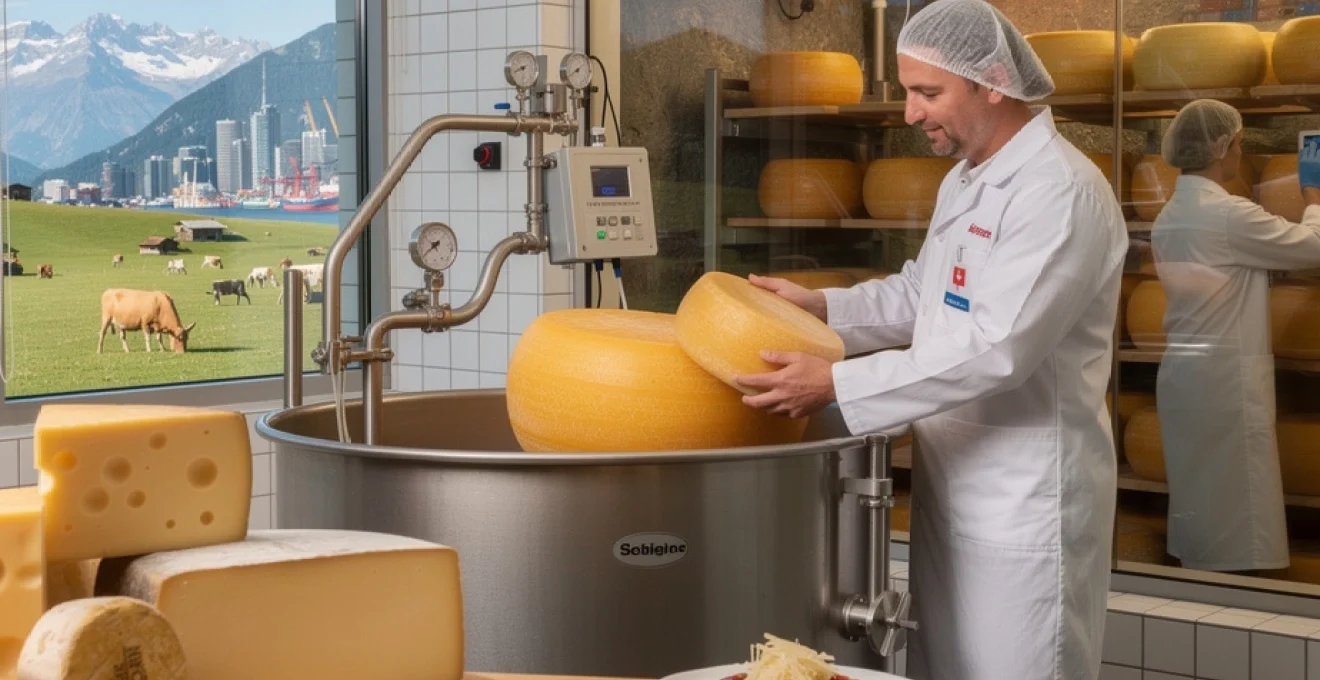
Switzerland’s reputation as a cheese-making powerhouse extends far beyond the bubbling caquelon of traditional fondue. While this beloved dish may have introduced the world to Swiss dairy excellence, the nation’s cheese heritage encompasses centuries of artisanal craftsmanship, innovative production techniques, and rigorous quality standards that have established Swiss varieties among the finest in global gastronomy. From the distinctive holes of Emmental to the crystalline texture of aged Gruyère, Swiss cheese represents a sophisticated fusion of ancient alpine traditions and modern food science that continues to shape international dairy markets.
The Swiss cheese industry generates over 1.2 billion Swiss francs annually in export revenue alone, demonstrating that these premium dairy products command respect and premium pricing worldwide. Beyond their economic significance, Swiss cheeses offer unique flavour profiles, nutritional benefits, and culinary applications that extend well into contemporary haute cuisine. Understanding the complexity behind these celebrated varieties reveals why Swiss cheese deserves recognition as one of Europe’s most sophisticated dairy achievements.
Swiss cheese production techniques beyond traditional alpine methods
Modern Swiss cheese production combines time-honoured alpine traditions with cutting-edge food technology, creating products that maintain authentic flavour profiles while meeting contemporary safety and consistency standards. The transformation from traditional farmhouse methods to sophisticated industrial processes has revolutionised Swiss cheese manufacturing without compromising the distinctive characteristics that define these premium varieties.
Propionibacterium shermanii fermentation process in emmental production
The iconic holes in Emmental cheese result from a carefully controlled fermentation process involving Propionibacterium shermanii, a specialised bacterial culture that produces carbon dioxide during the aging process. This remarkable microorganism transforms lactic acid into propionic acid and acetic acid, creating the distinctive nutty flavour and characteristic eye formation that defines authentic Swiss Emmental. Temperature management during this phase requires precise control, typically maintained between 20-24°C for optimal bacterial activity.
Contemporary Emmental producers utilise sophisticated monitoring systems to track fermentation progress, measuring pH levels, moisture content, and bacterial population density throughout the aging process. The timing of bacterial inoculation proves critical, as premature introduction can result in irregular hole formation, while delayed addition may produce insufficient eye development. Master cheesemakers often describe this process as orchestrating a “bacterial symphony,” where each microorganism plays a specific role in developing the cheese’s final character.
Temperature-controlled affinage in gruyère cave maturation
Gruyère’s complex flavour development relies on meticulously controlled cave aging, where temperature fluctuations of even one degree can significantly impact the final product. Modern fromageries employ climate-controlled aging facilities that replicate natural cave conditions, maintaining temperatures between 13-15°C with humidity levels of 85-90%. These controlled environments ensure consistent maturation across thousands of wheels simultaneously.
The affinage process for premium Gruyère extends from twelve months to over thirty-six months, with wheels turned and washed regularly using brine solutions that promote beneficial surface bacteria growth. Brevibacterium linens and other surface cultures contribute to the distinctive orange-brown rind development while influencing internal flavour evolution. Advanced aging facilities now incorporate automated turning systems and precise brine application techniques that ensure uniform maturation across entire production batches.
Modern pasteurisation impact on appenzeller flavour profiles
Appenzeller production presents unique challenges in balancing food safety requirements with traditional flavour development, particularly regarding pasteurisation protocols. While many artisanal producers continue using raw milk to achieve maximum flavour complexity, commercial operations increasingly adopt low-temperature, long-time pasteurisation methods that preserve beneficial enzyme activity while ensuring pathogen elimination.
Research indicates that pasteurisation temperatures above 72°C can denature critical enzymes responsible for Appenzeller’s characteristic sharpness and aromatic intensity. Modern facilities therefore employ HTST (High Temperature, Short Time) systems operating at precisely 71.5°C for fifteen seconds, maintaining the delicate balance between safety and flavour preservation. This technological approach allows large-scale production while preserving the artisanal qualities that distinguish premium Appenzeller varieties.
Industrial scalability of traditional swiss Cheese-Making at emmi
At Emmi’s large-scale facilities, traditional Swiss cheese-making has been adapted to industrial processes through a combination of automation and strict quality control protocols. Milk collection is centralised from selected alpine and pre-alpine farms, but the core stages of curdling, cutting, stirring and pressing still mirror what you would see in a small mountain dairy. The main difference lies in the use of computer-controlled vats, inline sensors and batch tracking systems that ensure every wheel of Emmental, Gruyère or Raclette meets precise specifications for fat content, moisture and microbial balance.
Rather than replacing artisan skills, Emmi integrates master cheesemakers into every stage of the production chain, using their expertise to calibrate recipes and adjust fermentation curves in response to seasonal milk variations. Automated brining tunnels, robotic turners and climate-controlled aging rooms allow tens of thousands of wheels to be matured under conditions that would once only have been possible in a handful of mountain caves. By scaling up these processes while maintaining PDO-compliant methods, Emmi demonstrates how industrial Swiss cheese-making can preserve authenticity and terroir, even at export-driven volumes.
Protected designation of origin classifications for authentic swiss varieties
Protected Designation of Origin (PDO/AOP) and Appellation d’Origine Contrôlée (AOC) systems play a crucial role in safeguarding authentic Swiss cheese varieties. These regulatory frameworks specify where cheeses can be produced, which milk may be used and which techniques are permitted, ensuring that “Swiss cheese” on a label corresponds to genuine Swiss standards rather than generic imitations. For buyers and consumers, these labels are more than just logos; they are guarantees of traceability, traditional know-how and consistent quality.
In a global market flooded with industrially produced cheeses, PDO protection helps Swiss producers defend their reputations and justify premium price points. It also anchors cheese production in specific rural regions, supporting alpine communities and traditional farming practices. When you choose an AOP or AOC Swiss cheese, you are not only purchasing a flavour profile but also investing in a regulated ecosystem of pasture management, animal welfare and artisanal skills.
AOC gruyère regulatory standards and geographic limitations
Authentic Gruyère carries an AOP (formerly AOC) designation that tightly defines its geographic origin and production methods. Only cheese made in designated regions of western Switzerland — predominantly the canton of Fribourg, along with parts of Vaud, Neuchâtel and Jura — using raw cow’s milk from these areas can bear the name Gruyère AOP. The milk must come from cows fed mainly on fresh pasture in summer and hay in winter, with silage strictly limited or prohibited to preserve the cheese’s delicate, nutty aromas.
Production rules stipulate that the milk be processed within a few hours of milking, without standardisation of fat content or the use of additives and preservatives. Curd heating, cutting size, pressing times and brine concentration are all specified in the AOP regulations, as is a minimum aging period of five months, with longer affinage required for “Réserve” and “Surchoix” labels. Independent controls by the Interprofession du Gruyère and accredited laboratories monitor parameters such as rind integrity, eye formation, texture and flavour, ensuring that each wheel meets the strict sensory and technical benchmarks required to carry the Gruyère AOP stamp.
Emmental switzerland AOP certification requirements
Emmental Switzerland AOP distinguishes itself from generic “Swiss cheese” by adhering to a rigorous rulebook that governs everything from herd management to wheel diameter. To qualify for the AOP label, Emmental must be produced in defined regions using raw, non-silage milk from cows grazing on natural meadows. Each wheel weighs between 75 and 120 kilograms and is pressed into characteristic large formats that allow for the formation of the iconic eyes during long, warm cellar fermentation.
The AOP specifications demand natural starter cultures, a ban on artificial colourings and preservatives, and a minimum aging period of four months, with many premium Emmental Switzerland AOP cheeses matured for 12 months or more. Quality inspectors drill samples from each wheel to check texture, aroma and eye distribution, rejecting those that do not show the typical open, elastic paste and sweet, nutty aroma. By clearly separating Emmental Switzerland AOP from industrial copies produced abroad, these certification requirements preserve both the cheese’s identity and the international reputation of Swiss cheese-making.
Tête de moine PDO authentication processes
Tête de Moine, the cylindrical cheese traditionally shaved into delicate rosettes, benefits from PDO protection that guarantees its monastic heritage and unique production style. Only cheeses made in a small area of the Jura mountains, using raw cow’s milk and specific copper vat techniques, can carry the Tête de Moine AOP designation. The milk must be thermised but not fully pasteurised, preserving crucial enzymes and microflora that contribute to the cheese’s intense, floral and slightly spicy aroma.
Authentication processes combine physical inspection with modern traceability tools. Each wheel is marked with an individual casein label and embossed with the AOP seal, allowing authorities to trace it back to a specific dairy and production batch. Official tasting panels regularly evaluate sample wheels for rind colour, paste suppleness, aroma intensity and flavour balance, ensuring that what ends up on a girolle (the special shaving device) in your kitchen truly reflects centuries of Jura cheese-making tradition.
Vacherin mont-d’or seasonal production restrictions
Vacherin Mont-d’Or is one of Switzerland’s most distinctive seasonal cheeses, and its AOP regulations are closely tied to the agricultural calendar. Production is permitted only between 15 August and 31 March, with the cheeses reaching market from 15 September to 30 April. This timing reflects the traditional use of richer winter milk, produced when cows come down from high pastures and feed on hay, which yields the lush, spoonable texture that defines authentic Vacherin Mont-d’Or.
The cheese must be made in the Jura Vaudois region, encircled in a band of spruce bark that imparts subtle resinous notes as it matures in cool cellars. Pasteurised or thermised milk may be used, but strict controls govern fat content, rind development and minimum aging times. Seasonal production restrictions not only preserve historical practice but also help maintain Vacherin’s reputation as a rare, eagerly anticipated delicacy — one that reminds us that not all great Swiss cheeses are available year-round.
Culinary applications in contemporary gastronomy beyond fondue
Although fondue and raclette dominate most conversations about Swiss cheese, contemporary chefs are increasingly using Swiss varieties in diverse and unexpected ways. In fine-dining restaurants from Zurich to New York, Gruyère, Emmental and Appenzeller feature in foams, crisps, custards and even dessert courses. Their complex flavour compounds, shaped by long aging and specific microflora, provide far more nuance than generic “melting cheese,” making them ideal tools for modern culinary creativity.
Consider Gruyère aged 18 months, with its crystalline texture and caramelised, roasted-onion notes: it performs beautifully shaved over roasted root vegetables or folded into a light soufflé, where its deep savouriness replaces meat stock. Emmental Switzerland AOP, with its balanced sweetness and gentle acidity, can be transformed into paper-thin tuiles or aerated mousses that add texture and umami to tasting menus. Even pungent Appenzeller finds new life in gourmet burgers, savoury cheesecakes or emulsified into dressings, where its peppery, herbal finish elevates otherwise simple dishes.
At home, you can apply these same principles on a smaller scale. Swap standard cheddar for Gruyère in a gratin dauphinois, use Sbrinz shavings instead of Parmesan over risotto or fold Tête de Moine rosettes into a warm salad of bitter greens and walnuts. By thinking of Swiss cheese as a flavour-building ingredient rather than just a centrepiece for winter dishes, we open up year-round applications that range from weekday pasta to special-occasion menus.
Nutritional biochemistry of swiss cheese varieties
Beyond flavour and tradition, Swiss cheese offers a compelling nutritional profile that reflects both its alpine origins and the biochemistry of long-aged dairy. Most hard and semi-hard Swiss cheeses are rich sources of high-quality protein, providing all essential amino acids in a highly bioavailable form. A 30-gram serving of Gruyère, for instance, typically delivers around 8–9 grams of protein, making it a compact contributor to muscle maintenance and satiety in balanced meals.
Calcium and phosphorus levels are particularly high in Swiss cheese varieties, supporting bone mineral density and dental health, especially in older adults. Long aging reduces lactose content to negligible levels, meaning many lactose-intolerant individuals can tolerate aged Gruyère, Emmental or Sbrinz without discomfort. From a biochemical standpoint, the extended fermentation and affinage processes encourage the development of bioactive peptides, some of which have been studied for potential antihypertensive and antioxidant effects. While cheese remains energy-dense due to its fat content, choosing small portions of flavour-intense Swiss cheese can provide micronutrient benefits that far exceed those of many ultra-processed snacks.
Lipids in traditional Swiss cheese are predominantly saturated fats, but modern research suggests that dairy-derived saturated fat may not have the same cardiovascular impact as that from processed meats or trans fats. Furthermore, grass-fed alpine cows produce milk with higher levels of omega-3 fatty acids and conjugated linoleic acid (CLA), compounds associated in some studies with anti-inflammatory and metabolic benefits. Sodium content, especially in very aged and strongly brined cheeses, is a factor to watch if you are managing blood pressure, but careful portion control and pairing with potassium-rich foods such as vegetables can help balance intake. Swiss cheese, when integrated thoughtfully into a broader dietary pattern, can be both a gastronomic pleasure and a nutrient-dense choice.
Economic impact of swiss cheese exports on global dairy markets
Swiss cheese is far more than a cultural emblem; it is a strategic export commodity that shapes regional economies and influences global dairy trade flows. In 2023, Switzerland exported roughly 80,000–85,000 tonnes of cheese, with export values frequently exceeding 1.2 billion Swiss francs per year. Premium positioning allows Swiss producers to command higher prices per kilogram than many competitors, helping offset the country’s elevated production costs, strict environmental regulations and strong currency.
For rural regions, particularly in mountainous cantons, cheese exports underpin farm incomes and sustain local infrastructure that would otherwise be at risk in a service-driven economy. Internationally, Swiss cheese occupies a niche similar to high-end wines: volumes are relatively modest compared to mass-market producers, but brand equity and perceived quality secure shelf space in specialty retailers and top-tier restaurants worldwide. How does this small alpine nation maintain such influence? The answer lies in a combination of PDO protections, consistent quality, and savvy trade diplomacy that keeps Swiss cheese visible and desirable in key markets.
Switzerland’s cheese export revenue analysis 2020-2024
Between 2020 and 2024, Swiss cheese exports demonstrated resilience despite global disruptions from the COVID-19 pandemic and supply chain volatility. While exact figures vary by source and final customs data, industry reports from organisations such as Switzerland Cheese Marketing indicate that annual export revenue stayed above 1 billion CHF, often reaching 1.2–1.3 billion CHF. Initial declines in foodservice demand in 2020 were partially offset by strong retail sales, as consumers in the EU, UK and North America shifted towards home cooking and premium comfort foods.
By 2022–2023, the reopening of restaurants and renewed tourism helped restore demand for high-value segments such as aged Gruyère AOP, Emmental Switzerland AOP and speciality mountain cheeses. At the same time, inflationary pressures and higher energy costs in Europe encouraged some buyers to trade down in volume but not necessarily in quality, favouring cheeses with strong brand recognition and reliable performance. Looking ahead to 2024 and beyond, Swiss exporters face currency risks and competitive pressure, but their track record of steady revenue growth suggests that demand for authentic Swiss cheese remains structurally robust.
Competitive positioning against french comté and italian grana padano
On the global stage, Swiss cheese competes most directly with other protected European hard and semi-hard cheeses such as French Comté and Italian Grana Padano. All three leverage strong geographical indications, strict production rules and distinctive flavour profiles to achieve premium positioning. Comté, produced in the Jura region of France, shares terroir similarities with Gruyère and often appears in the same culinary applications, from gratins to cheese boards. Grana Padano, meanwhile, competes in the “grating cheese” category, where Swiss Sbrinz positions itself as a robust, long-aged alternative.
What differentiates Swiss cheese in this crowded field? Consistency of quality and a strong national brand identity play key roles, as does a reputation for food safety and traceability. While Comté and Grana Padano benefit from larger production volumes and sometimes lower price points, Swiss exporters focus on storytelling around alpine pastures, small-scale dairies and craftsmanship to justify their premium. For chefs and consumers, the choice often comes down to nuance: do you want the toasted hazelnut notes of Gruyère, the fruity depth of Comté, or the crystalline sharpness of Sbrinz versus Grana Padano? This diversity of profiles means that Swiss cheeses often complement, rather than directly replace, their French and Italian counterparts.
Brexit effects on UK swiss cheese import tariffs
Brexit introduced a new layer of complexity to the long-standing trade relationship between Swiss cheesemakers and British consumers. Before the UK’s departure from the EU, Swiss cheese entered the British market under EU–Swiss agreements that streamlined tariffs and sanitary controls. Post-Brexit, Switzerland and the UK negotiated their own bilateral arrangements, aiming to maintain preferential access and minimise disruptions. Nevertheless, transitional customs procedures, new documentation requirements and logistical bottlenecks temporarily increased costs and lead times for importers.
For UK retailers and distributors, these changes meant reassessing product ranges, warehouse strategies and pricing structures for Swiss cheese. Some smaller importers reduced the variety of niche Swiss cheeses they carried, focusing instead on core favourites like Gruyère and Emmental with faster turnover. Over time, as supply chains adjusted and bilateral agreements stabilised, many of the initial frictions eased, but the episode highlighted how sensitive premium cheese flows can be to trade policy shifts. For Swiss producers, Brexit underscored the importance of diversified export markets and flexible distribution strategies.
Premium pricing strategies in north american specialty markets
In North America, Swiss cheese occupies a clear premium tier within the specialty cheese segment, relying on differentiated pricing strategies to reflect its production costs and perceived value. Importers and retailers often position Gruyère AOP, Emmental Switzerland AOP and Tête de Moine alongside artisanal American, French and Italian cheeses, with retail prices that can be two to three times higher than domestic “Swiss-style” alternatives. Rather than competing on volume, Swiss brands focus on education, in-store tastings and storytelling to help consumers understand why authentic Swiss cheese commands a higher price.
Cheese counters in urban markets such as New York, San Francisco and Toronto use descriptors like “raw-milk alpine cheese,” “mountain pasture milk” and “long-aged cave-matured” to convey quality cues that justify premium pricing. Foodservice buyers, particularly in high-end restaurants and hotel groups, are willing to pay more for Swiss cheese that delivers consistent melting behaviour, complex aromatics and strong name recognition on menus. For home cooks, smaller pre-cut wedges and mixed cheese platters offer accessible entry points, allowing you to experiment with Swiss varieties without committing to large purchases — a strategy that helps maintain demand even during periods of economic uncertainty.
Artisanal swiss cheese innovation in modern fromageries
While industrial groups like Emmi anchor the export economy, a new generation of artisanal fromageries is pushing Swiss cheese innovation in bold directions. Small dairies experiment with single-herd milk, alternative aging woods, washed-rind techniques and cross-border collaborations that blend Swiss know-how with influences from France, Italy or even Scandinavia. You might find a semi-hard alpine cheese washed in local craft beer, a raw-milk blue-veined wheel matured in disused railway tunnels, or a soft cheese infused with alpine herbs traditionally used in Swiss liqueurs.
These innovations do not reject tradition; rather, they treat it like a strong foundation on which to build. Many artisan producers adhere to PDO rules when making classic cheeses, then use non-PDO lines to explore new flavour territories. Direct-to-consumer models, farm shops and online subscription boxes allow them to bypass some of the constraints of mass distribution, connecting directly with cheese enthusiasts who value rarity and experimentation. For visitors, touring these modern fromageries offers a vivid reminder that Swiss cheese is a living culture, not a static museum piece.
From a broader perspective, artisanal innovation helps keep Swiss cheese relevant to younger consumers who seek authenticity and novelty in equal measure. By marrying centuries-old techniques with contemporary tastes — smoky notes, unusual rinds, surprising textures — Swiss cheesemakers demonstrate that their craft is as much about the future as the past. And for anyone who has only encountered Swiss cheese in the form of fondue or supermarket slices, these fromageries offer a simple invitation: taste widely, ask questions and discover just how diverse Swiss cheese can be.