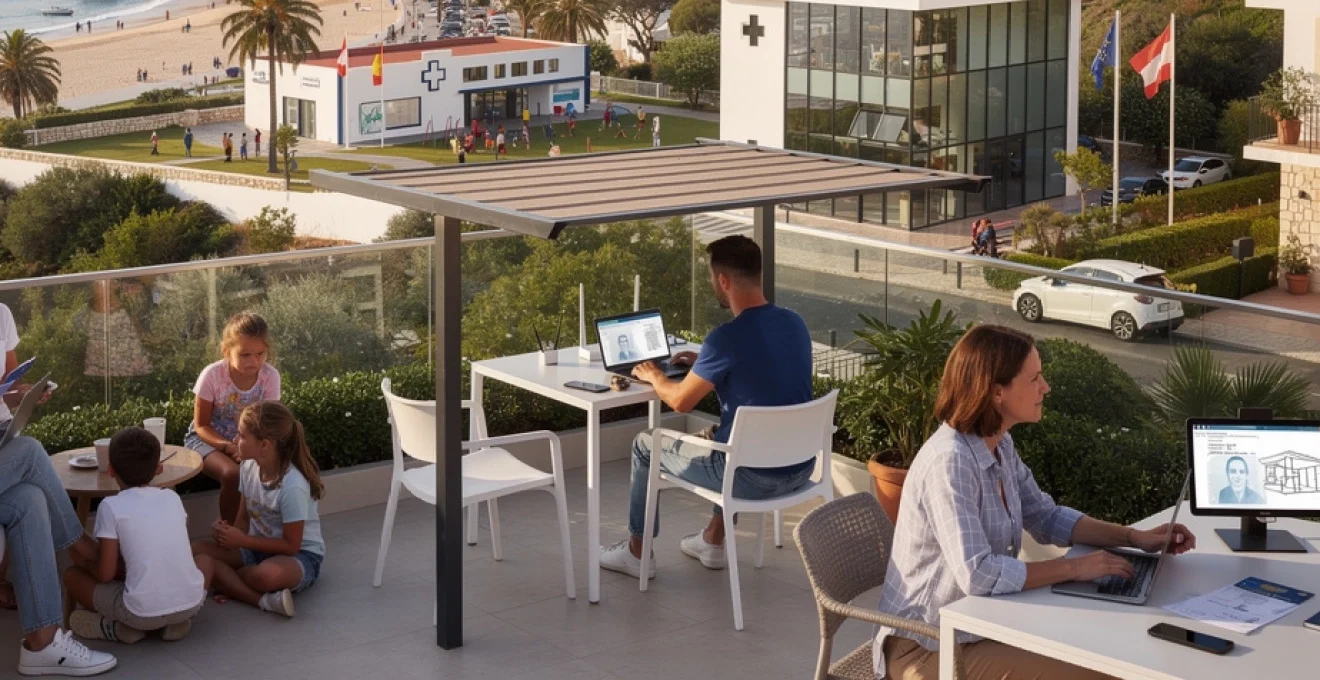
Portugal’s southernmost region has emerged as a magnetising destination for extended-stay visitors seeking more than a traditional holiday experience. The Algarve’s transformation from a seasonal beach destination into a year-round haven for digital nomads, remote workers, and lifestyle migrants represents one of Europe’s most compelling travel trends. With its exceptional climate, competitive living costs, robust infrastructure, and welcoming expatriate communities, this coastal paradise offers an irresistible proposition for those looking to escape the constraints of conventional living.
Recent statistics demonstrate this growing appeal, with the Algarve recording 597,700 guests and 2.38 million overnight stays in September alone, securing a commanding 27.9% share of Portugal’s total accommodation revenue. Beyond tourism figures, the region has witnessed a remarkable surge in visa applications, residency permits, and property purchases from international buyers seeking permanent or semi-permanent relocation. This phenomenon reflects a broader shift in how people approach work, lifestyle, and geographical freedom in an increasingly connected world.
Portugal’s golden visa programme and D7 visa pathways for extended residency
Portugal’s immigration framework has positioned itself as one of Europe’s most accessible pathways to residency, with the Algarve serving as a primary beneficiary of these progressive policies. The Golden Visa programme, though recently reformed to exclude coastal property investments, continues to attract significant international interest through alternative investment routes including venture capital funds, research activities, and cultural heritage preservation projects.
The D7 visa, specifically designed for passive income holders, has become increasingly popular among remote workers and retirees choosing the Algarve as their base. This visa category requires demonstration of sufficient financial means – approximately €635 monthly for individuals – making it accessible to digital nomads, pension recipients, and investment income beneficiaries. Processing times have improved significantly, with most applications completed within 60-90 days when properly documented.
Non-habitual resident tax regime applications in faro district
The Non-Habitual Resident (NHR) programme offers substantial tax advantages for new Portuguese residents, particularly attractive to professionals in qualifying sectors. Under this regime, foreign-sourced income may be exempt from Portuguese taxation for ten years, while domestic income benefits from reduced rates. The Faro District tax office has reported a 40% increase in NHR applications over the past two years, with approval rates exceeding 85% for properly submitted cases.
Technology professionals, consultants, and creative industries represent the largest applicant categories, drawn by the programme’s recognition of high-value activities and intellectual property income. The regime particularly benefits those maintaining international client bases while establishing Portuguese residency in the Algarve.
Schengen area mobility advantages for digital nomads
Portuguese residency provides unrestricted access to the 26-country Schengen Area, eliminating visa requirements and enabling seamless European travel. For digital nomads, this represents unprecedented geographical flexibility, allowing extended stays throughout Continental Europe while maintaining Algarve-based residency. The freedom to travel for business meetings, conferences, or leisure without bureaucratic constraints has become a decisive factor for location-independent professionals.
Recent surveys indicate that 73% of digital nomads consider visa-free travel essential when selecting long-term bases, positioning Portugal’s residency programmes as competitive advantages in the global nomad economy.
Residence permit processing times through SEF portimão office
The SEF (Serviço de Estrangeiros e Fronteiras) office in Portimão has streamlined its operations to accommodate increasing residence permit applications. Current processing times average 45-60 days for D7 visas and 90-120 days for family reunification permits, representing significant improvements from previous years. The office has implemented digital scheduling systems and expanded staff capacity to handle growing demand.
Applicants benefit from comprehensive support services, including document verification, biometric data collection, and status updates through online portals. The efficiency improvements have contributed to the Algarve’s reputation as an accessible destination for international residents.
Investment visa requirements for algarve real estate purchases
While the Golden Visa programme no longer accepts coastal real estate investments, alternative pathways remain
for investors focused on the Algarve real estate market. Many long-stay travellers now combine a D7 or other residency route with strategic property purchases, favouring long-term rental income over purely speculative gains. While direct coastal Golden Visa acquisitions have been phased out, investment in qualified rehabilitation projects, low-density inland municipalities, and regulated investment funds with Algarve exposure continues to provide a viable route to residency for higher-net-worth individuals.
Prospective buyers should approach Algarve real estate investment with a medium to long-term horizon, prioritising fundamentals such as location, build quality, and year-round rental demand. Legal due diligence, including verification of land registry records, building licences, and condominium regulations, remains essential. Working with local legal counsel and licensed estate agents ensures compliance with evolving investment visa requirements and provides an informed framework for property acquisition aligned with residency goals.
Lagos to vila real de santo antónio: remote work infrastructure analysis
For many long-stay travellers, the decision to base themselves in the Algarve hinges on one question: can they work reliably from here? Along the strip from Lagos in the west to Vila Real de Santo António on the Spanish border, the answer is increasingly yes. Over the past decade, the region has invested heavily in telecommunications, co-working spaces, and business-friendly services, turning traditional holiday towns into functional hubs for remote workers and digital nomads.
What distinguishes the Algarve from other coastal regions is the consistency of its remote work infrastructure across multiple municipalities. Rather than being confined to a single city, high-speed internet, modern cafés, and flexible office solutions are now available in Lagos, Portimão, Albufeira, Faro, Tavira, and even smaller communities. This distributed infrastructure gives long-stay visitors the freedom to choose their preferred lifestyle setting without sacrificing connectivity.
Fibre-optic connectivity speeds in tavira and olhão municipalities
Eastern Algarve towns such as Tavira and Olhão have emerged as particularly attractive for remote professionals seeking a blend of authentic Portuguese life and modern fibre-optic connectivity. In these municipalities, major providers typically offer residential fibre packages with advertised speeds of 500 Mbps to 1 Gbps, more than sufficient for video conferencing, large file transfers, and cloud-based workflows. Many long-stay tenants report stable performance even during peak evening hours.
For those planning to rent an apartment or villa in Tavira or Olhão, it is wise to confirm fibre availability at the specific address before signing a lease. While the historic centres often have excellent coverage, some traditional buildings may still rely on VDSL or cable connections. Remote workers who depend on uninterrupted connectivity often arrange secondary mobile data plans as a backup, turning their smartphones into hotspots in the rare event of a fixed-line outage.
Co-working space distribution across sagres peninsula
The Sagres Peninsula, long known for its wild Atlantic coastline and surf culture, has quietly developed a niche ecosystem for remote workers. While the density of co-working spaces is lower than in larger towns, a growing number of small, surf-and-work hubs now cater to location-independent professionals who value nature and tranquillity as much as they value Wi-Fi. These spaces typically offer dedicated desks, quiet zones, and community events, creating a support network for those staying in Sagres for several months at a time.
Because options remain more limited on the peninsula than in Lagos or Portimão, advance planning is essential. Remote workers who require guaranteed desk space should reserve monthly memberships rather than relying on drop-in access, particularly during the autumn and spring shoulder seasons when digital nomad numbers peak. For many, the trade-off is worthwhile: the ability to log off and walk straight to dramatic cliffs or uncrowded beaches is a powerful incentive to base a long-stay in Sagres.
MEO and NOS network coverage in rural algarve interior
While the Algarve coastline offers near-continuous high-speed coverage, the rural interior presents a more varied picture. Mobile network operators such as MEO and NOS have significantly expanded 4G and 5G reach into inland areas, yet signal strength can still fluctuate in valleys or more remote hilltop villages. Long-stay travellers choosing farmhouses or quintas in the interior should treat network verification as seriously as they would checking water pressure or heating.
A practical strategy is to test both MEO and NOS coverage upon arrival or to consult coverage maps before signing any long-term rental contract. In many rural locations, a fixed 4G or 5G router with an external antenna can provide speeds comparable to urban broadband, transforming previously impractical properties into viable remote work bases. Think of mobile internet here as you might think of off-grid solar power: with the right equipment and planning, it can be as reliable as traditional infrastructure.
Dedicated workstation availability in quinta do lago resort areas
Premium resort communities such as Quinta do Lago and Vale do Lobo have adapted quickly to the needs of long-stay guests combining leisure and work. Many serviced apartments, villas, and branded residences now market themselves explicitly to remote professionals, highlighting dedicated workstations, ergonomic chairs, and business-grade Wi-Fi as key features. Some resort clubs have added quiet lounges and meeting rooms that function as informal co-working environments for residents.
For those seeking an extended stay that balances productivity with access to golf courses, wellness facilities, and fine dining, these resort areas offer a turnkey solution. However, availability can tighten during high season, and prices reflect the premium environment. Booking shoulder-season stays of one to three months often provides the best value, giving you the full benefit of resort infrastructure at more moderate long-term rates.
Year-round climate optimisation for extended european escapes
The Algarve’s climate is one of its most powerful assets for long-stay travellers escaping harsher conditions elsewhere in Europe. With over 3,000 hours of sunshine per year and mild winters where daytime temperatures typically range between 15°C and 18°C, the region offers a genuine alternative to northern European winters. This predictable weather pattern allows visitors to plan extended escapes without the disruption of snow, ice, or prolonged grey skies.
From a lifestyle perspective, the climate enables a seamless indoor-outdoor rhythm that supports both work and wellbeing. You might start your day with a walk along the cliffs near Lagos, schedule video calls during the bright late morning light, and finish with an alfresco dinner in Tavira’s historic centre. Compared with destinations where winter can confine you indoors for months, the Algarve feels more like an extended spring and early summer, ideal for maintaining healthy routines over a long stay.
Cost-of-living comparative analysis: algarve vs northern european markets
For many long-stay visitors, the Algarve’s appeal is not just about sunshine; it is also about value. When compared with major northern European cities, day-to-day expenses in the Algarve often feel significantly lighter. Accommodation, dining, and services remain competitively priced, especially outside of peak summer months, making it possible to stretch a fixed income or remote salary further while enjoying a higher quality of life.
Of course, costs vary by location and lifestyle. Coastal hotspots like Albufeira, Lagos, and Vilamoura command higher rents and restaurant prices than quieter inland towns or smaller fishing villages. However, even in popular areas, long-term rentals and local supermarkets typically undercut equivalent offerings in cities such as London, Dublin, or Copenhagen. For long-stay travellers prepared to live a little more like locals, the Algarve can represent substantial savings over time.
Rental property pricing in cascais vs albufeira Long-Term markets
Comparing Cascais, near Lisbon, with Albufeira in the Algarve highlights the region’s relative affordability for long-term stays. In Cascais, long-term rents for a modern one-bedroom apartment in a central location often exceed €1,300–€1,500 per month, reflecting strong demand from commuters and international residents. By contrast, in Albufeira, similar properties frequently range between €800 and €1,100 per month for contracts of six months or longer, with even lower rates available outside high season.
For budget-conscious long-stay visitors, this difference can be decisive. Over a six-month period, the savings on accommodation alone can amount to several thousand euros, effectively funding additional travel, activities, or even part of a remote worker’s income buffer. When you consider that many Algarve rentals include access to pools, terraces, or sea views, the value proposition compared with Cascais becomes even more compelling for extended stays.
Utilities and council tax equivalents in portuguese municipalities
Understanding the true cost of living in the Algarve requires looking beyond rent to recurring household expenses. Utilities such as electricity, water, and gas are generally billed monthly or bi-monthly, with typical combined costs for a one- or two-bedroom apartment ranging from €80 to €150, depending on usage and season. Winter electricity bills can be higher due to electric heating, though the region’s mild climate keeps consumption below that of colder countries.
For long-stay tenants, it is also useful to understand how local property taxes, such as IMI (Municipal Property Tax), affect overall housing costs. While these taxes are usually paid by landlords rather than tenants, they help explain why service charges or condominium fees may vary between properties. When negotiating long-term leases, clarifying whether internet, condominium fees, and minor maintenance are included in the monthly rent will help you create an accurate budget for your Algarve stay.
Healthcare system access through centro de saúde network
Access to reliable healthcare is a key consideration for anyone planning to spend months, or even years, in a new country. In the Algarve, long-stay residents benefit from Portugal’s public healthcare network, anchored by local Centro de Saúde (health centres) and regional hospitals in towns such as Faro, Portimão, and Lagos. Once registered for residency and social security, many expatriates can access public care at low cost, complemented by a growing private healthcare sector.
For digital nomads and retirees alike, combining the public system with private health insurance often provides the best balance of affordability and convenience. Private clinics offer shorter waiting times and English-speaking staff, which can be reassuring during the initial stages of relocation. As with any move abroad, carrying copies of medical records and prescriptions, and identifying the nearest health centre to your accommodation, are practical steps to ensure peace of mind during a long stay.
Transportation infrastructure: CP rail services and A22 motorway access
The Algarve’s transport infrastructure further enhances its suitability for long-stay travellers. The A22 motorway connects Lagos in the west to Vila Real de Santo António in the east, making cross-region journeys straightforward and quick. For those renting a car, this route significantly reduces travel times between different coastal towns and resort areas, enabling you to explore widely without sacrificing work time.
Rail services operated by CP (Comboios de Portugal) complement the road network, running along much of the Algarve coast and connecting to Lisbon and Porto via intercity lines. While trains may be slower than driving for some local journeys, they provide a comfortable, scenic, and environmentally friendly option for longer trips. Many long-stay visitors adopt a hybrid approach: using a car for local errands and weekend excursions, while relying on trains and coaches for intercity travel, thereby reducing costs and logistical stress.
Cultural integration mechanisms for Long-Term international residents
Beyond infrastructure and cost, the success of a long stay in the Algarve often depends on how well you integrate into local life. Portugal’s strong community culture can initially feel close-knit, but it is also remarkably open to newcomers who show curiosity and respect. Language courses, volunteering opportunities, and local clubs provide natural entry points for international residents to build relationships and understand regional customs.
Many municipalities across the Algarve now offer Portuguese language classes aimed specifically at foreigners, alongside cultural workshops and information sessions on topics such as healthcare registration and recycling rules. Participation in these programmes not only eases practical challenges but also signals a commitment to engage with the community. Over time, simple routines—shopping at weekly markets, greeting neighbours, supporting local cafés—become the threads that weave long-stay visitors into the social fabric of their adopted home.
Algarve international school networks and expatriate community hubs
For families considering extended stays or semi-permanent relocation, education is a central concern. The Algarve hosts a growing network of international and bilingual schools, particularly around Lagos, Portimão, Albufeira, Loulé, and Faro. These institutions typically follow British, American, or International Baccalaureate curricula, offering continuity for children moving from other countries and facilitating future transitions to universities worldwide.
Alongside formal schooling, the region’s expatriate community hubs play a vital role in supporting long-stay residents. Co-working spaces, social clubs, and interest groups—from hiking and sailing associations to book clubs and start-up meetups—provide ready-made networks where newcomers can connect. For many long-stay travellers, these hubs serve as a bridge between the comfort of an international community and the richness of everyday Portuguese life, making the Algarve not just a beautiful place to visit, but a practical and welcoming place to stay longer term.