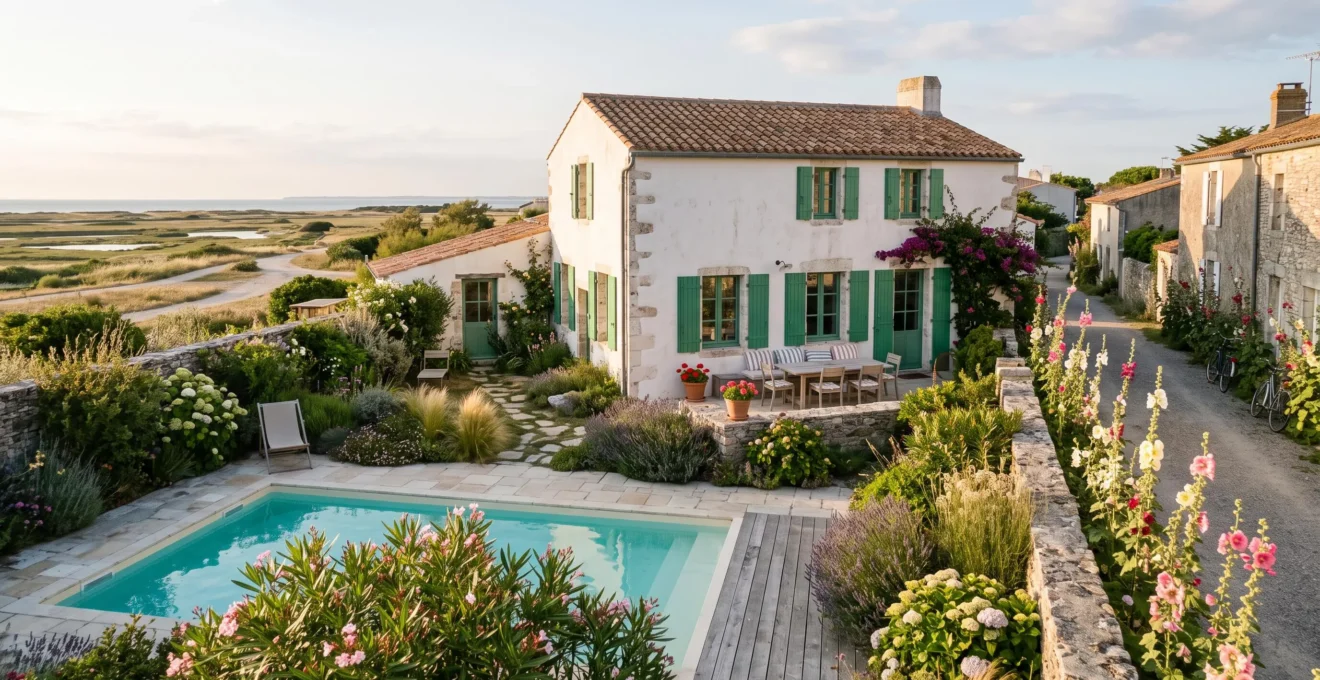
If you’re weighing up French coastal destinations for a luxury villa holiday, Île de Ré stands out for a simple, verifiable mix: a protected-feeling island environment, straightforward access from the mainland, and a villa style that often prioritises privacy and calm over “scene”. Compared with flashier luxury spots (parts of the Côte d’Azur) or surf-driven resort towns (around Biarritz), the island’s luxury is typically more understated—more about space, light, and an easy day-to-day rhythm once you’re there.
Réponse directe : Choose Île de Ré for a luxury villa stay if you want high-end comfort in a low-rise island setting where getting around is easy (especially by bike), seasonality is clear (busy summers, calmer shoulder seasons), and practical access rules—like the bridge toll—are easy to plan for.
What you should compare before booking on Île de Ré
- Setting: compact island, villages close together, nature areas (dunes, salt marshes) near residential zones.
- Villa experience: privacy, outdoor living (terraces/gardens), and “at-home” comfort over hotel-style services.
- Access: mainland bridge with seasonal toll; practical for shorter stays too.
- Seasonality: peak demand in summer; shoulder seasons can feel more exclusive.
- Getting around: bikes work well; parking and traffic can shape your daily comfort in high season.
- Why Is Île de Ré One of France’s Best Destinations for a Luxury Villa Holiday?
- What Makes Île de Ré Villas Stand Out From Other French Coastal Rentals?
- Exploring the Island: Villages, Heritage and Landscapes
- How to Plan Your Luxury Villa Stay on Île de Ré
- Key Takeaways for Your Île de Ré Villa Holiday
Why Is Île de Ré One of France’s Best Destinations for a Luxury Villa Holiday?
The island earns its reputation when you look at tangible decision criteria—not “charm” in the abstract. For a villa holiday, Île de Ré’s edge is the way preservation, access, and high-end rentals can align in one place without forcing you into a resort environment.
A luxury feel that comes from the setting, not the spectacle
On the French Atlantic coast, you’ll find luxury in very different forms: glamorous marinas, big beachfront hotels, or ultra-private countryside estates near the sea. Île de Ré tends to deliver a quieter version—low-rise villages, short distances between beaches and markets, and landscapes (notably salt marshes) that stay present in daily life rather than being “a day trip”.
That matters in a villa context because the most valuable “amenity” is often what surrounds the property: how calm the street feels, whether you can step out for a market run without getting in a car, and whether evenings stay peaceful once the day visitors leave.
Easy mainland access, with a clear cost to plan for
Unlike islands that require a flight or ferry timing, Île de Ré is reached by bridge from La Rochelle. The practical point for planning is that access includes a seasonal toll set by the local authority. The Département de la Charente-Maritime publishes the official bridge pricing; for a standard car (classe 1), it varies by season from 4€ to 16€ for an “aller-retour” (tarifs officiels du péage du pont).
A destination built around rentals—so seasonality is real
One reason you’ll see a broad rental market here is that the wider area has strong platform-based holiday rental activity. In 2024, Insee reported about 3.9 million nights in Charente-Maritime in tourist furnished rentals offered via online platforms, with a high tourism intensity (5.8 nights per inhabitant) in the département (Insee Flash Nouvelle-Aquitaine, 2024). That doesn’t “prove” luxury, but it does confirm a mature short-stay ecosystem—useful when you’re comparing with less-developed coastal zones.
Reputation check for demanding travellers : The island’s prestige doesn’t cancel peak-season pressure. If you want space and spontaneity, you’ll usually get a better experience by planning around the calendar (or shifting your expectations for July–August).
What Makes Île de Ré Villas Stand Out From Other French Coastal Rentals?
Not every “luxury villa rental Île de Ré” listing is genuinely high-end, and the island doesn’t follow one single template. Still, there are recurring, concrete traits that often differentiate Île de Ré villas from more standard coastal rentals elsewhere: architectural integration in villages, outdoor living design, and a premium placed on privacy and location rather than on flashy extras.
Typical villa features you can actually use as a checklist
When you compare listings across the French coast, focus on what changes your week in practical terms. On Île de Ré, many villas marketed as “high-end” emphasise things like enclosed gardens, multiple outdoor dining areas, and layouts designed for multi-generation stays (separate wings, independent bedrooms, or quiet work corners). Pools can be present in the market, but you should treat “private pool” as a feature to verify property-by-property rather than an island standard.
For decision-making, ask for specifics that affect comfort: shade at peak sun hours, sound insulation if you’re in a village centre, and whether the outdoor spaces feel private from neighbouring plots.
How seasonality affects availability and the “luxury” experience
Luxury is partly about time: easy restaurant bookings, less traffic, and more freedom to choose beaches and markets. Those conditions shift sharply by season on Île de Ré. For 2025, reporting based on figures from Destination Île de Ré indicates a gradual rebalancing away from the very peak summer weeks, while occupancy in furnished rentals increased year-on-year in July and August (with disparities by area and period). The key takeaway is not a guarantee of lower prices, but a planning insight: shoulder seasons can improve the “exclusive” feeling even when the island remains active.
If you need calm, don’t just search by price—search by calendar, then by location, then by villa specs.
Cas pratique
Imagine you’re choosing between a villa on the Côte d’Azur and a villa on Île de Ré for a one-week family holiday. On the Mediterranean coast, you might pay for proximity to a famous beach and spend more time driving or dealing with crowded hotspots. On Île de Ré, you might prioritise a quieter village edge, rely more on cycling for short trips, and structure days around markets, beaches, and long lunches at the villa—less nightlife, more “private home base” comfort. The “better” choice depends on whether your luxury means visibility and buzz (Mediterranean) or privacy and an easy daily rhythm (Île de Ré).
How to compare villas objectively: build a simple grid (privacy, outdoor living, walkability/bike access, parking constraints, noise exposure, beach distance, and how “village-centre” you really want to be). This avoids paying for labels and helps you match a property to your real habits.
Exploring the Island: Villages, Heritage and Landscapes
A villa holiday can flop if the destination only “works” inside the property. Île de Ré is strongest when the island outside your gate adds variety without adding logistics: villages close enough for short outings, landscapes that feel different from one side of the island to another, and heritage sites you can combine with markets or beach time.
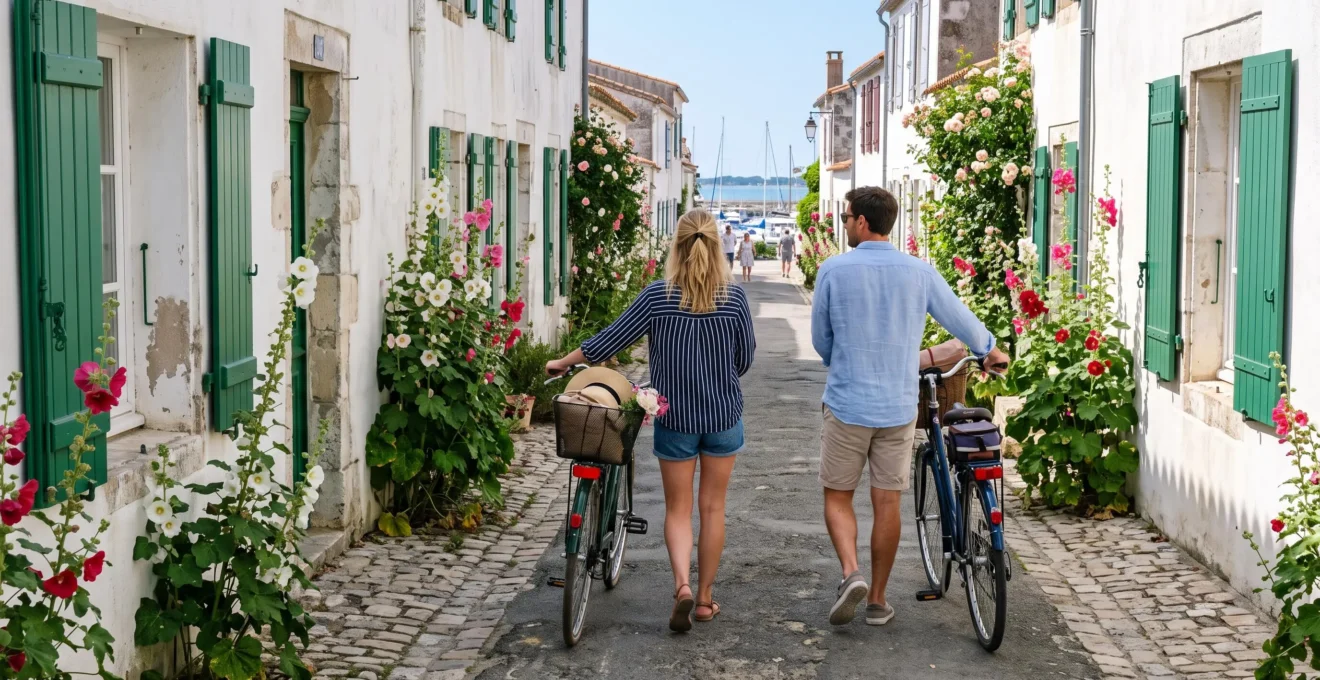
Villages that work well for “villa-style” days
Instead of thinking “best village”, think “best base for your routine”. If you like mornings out and afternoons at home, you’ll want a village with a solid market and easy access to a beach or coastal paths. If you want dinners out, check how easy it is to reach the harbour areas and whether you’ll be cycling back at night or relying on a car and parking.
The island’s villages tend to be close enough that you can sample several during one stay, which is ideal when your villa is the anchor: one outing, one signature landscape, back home for pool time or a terrace dinner.
Heritage and landscapes: what changes your itinerary
Île de Ré is not just “beaches”. The landscape mix—dunes, long flat stretches, salt marshes, and vineyards—makes it easy to vary the mood of the day without long drives. Heritage visits can fit into a half-day rhythm, which is exactly what many villa travellers want: a real visit, then back to privacy and comfort.
If you want to add more heritage-heavy stops to your wider France itinerary before or after the island, this historic sites guide can help you map a coherent route without cramming too much into the villa week.
A realistic “day plan” that suits a luxury villa stay
Example (hypothetical): cycle out for a morning market run, return to the villa for breakfast on the terrace, spend late morning on a nearby beach or coastal path, then aim for a low-effort afternoon—pool, nap, reading—before an early-evening harbour stroll and dinner. The point isn’t a packed schedule; it’s that the island makes this kind of balanced day easy.
How to Plan Your Luxury Villa Stay on Île de Ré
Planning well is what makes the island feel “effortless”. The two levers you control are when you come and how you move. Everything else—noise, parking stress, restaurant availability—often follows from those choices.
When is the best time to visit Île de Ré for a villa stay?
If your definition of luxury includes space and flexibility, consider shoulder seasons. Based on reporting of Destination Île de Ré’s figures for 2025, the share of visitors concentrated in the very peak weeks tends to decrease in favour of other periods—suggesting that travel demand is spreading out (with variations depending on month and area). That doesn’t guarantee quiet streets, but it supports a practical strategy: look beyond July–August first, then compare villa options.
If you must travel in high summer, plan as if the island is busy: book earlier, prioritise a villa layout that keeps you comfortable on-property (shade, outdoor spaces, quiet bedrooms), and choose locations where walking or cycling can replace short car trips.
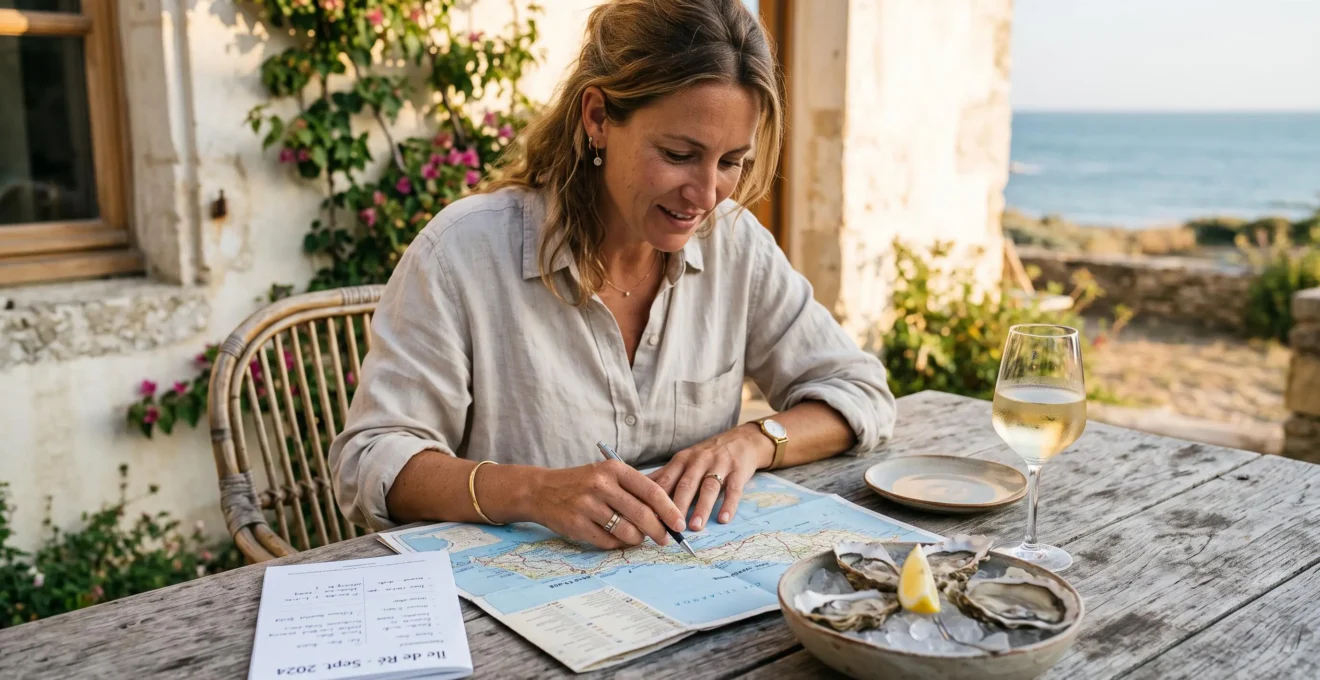
Getting there and getting around: what to decide upfront
Start with access: if you’re driving, the bridge toll is a fixed planning item and changes by season (published by the Département). Then decide how “car-dependent” you want to be once you arrive. Many travellers build their week around cycling for short trips—markets, beaches, village centres—because it can reduce parking friction and keep days feeling relaxed.
If you expect to explore mostly by car, factor that into villa selection: private parking becomes more than a convenience, and a central village location can feel less “luxury” if it also means daily parking stress.
Local constraints to verify before you book
Don’t assume rules are identical across French coastal destinations. Before you confirm a luxury villa rental on Île de Ré, verify the practical constraints that affect your stay: parking arrangements, any access limitations near your chosen area, and the local terms that apply to seasonal rentals (check-in windows, deposits, and local obligations). For anything that could affect traffic, access, or official pricing, rely on public or local-institution sources rather than listing copy.
- Pick your calendar first
Decide whether your priority is energy (high summer) or breathing room (shoulder season), then search availability accordingly.
- Choose your “movement style”
If you plan to cycle daily, choose a location that makes that enjoyable; if you’ll drive, prioritise parking and easy access.
- Shortlist by environment
Village centre, village edge, or more isolated lane: each changes noise, privacy, and convenience.
- Validate villa specifics
Confirm what matters most: outdoor privacy, shaded areas, bedroom comfort, pool details if relevant, and practical house rules.
Key Takeaways for Your Île de Ré Villa Holiday
Île de Ré is worth considering for a luxury villa holiday when you want a protected-feeling Atlantic island with easy access, a strong rental ecosystem, and the kind of day-to-day simplicity that makes a villa stay feel genuinely restorative. It’s less compelling if your idea of luxury is constant nightlife, large-scale resort infrastructure, or a destination where the “scene” is the main draw.
Your decision grid: judge the island on setting (privacy and calm), villa livability (outdoor space and layout), access (bridge cost and timing), and seasonality (how crowded you’re willing to accept). If Île de Ré scores high on those four, the reputation starts to look earned—not just inherited.
If you want to pressure-test your choice, take two villas—one on Île de Ré, one in another French coastal area you’re considering—and compare them line by line using the same criteria. That’s usually the fastest way to cut through prestige and decide with confidence.