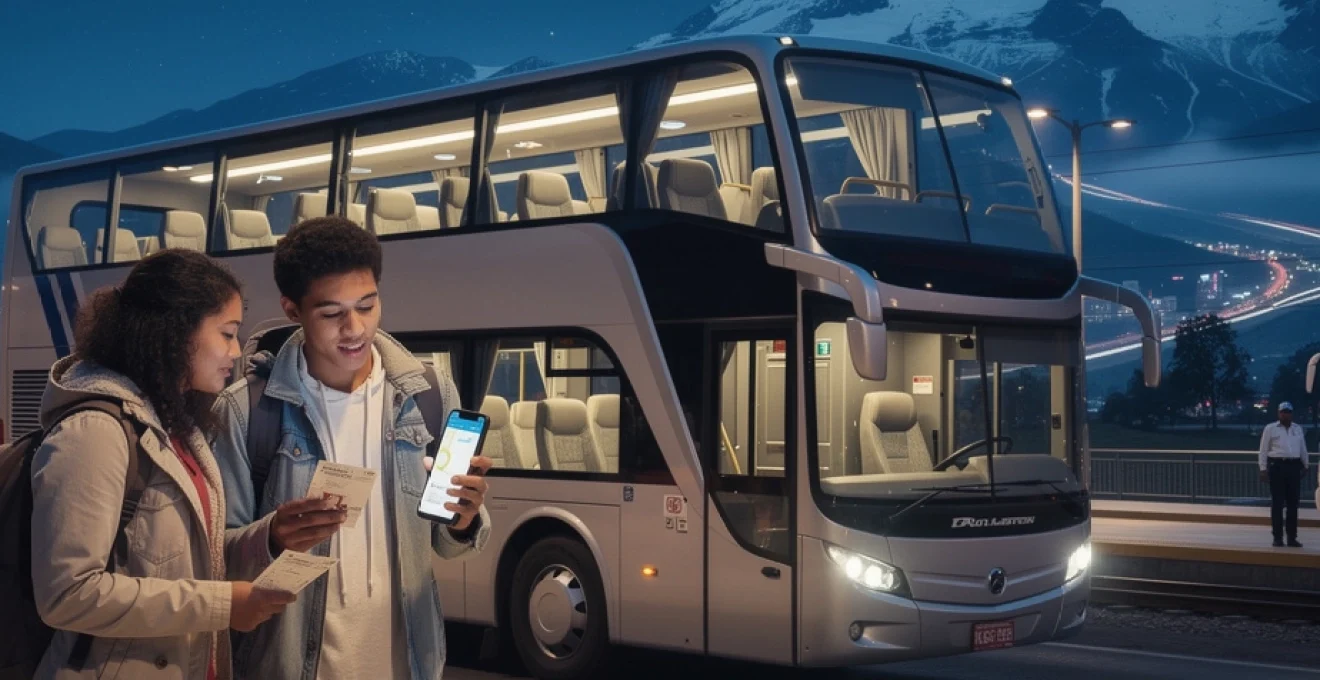
Night bus travel across South America represents one of the continent’s most efficient and economical transportation methods, connecting vast distances between major cities whilst allowing travellers to save on accommodation costs. The extensive network of overnight coach services spans from Colombia’s Caribbean coast to Argentina’s windswept Patagonian plains, offering everything from basic transport to luxurious semi-hotel experiences on wheels. Modern South American bus companies have transformed what was once a purely functional necessity into a sophisticated travel option, with some premium services rivalling airline comfort levels.
The continent’s geography presents unique challenges for overland travel, with the towering Andes Mountains creating dramatic altitude changes and diverse climate zones within single journeys. Understanding the intricacies of South American night bus travel can mean the difference between a comfortable adventure and an endurance test. From navigating complex terminal systems to managing high-altitude crossings, successful overnight bus travel requires careful planning and cultural awareness.
Essential Pre-Departure planning for south american night bus routes
Successful night bus journeys across South America begin with thorough pre-departure planning, encompassing route selection, timing considerations, and documentation requirements. The continent’s vast distances and varied terrain demand strategic thinking when plotting overland routes, particularly for travellers attempting to cover multiple countries during extended trips.
Booking strategies through RedBus and cruz del sur digital platforms
Digital booking platforms have revolutionised South American bus travel, with RedBus emerging as the dominant aggregator across multiple countries. The platform consolidates schedules from hundreds of operators, allowing travellers to compare prices, departure times, and service levels across different companies. Advanced booking becomes particularly crucial during peak season periods, when popular routes can sell out weeks in advance.
Cruz del Sur’s proprietary booking system offers direct access to Peru’s premium bus operator, featuring detailed seat maps and real-time availability updates. The platform accepts international credit cards and provides English-language support, addressing common booking challenges faced by foreign travellers. Mobile ticketing options eliminate the need for physical ticket collection, streamlining the boarding process at busy terminals.
Route analysis: buenos Aires-Santiago vs Lima-Cusco corridor comparisons
The Buenos Aires to Santiago route represents one of South America’s premier international bus corridors, featuring multiple daily departures and premium service options. This 20-hour journey crosses the Andes Mountains at the Cristo Redentor pass, reaching altitudes exceeding 3,200 metres whilst offering spectacular mountain vistas. Operators like Cata Internacional provide cama suite configurations with 180-degree reclining seats, gourmet meals, and personal entertainment systems.
Conversely, the Lima-Cusco corridor presents different challenges, with services traversing the Peruvian Highlands over 22 hours of travel time. Cruz del Sur dominates this route with frequent departures, though altitude sickness becomes a significant consideration as buses climb from sea level to over 3,400 metres elevation. The route’s popularity with tourists heading to Machu Picchu ensures year-round demand, necessitating advance reservations during peak months.
Seasonal timing considerations for andean mountain crossings
Seasonal weather patterns dramatically impact Andean crossing conditions, with winter months (June-August) bringing snow and potential road closures at high-altitude passes. The Cristo Redentor crossing between Argentina and Chile frequently experiences delays during winter storms, with buses sometimes waiting hours for road clearance. Dry season travel (May-September) generally offers more reliable schedules, though temperatures can plummet dramatically at altitude.
Rain patterns affect different regions variably, with Ecuador’s wet season extending from December through May, whilst southern routes experience peak precipitation during June and July. Planning journeys during shoulder seasons often provides optimal weather conditions whilst avoiding peak tourist crowds and inflated pricing.
Modern South American bus terminals have evolved into sophisticated transport hubs, featuring comprehensive amenities, security systems, and integrated urban transport connections.
Documentation requirements for international border crossings
International night bus journeys require specific documentation preparation, with passport validity requirements varying between countries. Most South American nations require passports valid for at least six months beyond entry dates, though tourist visa requirements differ significantly. The
most common international requirements include proof of onward travel, evidence of sufficient funds, and in some cases yellow fever vaccination certificates when crossing from endemic regions such as parts of Brazil or Colombia. For overland routes like Buenos Aires–Santiago, Lima–La Paz, or Santa Cruz–Corumbá, immigration procedures are usually completed at roadside border posts in the middle of the journey, often during the night or early morning hours.
Travellers should keep passports, entry slips, and vaccination cards in an easily accessible, waterproof pouch that stays on their person at all times. Photocopies or digital scans of key documents offer an extra layer of security in case of loss or theft, though they never replace originals at immigration. Where visa-on-arrival is not available (for example, some African or Asian nationalities entering Brazil or Chile), bus passengers must ensure that visas are obtained in advance, as drivers will not wait while you resolve documentation issues at the border.
Selecting premium bus companies and service classifications
Choosing the right operator and service class is central to a smooth night bus experience across South America. While budget services can be tempting, premium companies tend to offer better safety records, more reliable schedules, and significantly improved comfort on long journeys. Understanding the differences between common classes such as semi-cama, cama, and cama suite helps you decide where to spend and where to save.
Evaluating cama suite vs Semi-Cama configurations
South American bus classes are broadly defined by seat width and reclining angle. Semi-cama seats typically recline to around 140–150 degrees, with a moderate footrest and 2+2 configuration across the aisle. They are comfortable enough for a one-night journey on routes like Lima–Arequipa or Bogotá–Medellín, especially if you bring your own neck pillow and blanket. However, taller travellers may find legroom limited on some older fleets.
Cama and especially cama suite seats provide a noticeably more restful experience on longer or multi-night rides such as Buenos Aires–Bariloche or São Paulo–Foz do Iguaçu. In these classes, seats recline to 160–180 degrees, often in a 2+1 configuration with wider armrests, thicker padding, and individual footrests that support your full legs. If you think of semi-cama as economy class and cama suite as business class on a long-haul flight, you will have a realistic sense of the comfort difference and why spending 15–30% more can transform the journey.
Cruz del sur VIP service analysis for Peru-Chile routes
Cruz del Sur has become almost synonymous with safe and comfortable night bus travel in Peru, particularly on the Lima–Cusco, Lima–Arequipa, and Arequipa–Cusco corridors. Its VIP services feature downstairs cama or cama suite seating with around 160–180 degree recline, individual entertainment screens, onboard meals, and strict security protocols such as passenger photo registration and baggage tagging. For routes that continue south towards Tacna and Arica in Chile, these premium offerings help offset the fatigue of long border formalities and high-altitude stretches.
On Peru–Chile routes, Cruz del Sur’s higher-end buses usually include GPS tracking, speed monitoring, and two-driver systems to reduce fatigue risks on overnight legs. Security cameras in the cabin and controlled boarding procedures at terminals additionally minimise petty theft. For solo travellers and those carrying expensive photography or hiking gear, these features often justify the higher fare compared with lesser-known regional operators running similar schedules.
ANDESMAR executive class features on argentine patagonian routes
In Argentina, ANDESMAR is one of the key players on long Patagonian routes such as Buenos Aires–Mendoza, Mendoza–Bariloche, and Bariloche–El Calafate. Its Ejecutivo and Cama Suite classes are designed specifically for journeys exceeding 15 hours, where a full night’s rest on board becomes essential. Executive class services usually provide large leather seats, leg supports, and a generous recline, while Cama Suite can approach a true flat bed in a 1+2 layout downstairs.
On these Patagonian night buses, passengers can often expect airplane-style hot meals, coffee service, and occasionally wine with dinner, plus blankets and pillows included in the fare. While amenities can vary by route and season, ANDESMAR generally performs well on punctuality and equipment maintenance, important factors when you are crossing vast, sparsely populated stretches where alternative transport options are limited. If your itinerary includes multiple long legs through Patagonia, standardising on Executive or cama class on a reputable operator like ANDESMAR can make your overland journey feel much more sustainable.
Comparative safety records of major operators
Safety should be the primary filter when comparing South American night bus companies. Larger operators such as Cruz del Sur (Peru), ANDESMAR and Cata Internacional (Argentina and Chile), Expresso Brasileiro (Brazil), and Bolivariano (Colombia) usually publish fleet ages, safety certifications, and GPS monitoring policies on their websites. Independent traveller reports on forums and recent reviews on booking platforms can reveal patterns such as drivers speeding on mountain roads or passengers being allowed to stand in aisles on night routes.
When evaluating safety records, look beyond single anecdotes and focus on consistent feedback over the past two to three years. Does the company enforce seat belts? Are there two drivers on overnight journeys over eight hours? Do reviews mention routine police or highway checks, or conversely, frequent road incidents? While even top-tier companies cannot eliminate all risk, choosing a reputable, well-reviewed operator with modern coaches and clear safety policies significantly reduces the likelihood of serious issues compared with improvised local services on the same corridor.
Strategic packing for Multi-Day overland journeys
Packing for South American night buses is less about volume and more about smart organisation. You will typically check one large backpack or suitcase into the luggage hold, then keep a smaller daypack with your essentials in the cabin. Treat this daypack as your in-flight carry-on: everything you might need between departure and arrival should be within arm’s reach without you having to open the main luggage compartment.
For multi-day overland journeys, prioritise layers over bulk. Temperatures can swing from subtropical heat at lower altitudes to near-freezing conditions on Andean passes within a single night. A lightweight base layer, fleece or thin down jacket, and packable rain shell will cover most scenarios when combined with comfortable trousers or leggings. Add warm socks, a scarf or buff, and a beanie, and you are far better prepared than travellers relying solely on onboard blankets, which may or may not be provided.
Comfort and hygiene items make a disproportionate difference on long bus journeys. A compact travel pillow, eye mask, and earplugs can turn a noisy, brightly lit cabin into a private sleep cocoon, even when movies are playing at full volume. Travel-sized wet wipes, hand sanitiser, tissues or toilet paper, and a toothbrush with small toothpaste keep you feeling human at 3 a.m. in a remote bus terminal. Pack medications for motion sickness, altitude, and basic pain relief in a clearly labelled pouch, and keep any prescription drugs in original packaging in case of inspections at border crossings.
From a security standpoint, keep all valuables—including passport, bank cards, electronics, and hard drives—in the cabin with you, never in the hold or overhead bins. Many seasoned travellers place their daypack on the floor between their feet with zips facing inward, looping a strap around a leg to deter opportunistic theft. Consider splitting your cash between a money belt or hidden pocket and a small wallet for day-to-day expenses, so that if you need to pull out money quickly on the bus you are not flashing your entire budget in one go.
Navigating terminal infrastructure and urban transport connections
Major South American bus terminals function as mini-airports, with multiple levels, extensive retail areas, and integrated connections to city transport systems. Knowing how these hubs are laid out and what to expect on arrival can save you both time and stress, especially when you step off a night bus before dawn in an unfamiliar city. Planning your first and last mile transport in advance is just as important as choosing the right overnight service.
Terminal terrestre analysis: lima’s plaza norte vs retiro buenos aires
Lima’s Plaza Norte and Buenos Aires’ Retiro are two of the most important long-distance terminals on the continent, yet they offer notably different experiences. Plaza Norte, located in Lima’s northern sector, is a modern, multi-purpose complex incorporating a shopping mall, food court, and bus platforms under one roof. Security checks at entrances, CCTV coverage, and organised taxi stands contribute to a relatively controlled environment, though you should still keep a close eye on your bags in crowded waiting areas and food courts.
Retiro, by contrast, is a sprawling, older terminal adjacent to central Buenos Aires, handling dozens of companies and hundreds of daily departures across Argentina and neighbouring countries. The building can feel chaotic at peak times, with ticket offices for different companies spread across several wings and platforms. While there is a visible police presence, the sheer volume of people creates opportunities for pickpockets; therefore, keep your small bag on your lap or strapped to your front when waiting. If you are transferring between buses, allow extra time to locate your next company’s office, validate tickets if necessary, and move between platforms.
Metro integration at santiago’s terminal san borja
Santiago’s Terminal San Borja offers one of the best examples of bus–metro integration in South America, making it an efficient gateway for night bus passengers arriving from Argentina, northern Chile, or the coastal regions. The terminal connects directly to the city’s Metro system, with signage guiding you from bus platforms to ticket machines and station entrances in a matter of minutes. For travellers arriving early in the morning, this seamless access allows you to bypass more expensive taxi services and reach central neighbourhoods like Providencia or Bellavista quickly and safely.
When planning your connection, check Metro operating hours, as first trains may not run until around 5:30–6:00 a.m. depending on the line and day of the week. If your night bus arrives before public transport opens, use the time inside San Borja to organise cash at ATMs, buy a pre-loaded transport card, and grab a coffee while you wait. As with any major urban hub, avoid leaving the secure terminal area on foot with luggage while it is still dark; instead, remain inside until you can connect directly to the Metro or use registered taxis from official stands.
Security protocols at bogotá’s terminal salitre
Bogotá’s Terminal Salitre serves as Colombia’s primary intercity bus hub and has made significant investments in security and passenger services in recent years. Expect bag scanners at main entrances, visible private security, and CCTV monitoring throughout the building. Official taxi ranks with registration systems help ensure you are boarding a licensed vehicle, which is especially important when arriving late at night or in the early morning. Nonetheless, remain cautious of anyone offering unsolicited transport or trying to “help” with your bags.
Inside Terminal Salitre, use designated waiting areas near your company’s counter rather than wandering with luggage, and double-check departure boards, as last-minute gate changes are not uncommon. When buying or collecting tickets on site, keep your passport hidden until it is needed, then put it away immediately after. If your schedule allows, consider arriving a little early to familiarise yourself with the layout—food courts, bathrooms, ATMs, and departure platforms—so that when it is time to board your night bus you can move confidently rather than rushing through crowded corridors with bags swinging.
Managing High-Altitude crossings and climate variations
High-altitude night bus routes such as Lima–Cusco, La Paz–Uyuni, and Mendoza–Santiago combine long travel hours with physiological stress from rapid elevation gain. Altitude sickness (or soroche) can affect even fit travellers, causing headaches, nausea, and disturbed sleep, particularly when buses ascend quickly from near sea level to above 3,000 metres. Planning your itinerary so that you gradually gain altitude over several days—using intermediate stops like Arequipa or Salta—can significantly reduce the risk of severe symptoms.
On routes where gradual acclimatisation is not practical, you can still take steps to increase your comfort. Stay well hydrated before and during the journey, but sip water steadily rather than drinking large amounts at once to avoid frequent bathroom trips when stops are irregular. A light meal before boarding and simple, non-greasy snacks on board are easier to tolerate at altitude than heavy, rich foods. If your doctor has prescribed altitude medication such as acetazolamide, follow their guidance on when to begin taking it relative to your ascent, and store tablets in your cabin daypack for easy access.
Climate variations across South America’s night bus network can be dramatic: a single 20-hour journey might start in humid lowland heat, climb through chilly Andean passes, and descend into dry high plateaus by sunrise. Think of dressing for these routes as preparing for several microclimates in one day. Rather than one heavy coat, pack multiple light layers that you can add or remove as needed, including a breathable base layer to wick sweat, a warm mid-layer, and a windproof or waterproof outer shell. This system keeps you far more comfortable in buses where drivers frequently overuse air conditioning or heating.
Finally, remember that high-altitude roads often mean tight curves, steep drop-offs, and variable pavement quality. If you are prone to motion sickness, choose seats near the middle of the bus and on the lower deck where possible, and consider taking motion sickness tablets 30–60 minutes before departure. Keeping your eyes on the horizon during daylight hours, avoiding screens during the twistiest sections, and having ginger sweets or crackers on hand can also help settle your stomach as the bus winds through some of South America’s most spectacular mountain scenery.
Digital payment systems and currency exchange strategies
Digital payment systems have made booking night buses across South America easier than ever, but relying solely on cards can still backfire in certain regions. Major platforms and operators—such as RedBus, Cruz del Sur, and large Argentine companies—generally accept international credit and debit cards, allowing you to lock in fares and seat selections before arrival. However, smaller regional companies may still require cash payments at ticket counters, and foreign cards are sometimes declined due to local fraud controls or connectivity issues.
A balanced strategy is to use digital payments wherever possible for advance reservations, while arriving at each departure city with enough local currency to cover at least one last-minute ticket, terminal fees, food, and a taxi. ATMs are available in most big terminals but can run out of cash during weekends or holidays, and some charge high withdrawal fees. To avoid unfavourable exchange rates at unofficial kiosks, withdraw larger amounts less frequently and keep the bulk of your cash hidden, carrying only what you need for that day’s bus leg in an easily accessible but discreet wallet.
Because night bus journeys often cross borders—particularly on popular routes like Mendoza–Santiago, Tacna–Arica, or Foz do Iguaçu–Ciudad del Este—it is wise to carry a small reserve of widely accepted currencies such as US dollars or euros in clean, undamaged notes. These can serve as a backup if ATMs malfunction or your card is blocked, and they are generally easy to exchange at official casas de cambio near terminals or border posts. Just as you plan layers for temperature changes, think of your payment methods in layers too: primary cards for digital bookings, local cash for everyday expenses, and a modest emergency stash in a separate, secure location for unexpected situations.