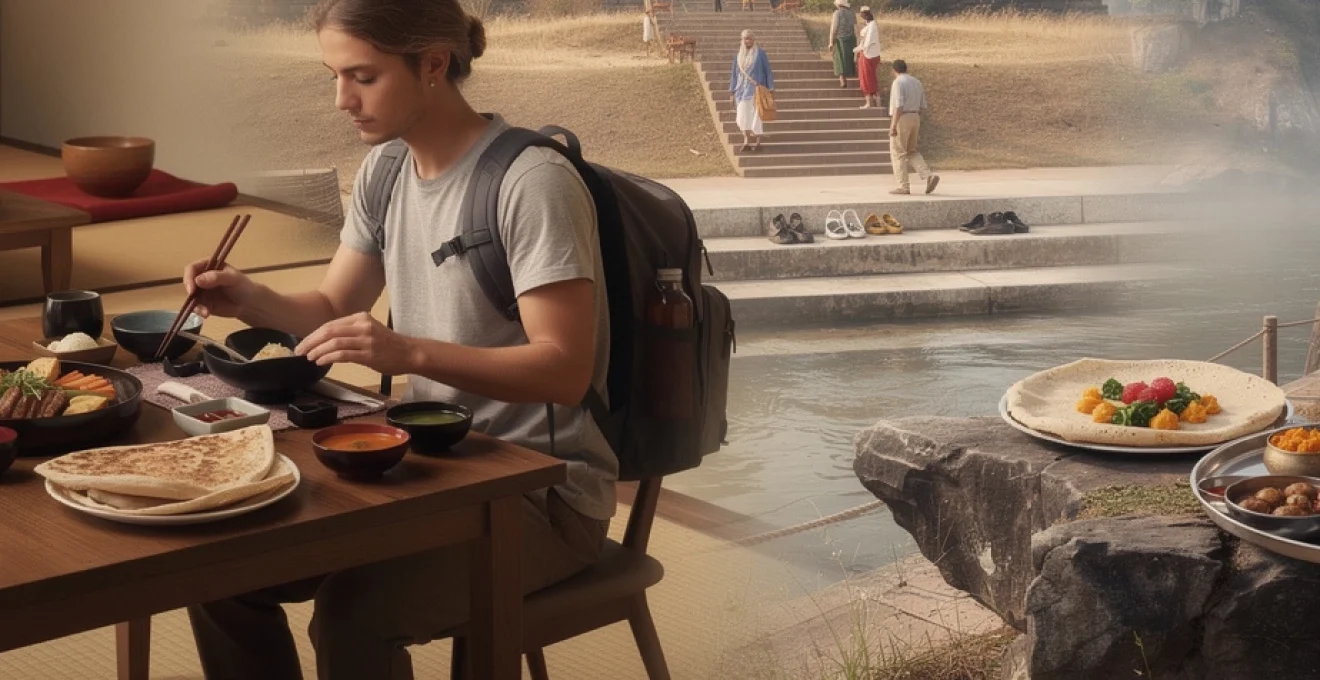
Cultural competency represents one of the most crucial yet overlooked aspects of international travel. While millions of travellers venture across borders annually, many inadvertently commit cultural blunders that could easily be avoided through proper preparation and awareness. Understanding local customs isn’t merely about politeness—it’s about demonstrating genuine respect for diverse ways of life, fostering meaningful connections, and ensuring that your presence enriches rather than disrupts the communities you visit. The difference between being perceived as a thoughtful visitor versus an insensitive tourist often lies in the small details: knowing when to remove your shoes, understanding appropriate greeting protocols, or recognising sacred spaces that require special reverence.
Pre-departure cultural intelligence research and preparation strategies
Effective cultural preparation begins months before departure, requiring systematic research that goes beyond superficial travel guides. Modern travellers have unprecedented access to cultural intelligence resources that can transform their understanding of destination societies. This preparation phase serves as the foundation for respectful cultural engagement and helps prevent potentially embarrassing or offensive situations abroad.
Ethnographic research methods using digital anthropology platforms
Digital anthropology platforms offer invaluable insights into contemporary cultural practices through real-time social media analysis and cultural trend mapping. These platforms aggregate local social media content, news sources, and cultural commentary to provide nuanced understanding of current social dynamics. Hofstede Insights remains one of the most comprehensive cultural analysis tools available, offering detailed breakdowns of national cultural dimensions including power distance, individualism, and uncertainty avoidance.
Academic databases such as JSTOR and Anthropology Plus contain peer-reviewed ethnographic studies that provide deep contextual understanding of specific cultural practices. These resources reveal the historical and social foundations underlying contemporary customs, helping travellers appreciate why certain behaviours matter to local communities. YouTube channels created by cultural anthropologists and local residents offer visual demonstrations of proper etiquette, from table manners to religious observances.
Religious calendar analysis for buddhist, islamic, and hindu destinations
Religious observances significantly impact daily life in many destinations, affecting everything from business hours to social interactions. Buddhist calendars include numerous observance days such as Vesak Day and Asalha Puja, during which alcohol sales may be prohibited and certain behaviours restricted. Understanding these cycles prevents travellers from inadvertently planning activities during inappropriate periods.
Islamic destinations observe the lunar calendar, making Ramadan dates variable each year. During this holy month, eating, drinking, or smoking in public during daylight hours demonstrates profound disrespect in Muslim-majority countries. The five daily prayer times also influence business operations and social rhythms, with many establishments closing briefly during prayer periods. Hindu festivals like Holi, Diwali, and Navaratri create unique cultural opportunities but also require specific behavioural awareness and appropriate participation protocols.
Social etiquette mapping through hofstede’s cultural dimensions framework
Hofstede’s framework provides systematic analysis of cultural values across six dimensions: power distance, individualism versus collectivism, masculinity versus femininity, uncertainty avoidance, long-term orientation, and indulgence versus restraint. Countries with high power distance, such as Malaysia and India, maintain strict hierarchical protocols where addressing authority figures requires particular formality and deference.
Collectivist societies prioritise group harmony over individual expression, meaning that direct confrontation or public disagreement may cause significant social discomfort. Understanding these underlying values helps travellers navigate complex social situations with greater sensitivity. For instance, in Japan’s highly collectivist culture, maintaining group consensus takes precedence over individual opinions, influencing everything from business meetings to casual conversations.
Language acquisition fundamentals for High-Context communication cultures
High-context cultures communicate through subtle cues, indirect language, and non-verbal signals that carry substantial meaning. Learning basic vocabulary represents just the starting point; understanding communication styles proves equally important. In Thailand, the concept of kreng jai influences how locals express disagreement or make requests, often through subtle indirection rather than explicit statements.
Arabic-speaking countries employ elaborate courtesy phrases that demonstrate respect and social awareness. Learning these formulaic expressions—beyond basic greetings—shows genuine cultural investment. Japanese keigo (honorific language) varies dramatically based on social relationships, age differences
and professional context. While mastering these nuances can take years, travellers can still make a positive impression by learning polite set phrases, paying attention to tone, and matching their level of formality to that of their hosts. In any high-context communication culture, you will gain far more by listening carefully, observing how locals speak to one another, and erring on the side of humility and respect.
Sacred site protocols and religious observance navigation
Religious and sacred sites are often the heart of local customs and traditions abroad. They are living spaces of worship, not just photogenic backdrops for social media. When you enter these environments, you step into communities’ most deeply held beliefs, which means the expectations around behaviour, dress, and photography are usually much stricter than in everyday public spaces. Understanding sacred site protocols before you arrive helps you avoid unintentional disrespect and ensures local communities remain willing to welcome visitors.
Temple entry requirements at angkor wat, borobudur, and varanasi ghats
Major temple complexes like Angkor Wat in Cambodia and Borobudur in Indonesia attract millions of visitors each year, which has led to increasingly formalised entry rules. At Angkor Wat, shoulders and knees must be covered for all genders; sarongs and scarves may be available for rent, but arriving appropriately dressed signals that you understand local expectations. Climbing on structures, posing suggestively, or shouting across courtyards is strictly prohibited, as these places remain active religious centres for local Buddhists and Hindus.
Borobudur enforces similar dress codes, and access to the higher terraces may be limited to guided tours to reduce erosion and preserve sacred reliefs. Removing hats, speaking quietly, and walking clockwise around stupas mirrors local devotional practice and shows awareness of temple etiquette. In Varanasi, the ghats along the Ganges serve as both social gathering areas and sites for cremation rituals; photographing funerary rites without permission is considered profoundly intrusive. When in doubt, ask a local guide or priest where it is appropriate to stand, watch, or take pictures.
Islamic prayer time awareness during ramadan in middle eastern destinations
In Muslim-majority countries, the daily rhythm is structured around the five daily prayers, and this rhythm intensifies during Ramadan. Shops, cafés, and government offices may close before sunset to allow staff to prepare for iftar, the meal that breaks the fast. As a visitor, planning your schedule with prayer times in mind demonstrates respect and prevents frustration when services briefly pause. Free apps and mosque timetables make it easy to check local prayer schedules for each destination city.
During Ramadan, non-Muslims are often exempt from fasting, but eating, drinking, or smoking openly in public during daylight hours can offend those observing the fast. Many airports and large hotels provide screened-off areas where travellers can discreetly eat or drink. Modest clothing becomes even more important during this month, with some destinations expecting covered shoulders and knees in most public spaces. You do not need to participate in religious rituals, but acknowledging their importance—for instance, by offering a quiet “Ramadan Kareem” to staff—signals cultural sensitivity.
Orthodox christian monastery dress codes in mount athos and meteora
Orthodox monasteries in Greece, such as those in Meteora and on Mount Athos, maintain strict entry rules that reflect centuries-old religious traditions. Many Meteora monasteries require women to wear long skirts (not trousers) and cover shoulders, while men are expected to wear long trousers and avoid sleeveless tops. Some sites provide wrap-around skirts and shawls at the entrance, but relying on these can create bottlenecks and delays; bringing your own modest clothing is more considerate and practical.
Mount Athos, one of the most traditional monastic communities in the world, restricts entry to men only, and permits must usually be arranged weeks in advance. Photography rules vary from monastery to monastery, but taking pictures of monks without explicit permission is widely frowned upon. Inside churches, speaking in hushed tones, switching phones to silent mode, and refraining from flash photography are basic ways to respect the sanctity of liturgical spaces. Treat these dress codes not as inconveniences, but as an invitation to step briefly into a different spiritual world.
Indigenous spiritual site restrictions in uluru and machu picchu regions
Indigenous sacred landscapes such as Uluru in Australia and the broader Machu Picchu region in Peru carry layered spiritual significance that predates modern tourism by centuries. For many years, visitors were allowed to climb Uluru, but after sustained requests from the Anangu traditional owners, the climb was permanently closed in 2019. Today, signage and visitor centre exhibits explain why staying off particular rock faces and respecting photography guidelines is essential. Certain sections of Uluru are designated as no-photo zones due to their sacred narratives; ignoring these restrictions undermines Indigenous authority over their own cultural heritage.
In the Machu Picchu region, including the Sacred Valley, local Quechua communities have revived traditional rituals tied to mountains, rivers, and archaeological sites. While the citadel itself is heavily regulated, with timed entries and one-way routes, respect extends beyond the ruins. You should avoid removing stones, leaving offerings without guidance from local spiritual leaders, or staging “spiritual” photos that mimic ceremonies you don’t fully understand. Engaging local guides from Indigenous communities and listening to their explanations of what is sacred—and what is not—helps ensure your visit supports cultural continuity rather than superficial spectacle.
Dining customs and culinary tradition adherence protocols
Food is one of the most direct ways you encounter local customs and traditions abroad, yet dining is also where many cultural missteps happen. Table manners, seating arrangements, and even how you accept a drink can communicate respect—or disrespect—far more loudly than you realise. By familiarising yourself with key dining etiquette in advance, you transform everyday meals into opportunities for cultural connection rather than anxiety.
Chopstick etiquette mastery for japanese kaiseki and chinese banquet settings
In East Asian cultures, chopsticks are more than utensils; they carry symbolic meanings rooted in history and religion. In Japan, formal kaiseki meals emphasise seasonality, precision, and quiet appreciation. Placing chopsticks upright in a bowl of rice evokes funerary rituals and is considered highly inappropriate. Instead, you should rest chopsticks parallel on a designated hashioki (chopstick rest) or across the edge of your plate when pausing between bites.
At Chinese banquets, chopstick etiquette also plays a prominent role in signalling respect within hierarchical seating arrangements. Using serving chopsticks—or the opposite end of your own—to take food from shared dishes is considered more hygienic and polite. Pointing at people with chopsticks, spearing food, or tapping bowls can seem childish or disrespectful. If you are unsure how to proceed when presented with unfamiliar dishes, watch what the host does first. Much like learning to drive in a new country, following local “traffic rules” with chopsticks keeps social interactions running smoothly.
Halal and kosher dietary compliance in multi-faith environments
Travelling through multi-faith regions often means navigating halal and kosher food practices, which are rooted in religious law rather than personal preference. In Muslim-majority countries, halal food preparation adheres to specific slaughter and handling regulations, and pork and alcohol are strictly avoided. Even if you do not follow these rules yourself, being mindful not to bring prohibited items into shared spaces—or to offer them as gifts—shows you recognise their importance for local communities. Many restaurants clearly label halal options, and asking staff for clarification is welcomed when done respectfully.
In Jewish communities, kosher laws govern not only which animals can be eaten, but also how meat and dairy are separated and prepared. If you are invited to a Shabbat dinner or holiday meal, it is best to avoid bringing outside food unless you have confirmed it is kosher and appropriate for the occasion. Cruise ships and international hotels often provide both halal and kosher menus, reflecting the increasing demand from global travellers. By taking a few minutes to understand these systems, you avoid accidentally pressuring hosts to compromise their beliefs and demonstrate that shared meals can accommodate everyone at the table.
Traditional tea ceremony participation in morocco, japan, and tibet
Tea rituals provide some of the clearest examples of how everyday actions become cultural art forms. In Morocco, serving mint tea is an expression of hospitality, and refusing it outright can be perceived as rejecting the host. You do not have to drink several full glasses, but accepting at least one cup and taking a few sips honours the gesture. The dramatic high pour, which aerates the tea and creates foam, is part of the tradition rather than showing off, and commenting appreciatively on the aroma or sweetness is usually well received.
Japanese tea ceremonies, by contrast, are choreographed events grounded in Zen aesthetics, where every movement is intentional. Guests are expected to bow, rotate the tea bowl before drinking, and admire the craftsmanship of the utensils. Speaking softly, silencing phones, and following the host’s cues are essential. In Tibetan regions, butter tea (po cha) has its own etiquette: your cup is often refilled constantly, and draining it completely may signal you want more. If you prefer to stop, leave a little at the bottom or gently cover the cup to indicate you have had enough. In all three contexts, your willingness to follow local patterns—rather than imposing your own coffee-shop habits—turns a simple drink into a meaningful cultural exchange.
Communal eating protocols in ethiopian injera and indian thali traditions
Communal eating traditions showcase how different cultures conceptualise sharing, hygiene, and hierarchy. In Ethiopia, meals are often served on a large round of injera, with various stews placed on top for everyone to share. Diners break pieces of injera with their right hand and use them to scoop up food, avoiding contact between fingers and the communal plate as much as possible. Feeding someone else a bite, called gursha, is a sign of affection or honour; if a host offers you gursha, accepting graciously can be a powerful gesture of connection.
In many parts of India, a thali presents multiple dishes in small bowls on a single platter, and eating with the right hand is the cultural norm, especially in traditional or rural settings. The left hand is associated with personal hygiene and should generally not be used to touch shared food or serving utensils. You might wonder: what if you are left-handed? In most cases, you can still use your dominant hand for tasks like cutting or writing, but at the table, switching to your right hand—even if awkward at first—signals a willingness to adapt. Whether in Addis Ababa or Ahmedabad, your attention to these small details shows you are not just consuming local cuisine, but also honouring the customs that surround it.
Non-verbal communication decoding and gesture sensitivity
Non-verbal communication often carries more weight than words, especially in high-context cultures where direct speech is softened by gesture, posture, and facial expression. A simple hand sign that means “OK” in one country can be an insult in another, and levels of eye contact, physical distance, and touch all vary widely across societies. Misreading these cues can lead to awkward encounters, yet with a bit of cultural research and mindful observation, you can quickly adjust your non-verbal “accent” to fit local expectations.
In parts of the Middle East and South Asia, for instance, the thumbs-up gesture or forming an “O” with your thumb and forefinger may be interpreted as vulgar rather than positive. In Japan, prolonged direct eye contact can feel aggressive, whereas in many Western cultures it signals confidence and honesty. Mediterranean and Latin American societies often stand closer in conversation and use more expressive hand movements, while Northern European cultures tend to value greater personal space and restrained gestures. As a rule of thumb, start slightly more formal and reserved, then mirror your hosts’ non-verbal style: if they step closer, relax your stance; if they keep a distance, avoid closing the gap.
Silence, too, carries cultural meaning. In Nordic countries and parts of East Asia, brief pauses in conversation are comfortable and signal thoughtfulness, whereas in the United States or the UK, people often rush to fill gaps with small talk. Crossing your legs, pointing with your feet, or revealing the soles of your shoes can be offensive in some Buddhist and Muslim-majority regions, where feet are considered the lowest and least clean part of the body. By treating non-verbal communication as another “language” you are learning—and not assuming your own body language is neutral—you greatly reduce the risk of unknowingly offending your hosts.
Gift-giving traditions and reciprocity customs across cultures
Gifts can open doors across cultures, but they can also create unintended pressure or embarrassment if you ignore local norms. In many societies, the act of giving and the context in which a gift is presented matter as much as the object itself. Understanding when a small token is expected, which items carry hidden symbolism, and how gifts should be wrapped and received helps you show appreciation without accidentally crossing social or professional boundaries.
In East Asian countries such as Japan and South Korea, presentation is paramount. Gifts are often wrapped beautifully, and it is common to politely refuse once or twice before accepting, as this ritual underscores modesty on both sides. Numbers and colours can carry symbolic weight: sets of four items are avoided in many Chinese-speaking communities because “four” resembles the word for death, whereas eight is considered auspicious. In contrast, in parts of Europe, lavish gifts in a business setting may be seen as attempts to influence or bribe, making modest, locally themed items—such as specialty foods or books from your home region—a safer choice.
Reciprocity expectations also differ. In some cultures, a host will feel obligated to reciprocate with a gift of equal or greater value, which can strain relationships if your gift is too expensive. In the Middle East, bringing sweets, dates, or high-quality nuts when visiting a home is often appreciated, but alcohol may be inappropriate in conservative households. If you are unsure what to bring, asking a local colleague for advice is far better than guessing. Just as important is how you receive gifts: use both hands where customary (for example, in many parts of Asia), express sincere gratitude, and avoid opening the gift immediately if local etiquette dictates it should be opened later.
Conflict resolution and cultural sensitivity recovery techniques
Even the most well-prepared traveller will occasionally misread a situation or unintentionally offend someone. What happens next—how you respond, apologise, and adjust—often matters more than the original mistake. Developing culturally sensitive conflict resolution skills equips you to de-escalate tension, repair relationships, and learn from missteps rather than letting them define your experience abroad.
First, recognise that emotional expression in conflict varies widely across cultures. In some Mediterranean or Latin American contexts, raised voices and animated gestures may be part of normal disagreement, not a sign that the relationship is irreparably damaged. In contrast, in East Asian or Northern European countries, overt confrontation can feel deeply uncomfortable, and people may withdraw rather than debate. If you sense you have crossed a line—perhaps through an inappropriate joke, a misused gesture, or entering a restricted area—step back, lower your voice, and offer a concise apology. A simple “I’m sorry, I didn’t know; thank you for telling me” can be surprisingly powerful around the world.
Next, let your actions demonstrate learning. If you are corrected on dress, change immediately and return with visible good humour; if asked not to photograph a ceremony, put your camera away rather than sneaking a final shot. Think of cultural mistakes as similar to mispronouncing a word in a new language: people are usually forgiving if they see you trying to improve. When situations escalate—such as disputes with taxi drivers or market vendors—seeking help from a neutral local, hotel staff, or your tour leader often leads to faster, calmer resolution than arguing directly. Most importantly, resist the temptation to generalise one difficult incident to an entire country or culture.
Finally, reflect on each challenging interaction as part of your ongoing cultural learning curve. Ask yourself: what assumption did I bring from home that didn’t fit here? How might power dynamics, history, or religion have shaped this situation? By approaching conflict as data rather than drama, you build a deeper, more flexible form of cultural intelligence that will serve you on every future trip. Respecting local customs and traditions abroad is not about being perfect; it is about being willing to observe, adapt, apologise when necessary, and keep learning as you go.