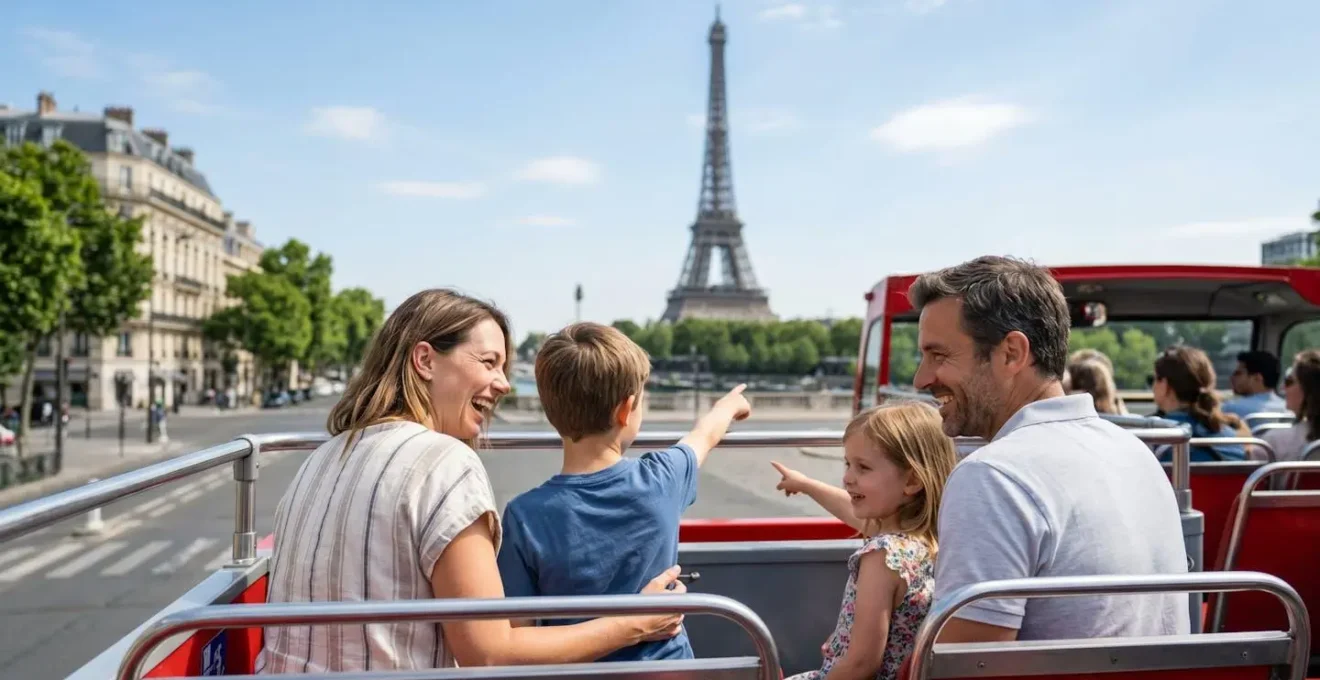
Paris with children sounds magical until you’re hauling a stroller down metro stairs for the fourth time while your 5-year-old announces she’s bored and your 8-year-old wants to know why historical monuments matter. The gap between Instagram-perfect family travel and the reality of keeping kids engaged while actually seeing the city creates stress most guidebooks ignore. Tootbus Paris addresses this challenge directly with infrastructure built around family realities rather than adult touring assumptions: dedicated children’s audio guides that treat young travelers as an audience worth engaging, hop-on hop-off flexibility that respects short attention spans, and an Emily in Paris themed experience that connects pop culture familiarity to cultural discovery. For families visiting Paris between spring break and summer 2026, understanding how this system works—and which pass duration actually matches your children’s touring capacity—determines whether you’ll spend your trip managing logistics or enjoying landmarks together.
Paris welcomed an estimated 6.4 million tourists during summer 2025 according to official tourism data, with American families representing a significant portion despite navigation challenges. The reality most travel blogs skip: managing young children through a city where many metro stations lack elevator access while trying to maintain their enthusiasm for cultural sightseeing.
The solution isn’t abandoning Paris family travel—it’s choosing infrastructure that works with children’s needs rather than against them. Here’s what you need to know to make that choice strategically.
Your 30-Second Tootbus Paris Family Decision
- Best for families with kids 4+ wanting stress-free Paris landmark overview without metro navigation hassle
- Key advantage: dedicated children’s audio guides plus Emily in Paris animation keep young travelers engaged where standard adult commentary fails
- Smart strategy: match pass length to your kids’ actual energy levels—1-day works for children under 6, consider 2-day only for ages 7-12 with stamina
- Reality check: start touring before 10 AM for optimal weather and seating, pack snacks and backup entertainment for potential waits between buses
Why Paris Sightseeing with Kids Is Different (And Why Most Parents Underestimate It)
The challenge isn’t just seeing Paris landmarks with children. The friction emerges when you’re enjoying the Eiffel Tower while managing metro transfers, decoding French signage, and explaining to your exhausted 6-year-old why stairs exist instead of elevators. What most Pinterest boards don’t show: the metro’s limited elevator access creates genuine barriers for families with strollers, and underground platforms offer zero entertainment for children whose attention spans measure in minutes.
According to official Paris Region tourism data on families, family tourists prioritize activities balancing cultural discovery with practical logistics. The city breaks leisure and discovery model works when infrastructure supports both parent relaxation and child engagement simultaneously. Paris metro requires constant vigilance: watching belongings, managing tired children through crowds, navigating transfers while consulting maps, all while missing the actual city scenery you traveled to experience. Open-top bus touring flips this by making the journey itself part of the experience.
The pop culture factor matters more than traditional guidebooks acknowledge. Research from Fordham University‘s analysis of screen tourism reveals that 1 in 10 tourists now choose Paris destinations after watching films or TV series, with 38% specifically citing “Emily in Paris” as motivation. For families with tweens and teens, this cultural connection transforms passive sightseeing into active engagement—those Parisian streets become recognizable settings from content they’ve consumed.

Before diving into how Tootbus solves these challenges, understanding the fundamental difference between hop-on hop-off touring and Paris public transit helps clarify why infrastructure choice matters for family experiences. The comparison below examines four critical criteria from a family perspective rather than generic tourist convenience.
The table below compares Tootbus and Paris Metro across four family-specific pain points: physical accessibility with strollers, strategies for keeping children engaged, navigation complexity when managing distractions, and weather protection considerations. Each criterion reflects real-world family travel challenges rather than theoretical tourism benefits.
| Transportation Option | Stroller Accessibility | Child Engagement | Navigation Complexity | Weather Protection |
|---|---|---|---|---|
| Tootbus Hop-On Hop-Off | Easy boarding, storage available on most buses | Dedicated children’s audio guides, open-top novelty, continuous landmark views | Fixed route with clear stops at major landmarks, no transfer navigation required | Lower deck fully covered; open-top experience weather-dependent |
| Paris Metro | Many stations lack elevators; carrying stroller up and down stairs common challenge | No built-in entertainment; underground environment requires constant parent narration | Requires line transfers, station navigation, map reading while managing distractions | Fully weather-protected but can become uncomfortably hot and crowded in summer months |
What Makes Tootbus Paris Actually Work for Families
The challenge isn’t just seeing Paris with kids—it’s keeping them engaged while you actually enjoy the sights instead of managing metro meltdowns and navigation stress. Tootbus Paris addresses this directly with infrastructure designed around family realities rather than adult touring assumptions. Where traditional public transportation treats children as smaller versions of adult passengers, this system recognizes that young travelers require fundamentally different engagement strategies to make sightseeing successful.
The mechanics work through integrated components. Dedicated children’s audio commentary delivers age-appropriate storytelling connecting landmarks to concepts kids understand. The Emily in Paris themed integration adds a pop culture hook for older children, transforming passive observation into active landmark recognition. The hop-on hop-off functionality maps to family energy management: board when kids are fresh, hop off when attention wanes. The Tootbus app provides real-time bus tracking reducing wait frustration—you can see exactly when the next bus arrives instead of standing indefinitely at stops with restless children.
The operational benefits reshape the family touring experience in measurable ways. Parents gain mental space to relax and absorb Paris atmosphere instead of maintaining constant vigilance over metro navigation and child safety in unfamiliar transit systems. Your family avoids the physical stress of metro stairs with strollers and platform crowds. Children stay engaged through the novelty of viewing the city from an open-top vantage point while absorbing educational content packaged as entertainment. The flexibility to adjust plans on the fly creates real stress reduction: child needs a bathroom, hop off at the next museum stop with facilities; toddler falls asleep, stay on for the full loop while they nap.
Consider a family of four—parents with children aged 5 and 9—arriving in Paris for a four-day spring break trip. Their initial plan involved using the metro to maximize budget, hitting all major landmarks across three intensive touring days.
By day one afternoon, reality hit: navigating metro stairs with their stroller exhausted the parents, the 5-year-old complained of boredom in underground stations, and the 9-year-old resisted boring museum stuff despite being at the Louvre. They’d covered three landmarks but felt drained and disconnected from the Paris experience they’d imagined.
Switching to a 2-day Tootbus pass on day two transformed their dynamic. The open-top novelty captured both children’s attention. The 9-year-old engaged with Emily in Paris audio content, spotting filming locations independently. The 5-year-old stayed entertained by changing views and kid-narrated stories. Parents relaxed knowing the next stop was minutes away, eliminating pressure to maximize every moment. They covered more landmarks with less stress.
Kid-friendly audio content: The children’s audio track delivers storytelling that connects landmarks to relatable concepts, questions that encourage kids to look for specific details, and pacing matching elementary school attention spans. Commentary averages eight to twelve minutes per stop—long enough for meaningful context, short enough that a 7-year-old doesn’t tune out. The separate kids track means your 5-year-old gets age-appropriate content while you listen to adult commentary.
Emily in Paris themed experience: The pop culture integration connects recognizable show locations to real Paris landmarks, giving older children a frame of reference that transforms another old building into the place where Emily had that scene. Best suited for ages eight to fourteen familiar with the series, this content gives tweens and teens ownership over the experience—they’re spotting locations and making connections while cultural education happens incidentally.
Routes and flexibility: The structured route system covering major landmarks eliminates navigation anxiety while hop-off freedom preserves spontaneity. You’re not locked into rigid schedules but also not paralyzed by infinite options. Buses run at fifteen to twenty minute intervals during peak season, meaning the commitment to hop off carries minimal risk—if your children decide after ten minutes they’ve seen enough, the next bus arrives shortly.
Choosing Your Tootbus Pass: Match It to Your Family’s Reality
The pass duration decision determines whether you’ll maximize value or waste money on unused days. The marketing promises flexibility, but the practical question every parent faces is: how much touring can your specific children actually handle before diminishing returns set in?
Here’s the reality most families discover too late: young children max out at three to four hours of active sightseeing before fatigue triggers behavior problems that derail the rest of your day. A 1-day pass often delivers more usable value than a 3-day pass that goes unused after your kids hit their limit on day one. The decision tree below helps you match pass duration to your actual family composition and trip structure rather than theoretical touring ambitions.
- If you’re in Paris for 2-3 days total with children under age 6:
Choose the 1-day pass. Young children max out at three to four hours; use bus for morning overview, afternoons for parks. Multi-day intensive sightseeing with toddlers typically backfires by day two.
- If you’re in Paris for 2-3 days with children ages 6-12:
Start with the 1-day pass, consider 2-day only if children demonstrate high energy. Individual stamina varies dramatically. Test the first day before committing—if enthusiastic after initial experience, add another day.
- If you’re in Paris for 4-5 days and prefer comprehensive coverage with flexibility:
The 2-day pass delivers optimal value. Use day one for full orientation, letting children identify what interests them. Day two allows selective revisits without rushing.
- If you’re in Paris for 6+ days:
Maximum 2-day pass regardless of trip length. Children benefit from varied activities; reserve remaining days for museums and neighborhoods. Multi-day touring beyond two days risks diminishing engagement and tension.
The pricing structure and pass logistics matter for budget planning, but specific current rates should be verified directly through official booking channels as seasonal pricing adjustments occur. What remains consistent: passes activate upon first use and run for consecutive days, so strategic timing matters. If you activate your 2-day pass on a Thursday afternoon, it expires Friday evening—meaning you’ve potentially wasted half a day of access. Smarter approach: plan your first boarding for early morning on day one to maximize the full window.
Making the Most of Your Tootbus Day: Practical Family Tips
The difference between a successful family tour and a frustrating one often comes down to preparation details most articles skip. You need tactical guidance on timing, weather contingencies, and expectation management—not just general encouragement to “enjoy Paris.”
Download the app and test audio functionality with your children’s devices the night before your first tour. Technical troubleshooting at 9 AM while standing at the first boarding stop with impatient kids creates avoidable stress. Verify headphone compatibility, check that audio plays clearly, and let children familiarize themselves with the interface in your hotel room where mistakes cost nothing. This investment prevents the scenario where you discover incompatibility issues after the bus departs and your kids have nothing to listen to for the next hour.
The midday heat reality for open-top buses: Paris summer temperatures on open-top bus decks can reach 85-95°F (29-35°C) between 12 PM and 4 PM with minimal shade coverage. Young children face particular vulnerability to heat exhaustion in these conditions. Strategic timing delivers better experiences: complete your primary touring by 11:30 AM, spend midday hours at indoor museum stops with air conditioning, or take extended lunch breaks. Resume evening tours after 5 PM when temperatures drop and lighting improves for photos. Alternative approach: choose the lower covered deck during peak heat hours, though views become more limited.
Snack strategy matters more than you’d expect. Tours run one and a half to two hours between stops offering convenient food access. Pack a dedicated snack bag with non-melting options: granola bars, crackers, dried fruit. Hungry children become irritable children, and Paris restaurant timing doesn’t always align with American family meal schedules. The ability to hand your 5-year-old a snack at 10:30 AM prevents the energy crash that would otherwise derail your late morning touring window. For broader family travel preparation strategies beyond Paris-specific logistics, these tips for traveling with kids cover packing, schedule management, and maintaining routines away from home.
- Download app, test audio with kids’ devices night before
- Pack sunscreen, hats, rain jackets for weather variability
- Prepare snack bag with non-melting options for gaps between stops
- Charge all devices fully for backup entertainment during waits
- Explain hop-off concept beforehand: set 2-3 stops max expectation
- Identify priority stops matching kids’ specific interests
- Plan bathroom strategy noting stops with family-friendly facilities
- Target 9:00-9:30 AM departure to beat heat and secure seating
Expectation management with children before the tour prevents disappointment during it. Explain that you’ll choose two to three stops to explore in depth rather than hopping off at every landmark. Let older children participate in selecting which stops matter most to them—this ownership increases engagement and reduces resistance. For younger children, frame the bus ride itself as the adventure rather than just transportation between destinations. The journey becomes the activity when you shift perspective from “getting to the Eiffel Tower” to “riding on top of a bus through Paris while listening to stories.”
Start by testing your children’s touring capacity on day one with a conservative 1-day pass. Their energy levels and engagement will tell you whether extending to a second day makes sense—you can always add more touring, but you can’t recover wasted money on unused pass days or undo the family tension created by pushing exhausted kids beyond their limits. With your Tootbus strategy set, round out your broader trip preparation with this comprehensive guide to planning stress-free holiday travel covering everything from packing systems to itinerary management that prevents overscheduling.