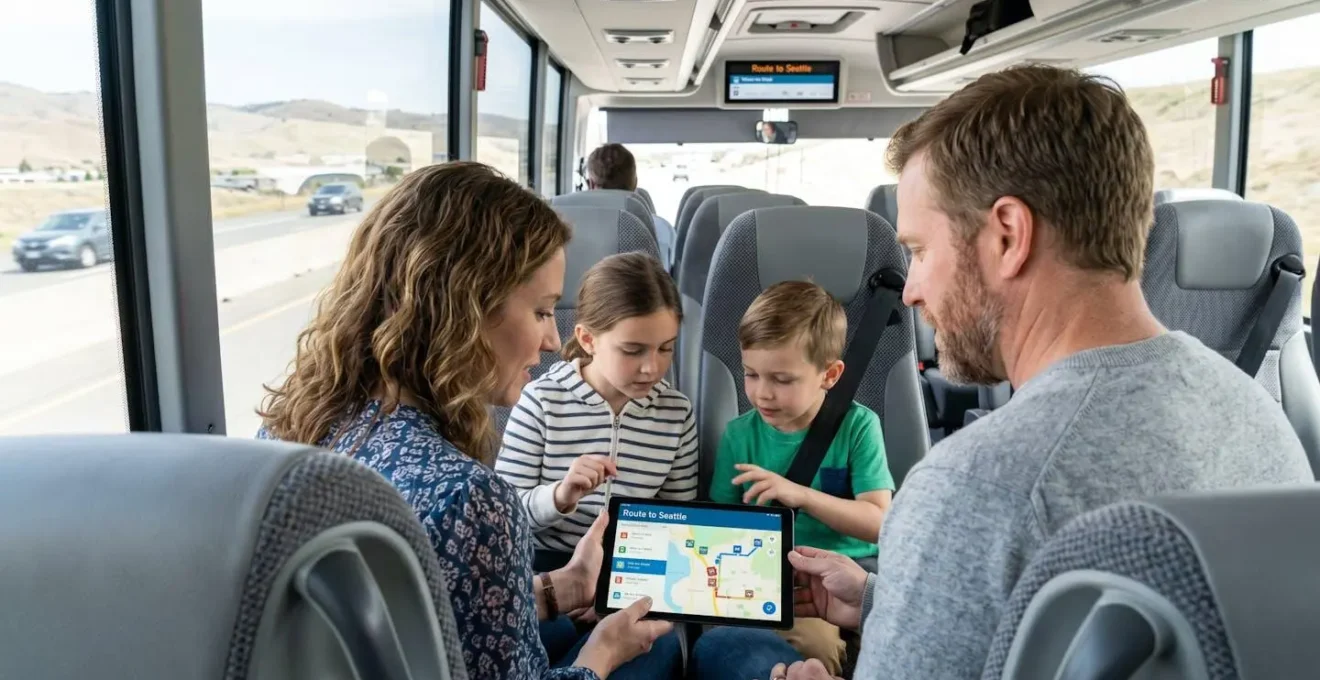
Tuscany pulls in €19 billion annually from tourism, with visitors spending an average of €1,060 per capita—the highest in Italy, according to ISTAT and Bank of Italy data on Tuscany tourism spending. Families make up 45% of travelers attending festivals and exploring Florence, Pisa, and Siena. Yet the choice between intercity bus passes, regional trains, rental cars, and organized tours can paralyze American parents planning their first trip. The advertised price rarely tells the full story when you factor in a family of four, stroller logistics, and the reality of managing tired kids across multiple cities. Tootbus and similar hop-on hop-off passes promise flexibility, but are they worth the premium over 8.90 € Trenitalia train tickets? This breakdown compares the four main options across cost, flexibility, family features, and actual on-the-ground practicality—so you can stop second-guessing and start booking with confidence.
American families planning their first Tuscany trip face a fundamental transport choice that determines whether the vacation flows smoothly or devolves into logistical stress. The region’s five most popular destinations—Florence, Pisa, Siena, Lucca, and San Gimignano—sit 30 to 90 kilometers apart, reachable via four fundamentally different systems: hop-on hop-off intercity bus passes, regional trains sold per journey, rental cars requiring navigation of restricted traffic zones, and all-inclusive organized tours with fixed schedules.
Each option optimizes for different priorities, and the “cheapest” advertised fare rarely tells the full story once you factor in a family of four, multiple trips, and the hidden friction of managing tired children across unfamiliar transit systems. The breakdown below compares these four transport models across the criteria that actually matter when traveling with kids—so you can move past paralysis-by-analysis and book with confidence.
Your 60-Second Breakdown: 4 Options at a Glance
- Tootbus Pass: Best for families wanting flexibility across 3–5 cities over multiple days, with dedicated kids’ audio content in 50+ languages and no fixed departure times.
- Trenitalia Trains: Best for tight budgets with a fixed two-city itinerary (Florence–Pisa or Florence–Siena direct), paying per journey with no frills.
- Car Rental: Best for families of five or more needing total autonomy to visit countryside vineyards and hilltop towns off the bus network.
- Organized Tours: Best for maximum convenience with zero logistics stress, but expect zero schedule flexibility and adult-focused live commentary.
What Makes a Tuscany Bus Pass Worth It for Families?
The question isn’t whether Tuscany is worth visiting with kids—it’s how to move between Florence’s Duomo, Pisa’s Leaning Tower, and Siena’s medieval squares without losing your mind or your wallet. American families face a choice between four fundamentally different transport models, each with hidden trade-offs that only surface when you’re hauling a stroller up train platform stairs or circling Florence’s restricted traffic zones hunting for legal parking.
Hop-on hop-off bus passes like Tootbus operate on multi-day validity (typically two, three, or five consecutive days), letting families board and disembark freely along set routes connecting major cities. Regional trains run on fixed schedules with per-journey pricing. Rental cars offer total freedom at the cost of navigating Italy’s notorious ZTL restricted zones and parking fees. Organized bus day tours bundle everything—transport, guide, itinerary—into a single inflexible package.
The real decision hinges on six criteria:
- Flexibility to change plans when your six-year-old melts down
- Actual cost for four people across multiple trips
- Family-friendly features like kids’ audio guides and stroller access
- Geographic coverage of must-see cities
- Educational value beyond basic transport
- Booking simplicity
Most families optimize for two or three of these, rarely all six. Budget-conscious parents with a fixed Florence-Pisa-Siena loop often default to trains. Those dreading Italian driving stress but wanting multi-city freedom gravitate toward intercity bus passes. Large families (five or more) find car rental economics improve with each additional passenger.
- How many days are you exploring Tuscany’s cities?
A) Two days or less → Trenitalia trains likely cheaper for limited routes.
B) Three to five days → Multi-day bus pass value maximized across multiple cities.
C) Six-plus days → Consider car rental if visiting countryside estates and small hilltop villages. - What’s your top priority?
A) Lowest possible cost → Trenitalia regional tickets win on price per journey.
B) Maximum flexibility to change plans → Hop-on hop-off passes eliminate rebooking stress.
C) Zero planning effort → Organized tours handle all logistics but lock you into rigid schedules. - What are your kids’ ages?
A) Under five with stroller → Confirm accessibility; buses typically easier than train platform stairs at smaller stations.
B) Six to twelve (active explorers) → Kids’ audio guides and interactive AI features become major value-adds.
C) Teens thirteen-plus → Educational depth and autonomy matter more than entertainment features.
Context matters enormously. A California family initially booking separate Trenitalia tickets for Florence, Pisa, and Siena discovered mid-trip that managing four individual reservations across five journeys became logistically nightmarish when their nine-year-old needed an unplanned bathroom stop, causing them to miss a connection. Switching to a multi-day pass mid-vacation restored flexibility but cost them the sunk train fares. Planning correctly from the start avoids this expensive lesson.
Tootbus vs Trains vs Car vs Tours: The Complete Comparison
The advertised adult fare tells you almost nothing about real family cost or practical differences. A Florence-to-Pisa train ticket shows €8.90 on Trenitalia’s site—but that’s per person, one direction, and excludes the hidden friction of validating tickets, navigating Italian station signage, and hauling luggage through unstaffed rural platforms. The following comparison uses six criteria that actually matter when traveling with children, evaluated across the four main options American families consider.
Data collected and updated February 2026 from official operator sites and neutral travel sources.
| Criteria | Tootbus Pass | Trenitalia Trains | Car Rental | Organized Tours |
|---|---|---|---|---|
| Flexibility & Freedom | Hop-on hop-off across multi-day pass, no fixed departure times, change itinerary freely | Fixed schedules, must book specific trains, missed connection = buy new ticket | Total freedom, drive anywhere anytime, full control over stops | Zero flexibility, locked into tour operator’s fixed schedule and route |
| Family Cost (4 people, 5 intercity trips, 3 days) | Multi-day family passes typically range €120-180 for 3-day passes based on market analysis (verify current pricing and family discounts on booking site, rates vary by season and pass duration) | Approximately €178 total (based on official Trenitalia Tuscany Line fare schedule: Florence–Pisa €8.90 × 4 people × 2 directions = €71.20, plus additional routes) | Estimated €450–550 total (€180–240 rental for 3 days + €60–80 fuel + €210–230 parking in Florence and Siena centers at €25–40 daily) | Typically €320–600 for family of 4 (€80–150 per person per day tour, must book multiple tours to cover 5 cities) |
| Kids Features | Dedicated children’s audio guides, Tootie AI answering questions in 50+ languages, family pass rates, stroller accessible, onboard wifi | Basic transport only, no kids’ content, stroller challenges at unstaffed rural stations with stairs | Requires child car seats (rental fee extra), full control over bathroom and snack stops | Live guide commentary (adult-focused), fixed bathroom breaks, kids often bored during transit |
| Cities Covered (base fare) | Five cities: Florence, Pisa, Siena, Lucca, San Gimignano via two thematic routes (Route Verte and Route Terracotta) | All major cities reachable, but pay separately for each individual route (Florence–Pisa, Pisa–Lucca, Florence–Siena all billed individually) | Unlimited access across entire Tuscany region, including countryside vineyards and hilltop villages | Typically two to three cities per single tour; must book multiple separate tours to cover five cities |
| Educational Value | Multilingual audio for adults and children, Tootwalk free pedestrian audio guides in cities, Tootie AI for interactive questions | None (transport only, no cultural content provided) | Self-guided (bring your own guidebooks or apps) | Live guide commentary in English, quality and kid-friendliness vary by operator and guide |
| Booking Ease | Online purchase, pass activates on first scan, real-time bus tracking via app, no fixed reservations needed | Trenitalia website or app (potential language barriers), must validate tickets before boarding, risk fines if forgotten | Requires international driver’s license, ZTL restricted zone risk (automatic fines mailed months later), parking stress in historic centers | Simple online booking, all logistics pre-arranged, least flexibility to deviate |
This breakdown reveals why price alone misleads. A family of four making five intercity trips across three days pays approximately €178 in individual Trenitalia tickets versus an estimated €450–550 for car rental when fuel and mandatory parking are included. The Tootbus pass sits between these extremes, bundling transport with educational content and flexibility that pure point-to-point tickets lack. Tours cost the most per day but eliminate all planning effort—at the expense of spontaneity when your eight-year-old wants to linger at the Leaning Tower.
Beyond choosing the right transport mode, applying general tips for traveling with kids can reduce meltdowns when navigating Tuscany’s busy train stations or adapting to unexpected route delays.
Breaking Down What Actually Matters on the Ground
Comparison tables simplify decision-making, but they can’t capture the moment your toddler’s stroller gets stuck on a narrow train platform staircase at Lucca station while your connection departs in three minutes. Real-world practicality separates theoretical savings from actual family sanity. The following criteria consistently determine whether parents remember their Tuscany trip fondly or spend it managing logistical chaos.
Flexibility & Real Cost Analysis: Advertised fares rarely account for the hidden tax of rigidity. Trenitalia’s regional tickets between Florence and Pisa cost €8.90 per person each way, making a family of four’s round trip €71.20—undeniably cheaper than multi-day passes on paper. The friction emerges when your six-year-old needs an unplanned bathroom stop, causing you to miss your booked 14:35 departure. You’re now buying four new tickets at the station for the 15:50 train, erasing your “savings” and adding stress.
Hop-on hop-off systems eliminate this penalty. Tootbus and similar multi-day passes activate on first use and remain valid for consecutive days (two, three, or five depending on purchase). Miss a bus? Catch the next one. Decide mid-morning to skip Lucca and head straight to Siena? No rebooking required. This flexibility compounds in value across multiple trips—a three-day pass covering five intercity journeys essentially self-insures against the unpredictability of traveling with children.
Car rentals promise ultimate freedom but deliver hidden costs. Parking in Florence’s historic center runs €25–40 daily, and ZTL (limited traffic zone) violations trigger automatic €80–100 fines mailed to your home address months after vacation ends. A family from suburban Chicago renting a car for three days faces roughly €180–240 rental, €60–80 fuel, and €210–230 parking if staying overnight in Florence and Siena—totaling €450–550 before factoring in potential ZTL fines they won’t discover until September.
For families planning extended stays, the official Autolinee Toscane suburban pass fare table confirms that monthly suburban passes across Tuscany start at €39.80 for 0-10 km routes and scale to €87.90 for 40-50 km distances, covering all provinces including Florence, Siena, Pisa, and Arezzo. These regional bus passes offer an alternative for families staying in one area long-term, though they lack the hop-on hop-off flexibility and educational features of intercity tourist passes.
The most common mistake families make is calculating cost per adult ticket without multiplying by four people across five to seven trips. Regional trains stay cheapest only if your itinerary is fixed, direct (no connections), and limited to two cities. Add a third city or any schedule uncertainty, and the value equation shifts toward passes or even rental cars for larger families.
Family-Friendly Features That Actually Help: Transportation with young children isn’t just about getting from Point A to Point B—it’s about keeping a nine-year-old engaged during a 90-minute ride and avoiding meltdowns when the route takes longer than promised. Features that sound like marketing fluff often become sanity-savers in practice.
Audio guides designed specifically for children transform passive transit into active learning. Tootbus provides kids’ commentary in addition to adult versions, with the Tootie AI guide answering questions in real-time across 50+ languages. When your eight-year-old asks “Why is the Leaning Tower leaning?” mid-route, an interactive AI assistant beats your vague response about “soft ground or something.” This educational layer justifies the trip as a learning experience—useful when defending vacation budgets to skeptical relatives.
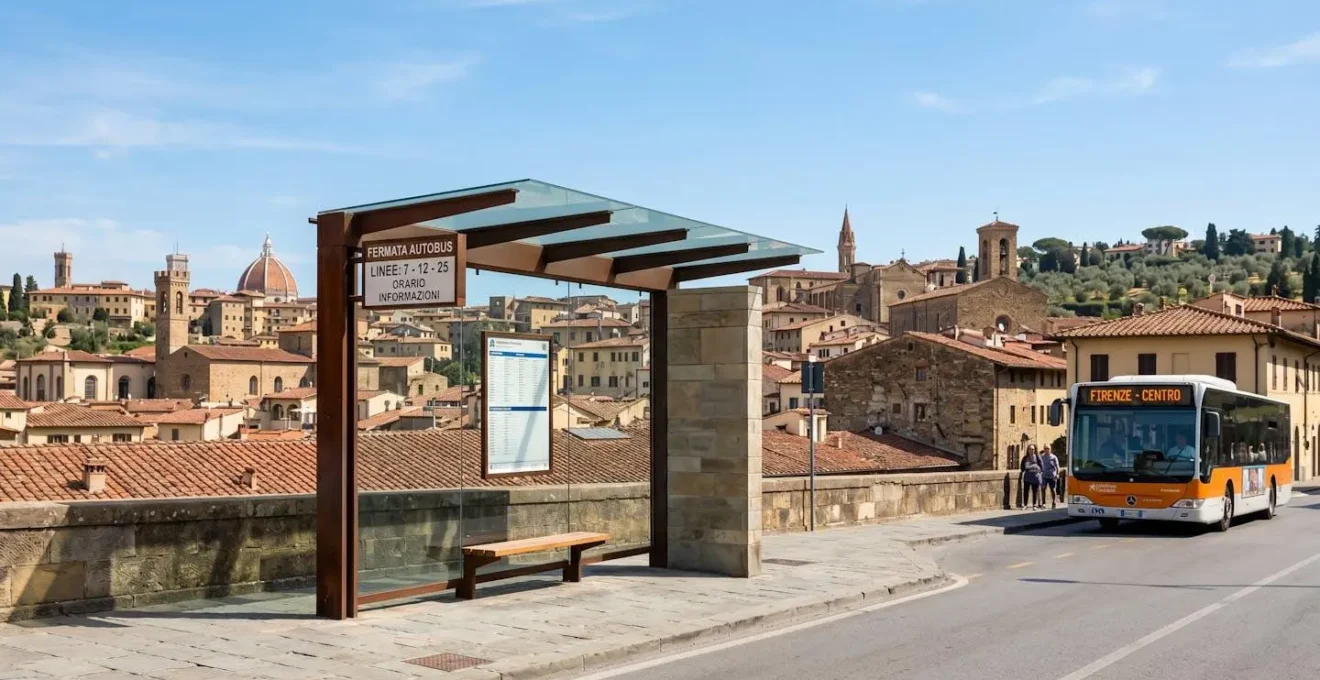
Accessibility determines whether you board smoothly or struggle publicly. Modern intercity buses typically feature low floors and dedicated stroller storage, whereas regional trains at smaller Tuscan stations often require navigating narrow staircases with no elevator access. A family traveling with a three-year-old and stroller discovered that Lucca and San Gimignano train stations lacked platform elevators, forcing them to collapse the stroller, carry luggage, and manage a tired toddler simultaneously—a scenario buses with ground-level boarding avoid entirely.
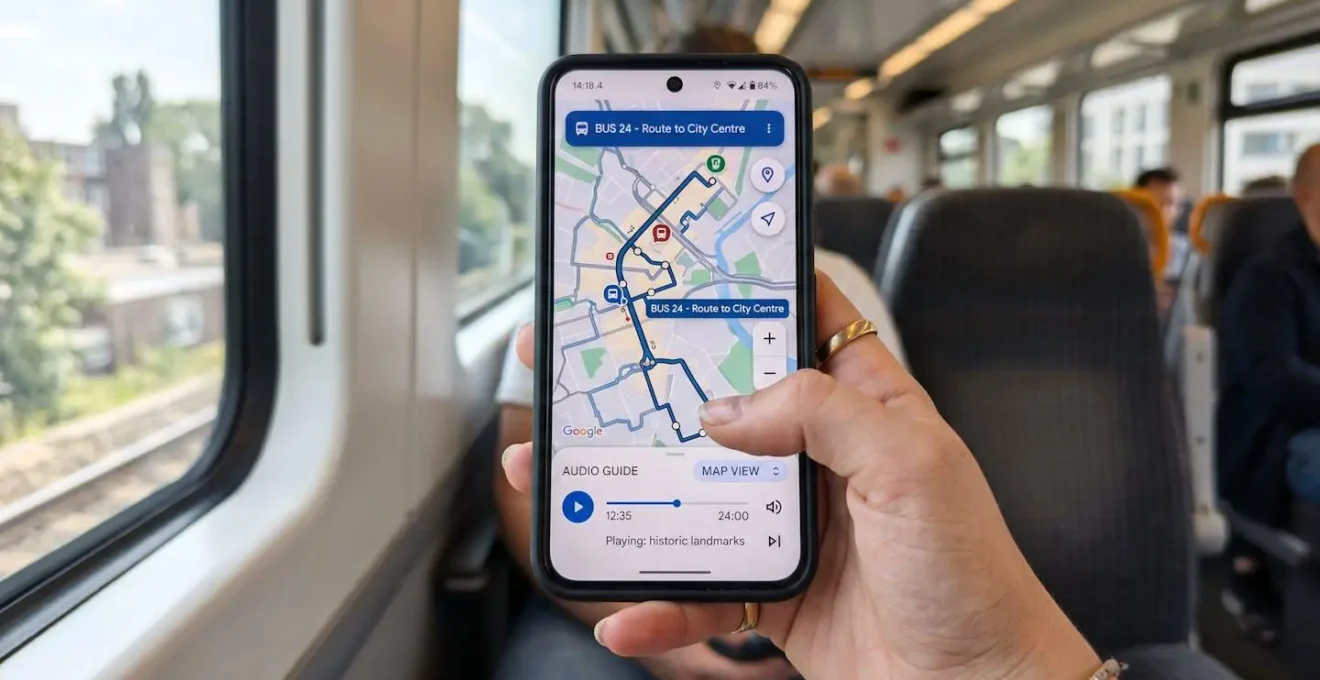
Onboard wifi and real-time tracking apps keep parents sane. Knowing the next bus arrives in twelve minutes lets you grab gelato without panic, while connectivity entertains kids during longer intercity segments. Trenitalia trains offer neither tracking apps nor guaranteed wifi on regional routes, leaving families guessing at platform signs in Italian.
Family pass pricing structures matter more than individual child discounts. Bundled four-person rates often beat buying two adult and two child tickets separately, but operators structure these differently. Always calculate the total for your specific family size rather than extrapolating from advertised adult fares.
Coverage & Logistics: Getting Where You Want: Geographic reach determines which transport option even qualifies for your itinerary. The five most popular Tuscan destinations for American families are Florence, Pisa (Leaning Tower), Siena (medieval center), Lucca (walled city), and San Gimignano (tower village). Not all systems serve all five efficiently.
Tootbus operates two thematic routes: the Route Verte connecting Florence, Pisa, and Lucca, and the Route Terracotta linking Florence, San Gimignano, and Siena. This dual-route structure covers all five key cities within a single multi-day pass. Trenitalia regional trains serve Florence, Pisa, Lucca, and Siena directly but require a bus connection to reach San Gimignano (no train station). Rental cars access everywhere, including countryside wineries and hilltop agriturismo estates that buses and trains miss entirely. Organized day tours typically bundle two to three cities per tour, forcing families to book multiple separate tours (and days) to cover five destinations.
Journey duration varies significantly by mode. Trenitalia trains run Florence to Pisa in approximately 60 minutes on regional services, while intercity buses take roughly 90 minutes but include cultural commentary during transit. Cars offer the fastest point-to-point times (Florence to Pisa in 75 minutes via highway) but add parking hunt time at destinations. Tours bundle transport and guide narration into four to six hour packages, eating most of a day.
Departure frequency matters when traveling with unpredictable children. Trenitalia runs Florence-Pisa regional trains roughly hourly throughout the day, giving families fallback options if they miss a connection. Intercity buses operate on less frequent schedules (typically every 90–120 minutes on major routes), but the hop-on hop-off model means missing one bus simply means waiting for the next without penalty. Rental cars offer unlimited “departures” at the cost of driver fatigue and parking stress.
Station and stop locations impact practical accessibility. Train stations in Florence (Santa Maria Novella) and Pisa (Centrale) sit adjacent to historic centers, while Siena’s station is a steep uphill walk or bus ride from the medieval Piazza del Campo. Bus stops for intercity services often position closer to city centers—a meaningful difference when hauling luggage and tired kids in afternoon heat.
- Unmatched flexibility: change cities or timing on the fly without rebooking fees or penalties
- Kids stay engaged: dedicated audio stories plus interactive Tootie AI in their native language
- Stress-free logistics: no driving Florence traffic, no ZTL zone fines, no parking nightmares in medieval centers
- Educational bonus: Tootwalk free pedestrian audio guides included as value-add beyond basic transport
- Family-friendly design: stroller accessible, onboard wifi, scheduled bathroom breaks at stops
- Premium pricing compared to basic train tickets if you have a completely fixed itinerary
- Bus schedules not as frequent as trains on major Florence-Pisa route (trains run hourly, buses every 90–120 minutes)
- Coverage limited to five cities; deep countryside vineyards and remote hilltop estates require rental car
- Multi-day pass value maximized at three-plus days; not economical for quick one to two day trips
Once you’ve sorted Tuscany transport, broaden your strategy with comprehensive multi-city trip planning to optimize your entire Italy itinerary beyond regional connections.
Your Best Tuscany Transport Option (By Family Profile)
No single option wins universally—the “best” choice depends entirely on your specific family profile, trip length, budget priority, and tolerance for logistical complexity. The following recommendations match transport mode to common American family scenarios based on the criteria analyzed above.
Choose Tootbus or similar multi-day bus passes if: You’re exploring three to five cities over three or more days, prioritize flexibility to adjust plans without rebooking penalties, have children aged six to twelve who benefit from engaging audio content, and value educational features beyond basic transport. This model excels for first-time Tuscany visitors wanting a structured but adaptable framework that covers Florence, Pisa, Siena, Lucca, and San Gimignano without rental car stress. The premium over train tickets pays for itself in saved rebooking fees and parental sanity when schedules inevitably shift.
Choose Trenitalia regional trains if: Your budget is extremely tight, you’ve locked in a fixed two-city itinerary (typically Florence-Pisa or Florence-Siena), you’re comfortable navigating Italian train stations and validating tickets, and you don’t need kids’ entertainment or educational content during transit. Trains deliver the lowest per-journey cost and fastest point-to-point times on major routes. The trade-off is zero flexibility—missed connections mean buying new tickets—and minimal family-friendly features beyond basic transport. Best suited for organized parents with older children (teens) who can handle rigid schedules.
Choose car rental if: You’re a family of five or more (rental economics improve with more passengers), planning to visit countryside wineries and hilltop villages inaccessible by public transport, comfortable driving in Italy with an international license, and willing to navigate ZTL restricted zones and pay premium parking fees. Cars grant total autonomy over timing and destinations but demand confident drivers unbothered by narrow medieval streets and aggressive Italian highway traffic. The total cost (rental, fuel, parking, potential fines) often exceeds bus passes for four people but becomes competitive for larger families needing two hotel rooms anyway.
Choose organized bus day tours if: You want absolute zero planning stress, don’t mind surrendering schedule flexibility entirely, prefer live English-speaking guides over audio content, and plan to visit only two to three cities total. Tours bundle transport, guide, and sometimes entry tickets into turnkey packages ideal for exhausted parents who’d rather pay extra than research routes. The rigidity becomes the feature—no decisions required—but also the limitation when your children want to linger somewhere or skip ahead.
- Trip length confirmed: If three-plus days exploring multiple cities, multi-day pass value maximized; if one to two days only, reconsider cheaper per-journey train tickets
- Priority cities listed: Verify your chosen system covers your must-sees (Florence, Pisa, Siena, Lucca, San Gimignano)—if visiting countryside estates, car required
- Family budget calculated: Price out real cost for four people across five to seven trips using the comparison table above, not just advertised adult single-journey fare
- Kids’ needs identified: If traveling with children under five and stroller, confirm accessibility details; if ages six to twelve, kids’ audio guides become major engagement value-add
- Booking window checked: Multi-day passes typically require advance online purchase; last-minute bookings may face availability constraints during peak summer months