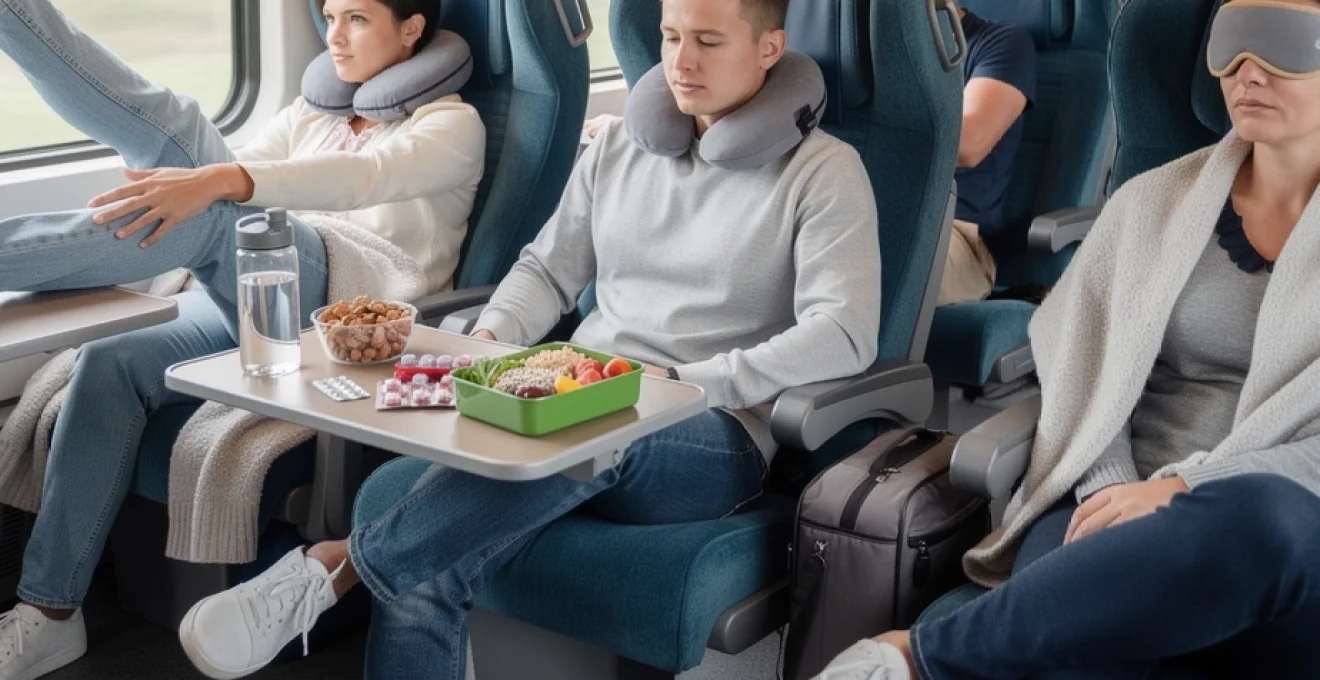
Extended rail and coach travel presents unique health challenges that millions of passengers face daily across Britain and Europe. Whether you’re embarking on a cross-country journey aboard Virgin Trains or settling in for an overnight Megabus adventure, maintaining your physical and mental wellbeing during prolonged periods of confined travel requires strategic planning and conscious effort. The sedentary nature of these journeys, combined with limited food options, restricted movement, and shared air spaces, can significantly impact your health if proper precautions aren’t taken.
Modern transport operators have made considerable improvements to passenger comfort and safety standards, yet the fundamental challenges of extended seated travel remain. Research indicates that passengers on journeys exceeding four hours face increased risks of circulation problems, dehydration, digestive issues, and disrupted sleep patterns. Understanding these risks and implementing preventive measures can transform your travel experience from an endurance test into a comfortable, health-conscious journey that leaves you refreshed rather than fatigued upon arrival.
Pre-journey health preparation and risk assessment for extended rail and coach travel
Successful health management during lengthy train or bus journeys begins well before you board your chosen transport. The foundation of comfortable travel lies in thorough preparation that addresses your individual health needs, journey duration, and potential risk factors. This preparation phase should commence at least 48 hours before departure, allowing sufficient time to implement necessary adjustments to your routine and gather essential health-supporting items.
Your pre-travel health assessment should consider several critical factors: existing medical conditions, medications that require timing precision, dietary restrictions, and any mobility limitations that might affect your journey experience. Passengers with chronic conditions such as diabetes, hypertension, or respiratory issues need particular attention to medication scheduling and symptom management during extended periods of limited movement and potentially irregular meal timing.
Deep vein thrombosis prevention protocols for passengers with sedentary travel conditions
Deep vein thrombosis (DVT) represents one of the most serious health risks associated with prolonged seated travel. This condition occurs when blood clots form in deep veins, typically in the legs, due to extended periods of immobility. The risk increases significantly during journeys exceeding four hours, particularly for passengers over 40, those with a family history of blood clots, or individuals taking hormonal medications.
Effective DVT prevention requires a multi-faceted approach combining physical movement, proper hydration, and strategic clothing choices. Compression socks rated between 15-20 mmHg provide optimal support for most travellers, promoting healthy blood circulation without causing discomfort during extended wear. These specialised socks work by applying graduated pressure that encourages blood flow back toward the heart, counteracting the gravitational pooling that occurs during prolonged sitting.
Movement protocols should include calf raises performed every 30 minutes, ankle rotations, and brief walks when possible. During bus journeys, utilise rest stops for vigorous walking and leg stretching. On trains, take advantage of the greater mobility to walk through carriages regularly, targeting at least five minutes of movement every hour.
Cardiovascular health screening considerations for journeys exceeding 8 hours
Extended journeys place additional stress on the cardiovascular system through prolonged sitting, potential dehydration, and disrupted sleep patterns. Passengers with existing heart conditions should consult their healthcare provider before embarking on journeys exceeding eight hours, particularly those involving overnight travel or multiple connections.
Blood pressure monitoring becomes particularly important during extended travel, as the combination of stress, irregular eating patterns, and limited movement can cause fluctuations in cardiovascular health markers. If you regularly monitor blood pressure at home, consider bringing a portable device for longer journeys, especially if you’re travelling across multiple time zones or experiencing significant schedule disruptions.
Medication management systems for Cross-Border travel on eurostar and national express routes
International rail and coach travel introduces additional complexity to medication management, particularly when crossing time zones or dealing with varying meal schedules. Create a detailed medication schedule that accounts for journey duration, time zone changes, and potential delays. For diabetes medications or other time-sensitive treatments, consult your healthcare provider about timing adjustments during travel days.
Prescription medications should always remain in carry-on luggage during bus travel or personal bags during train journeys. Pack medications
in their original packaging with clear labels, accompanied by printed prescriptions or a summary from your doctor. This is particularly important when travelling on Eurostar or National Express routes that cross borders, where security checks or customs officials may ask you to verify controlled substances such as strong painkillers or ADHD medications. Keep a small, clearly organised pill organiser for daily use, but always retain original boxes or blister packs as backup proof of prescription and dosage instructions.
To reduce the risk of missed doses during long train or bus journeys, set multiple alarms on your phone in both your home time zone and your destination time zone. For medications that must be taken with food, factor in likely meal times on board or at service stops when choosing your seat and planning your snacks. If you use temperature-sensitive medicines such as insulin, store them in a small insulated pouch and avoid leaving them in overhead racks where temperatures can fluctuate more dramatically.
Dietary restriction planning for limited food service scenarios
Passengers with dietary restrictions face particular challenges on long-distance coaches and trains, where catering options are often limited, high in salt, and geared toward convenience rather than nutrition. If you follow a gluten-free, vegan, low-sodium, or medically prescribed diet, assume that suitable options may be sparse or unavailable on board. Advance planning can help you avoid relying on whatever sandwiches or snacks happen to be stocked in the on-board trolley or at motorway service stations.
Research your route at least a day in advance and identify stations or scheduled rest stops where you can access supermarkets rather than fast-food outlets. Preparing your own travel-friendly meals—such as wholegrain wraps with lean protein, salads in leak-proof containers, or oat-based snack bars—gives you control over ingredients and portion sizes. For journeys exceeding eight hours, aim to pack at least one full meal and several nutrient-dense snacks that align with your dietary needs, so that an unexpected delay or cancelled catering service does not leave you without safe food choices.
Ergonomic seating solutions and postural health maintenance during transit
Maintaining healthy posture during long train or bus journeys is essential for reducing muscle fatigue, joint stiffness, and back pain. Standard coach and rail seats are designed to fit the average passenger, not your individual body proportions, which means some simple adjustments can significantly improve comfort. Think of your seat as a basic framework that you customise with small accessories and conscious positioning, rather than a fixed shape you must endure.
Poor posture during travel does more than cause a stiff neck; it can contribute to headaches, nerve irritation, and even longer-term musculoskeletal issues if repeated frequently. By approaching your seating position with the same attention you might give to an office workstation, you can minimise strain on your spine and joints. A few low-cost items—a compact lumbar cushion, a soft scarf, or a foldable footrest—can transform an ordinary seat into an ergonomically supportive base for extended journeys.
Lumbar support optimisation techniques for standard coach and train seating
The lumbar region of your spine—the natural inward curve in your lower back—often lacks adequate support in standard train and coach seats. When this curve collapses, your pelvis tilts backwards, your shoulders round forward, and your head shifts out of alignment, leading to discomfort and fatigue. To maintain proper lumbar support, adjust your position so that your hips are slightly higher than your knees, creating a gentle slope that encourages a natural curve.
If your seat does not include built-in lumbar support, create your own by placing a small travel cushion, rolled jumper, or folded scarf in the hollow of your lower back. Sit back fully so your pelvis is in contact with the backrest rather than perched on the front edge of the seat. On services such as Virgin Trains and Megabus, where seat pitch and design vary, you may need to adjust the thickness of your makeshift support until you find a position that feels sustainable for several hours without fidgeting or slumping.
Cervical spine alignment strategies using portable travel accessories
Neck strain is one of the most common complaints after a long rail or coach journey, particularly when passengers doze in awkward positions. The cervical spine is designed to support your head in a neutral alignment, but slouching, looking down at your phone, or leaning against a window without support puts extra stress on muscles and ligaments. Over time, this can manifest as tension headaches, shoulder pain, or a sensation of stiffness when you arrive at your destination.
To support cervical alignment, use a travel pillow that keeps your head from falling sharply to one side rather than simply cushioning the back of your neck. U-shaped pillows, especially those with adjustable toggles or memory foam, can stabilise your head when you sleep upright in a bus or train seat. If you prefer not to carry a dedicated pillow, a soft hoodie or scarf can be folded and placed between your shoulder and the window, allowing you to lean with support rather than letting your neck bear the full weight of your head.
Lower extremity circulation enhancement through targeted positioning
Healthy circulation in the legs depends on regular muscle contraction and unobstructed blood flow, both of which are compromised when you sit still for long periods in confined spaces. While full walking breaks are ideal, there are several ways you can optimise leg position even when aisle access is limited. Avoid crossing your legs or tucking your feet under your seat for extended periods, as these positions can compress blood vessels and increase the risk of swelling or numbness.
Instead, aim to keep both feet flat on the floor or supported on a small footrest, with your knees at roughly a 90-degree angle. If your feet do not comfortably reach the floor—common on some coach services—use a small bag, folded jacket, or collapsible footrest to create a stable platform. Periodically rock your feet from heel to toe, perform gentle ankle circles, and contract your calf muscles as if you were pressing a pedal; these micro-movements act like a manual pump to assist venous return, supporting circulation even when you cannot stand up.
Pressure point relief methods for extended sitting on virgin trains and megabus services
Prolonged pressure on the same contact points—typically your sitting bones, thighs, and lower back—can cause discomfort, pins and needles, or a dull ache during long journeys. This is similar to how standing in one spot for too long makes your feet sore: tissues are compressed and circulation is reduced. On services like Virgin Trains and Megabus, where seats may have limited padding or fixed recline, simple pressure relief strategies can markedly improve your comfort.
Shift your weight at least every 20–30 minutes by subtly adjusting your position in the seat, tilting your pelvis forward and backward, or leaning slightly to one side and then the other. If you are prone to tailbone or hip discomfort, consider a slim, inflatable seat cushion designed for travel, which redistributes pressure and adds an extra layer of padding without taking up much space. During scheduled stops, stand up fully, straighten your hips, and stretch your hip flexors and hamstrings; even two minutes of full-body extension can reset pressure points that have been compressed for hours.
Hydration science and fluid balance management in confined transport environments
Maintaining proper hydration during long-distance train and bus travel is more complex than simply drinking when you feel thirsty. Confined environments with air conditioning or heating can increase fluid loss through respiration and evaporation, even when you are sitting still. At the same time, passengers often restrict fluid intake to avoid frequent trips to the toilet, inadvertently creating a cycle of mild dehydration that contributes to headaches, fatigue, and reduced concentration.
Aim for a steady intake of water throughout your journey rather than large, infrequent drinks that strain your bladder. As a general guideline, most adults do well with 150–250 ml of water per hour of sedentary travel, adjusted for individual needs and climate. Clear or pale-yellow urine usually indicates adequate hydration, whereas dark yellow urine suggests you need more fluids. Limit caffeinated drinks such as strong tea, coffee, and energy drinks, as they can have a mild diuretic effect and exacerbate restlessness or anxiety, especially on overnight services.
Electrolyte balance is another key component of healthy hydration on long journeys. If you are travelling in hot weather, prone to sweating, or have a history of low blood pressure, consider adding an oral rehydration sachet or low-sugar electrolyte tablet to one of your water bottles. This helps maintain sodium and potassium levels, which support nerve function and muscle performance. To minimise plastic waste and keep costs down, carry a refillable bottle and top it up at stations or service stops rather than relying solely on single-use bottles purchased on board.
Nutritional strategies for sustained energy during cross-country rail journeys
Food choices during long train or bus journeys can make the difference between steady energy and mid-trip fatigue. Many on-board snacks and service-station meals are high in refined carbohydrates, salt, and saturated fat, which may provide a quick energy boost followed by a crash. For cross-country rail trips, adopting a nutritional strategy that emphasises slow-release carbohydrates, lean protein, and healthy fats will support stable blood sugar and mood.
Think of your journey as a working day in terms of meal planning: you would not typically rely on crisps and sweets from a vending machine to get you through eight hours at your desk, so aim for similar standards when travelling. Packing a mix of portable whole foods—such as nuts, seeds, fruit, and wholegrain sandwiches—helps you avoid impulsive purchases of less nutritious options when you are hungry and restricted by what is available. Eating smaller, balanced portions every three to four hours is often more comfortable than large, heavy meals that can cause bloating or drowsiness in a confined seat.
Glycaemic index optimisation for stable blood sugar on ScotRail highland routes
Long scenic journeys like those on ScotRail Highland routes can involve extended periods without access to substantial food outlets, making your initial snack choices particularly important. Focusing on low to medium glycaemic index (GI) foods helps prevent dramatic swings in blood glucose levels that lead to energy crashes and irritability. Low-GI carbohydrates release glucose more slowly into the bloodstream, providing a more sustained energy supply ideal for multi-hour travel.
Examples of suitable low to medium GI snacks include oatcakes with nut butter, hummus with carrot sticks, unsweetened yoghurt with berries, and whole fruit such as apples or pears. Combining carbohydrates with protein or healthy fats—like pairing wholegrain crackers with cheese or adding seeds to a salad—further slows absorption and enhances satiety. For passengers managing diabetes or reactive hypoglycaemia, pre-planning these lower-GI options is especially important to avoid relying on high-sugar confectionery or pastries from on-board trolleys.
Micronutrient density maximisation in portable travel meals
When luggage space is limited, every item of food you carry should work hard for you nutritionally. Prioritising micronutrient-dense options ensures that even small portions deliver meaningful amounts of vitamins and minerals that support immune function, energy metabolism, and cognitive performance. This is particularly relevant on multi-day trips or during busy travel periods when your overall diet may be less varied than at home.
Convenient choices rich in micronutrients include mixed nuts and seeds (for magnesium, vitamin E, and healthy fats), dried or fresh fruit (for vitamin C and fibre), and pre-cut raw vegetables such as peppers, cherry tomatoes, and sugar snap peas (for antioxidants and hydration). A simple grain salad made with quinoa, chickpeas, chopped vegetables, and olive oil travels well in a sealed container and provides iron, folate, and B vitamins. Think of these foods as your nutritional insurance policy during long journeys, offsetting the occasional less-healthy snack or meal choice along the way.
Digestive health maintenance through strategic food timing and composition
Digestive discomfort—bloating, gas, or cramps—is a common complaint on long journeys, often triggered by rushed eating, unfamiliar foods, or prolonged sitting after heavy meals. To support digestive health on buses and trains, prioritise lighter, fibre-rich meals and allow time to eat slowly rather than gulping food during brief stops. Chewing thoroughly reduces the workload on your stomach and can help prevent discomfort when you return to a seated position for several hours.
Consider timing your main meals for periods when you know you will be able to move around afterwards, such as during a longer station stop or shortly before boarding when you can walk through the station. Avoid very rich, greasy, or highly spiced foods immediately before boarding, as these can increase the likelihood of heartburn or indigestion when you are confined to an upright seat. If you are prone to constipation during travel, maintain your fibre intake through whole grains, fruit, and vegetables, and pair this with adequate hydration; a warm herbal tea on board can gently stimulate digestion without overstimulating your nervous system.
Respiratory health and air quality management in enclosed transport cabins
Air quality on trains and coaches varies widely depending on ventilation systems, passenger numbers, and journey length. Modern rail carriages often use filtered, recirculated air, while some buses rely more on open windows and external airflow. In both cases, close proximity to other passengers increases exposure to airborne particles, from dust and pollen to viruses and bacteria. Protecting your respiratory health involves both personal hygiene practices and intelligent use of available ventilation.
Wearing a well-fitted mask, particularly on crowded services or during peak illness seasons, reduces your risk of inhaling infectious droplets and also helps protect fellow passengers if you develop symptoms mid-journey. When possible, choose a seat away from toilets and high-traffic doors, where air may be more turbulent and contaminated. If windows can be opened safely, a modest flow of fresh air can dilute indoor pollutants; however, avoid sitting in a direct draught for hours, as this can dry out your nasal passages and throat.
Regular hand hygiene is a surprisingly powerful tool for supporting respiratory health in enclosed cabins, as many respiratory viruses spread via surfaces as well as the air. Carry an alcohol-based hand sanitiser (at least 60% alcohol) and use it after touching shared surfaces such as door handles, seat backs, or ticket machines, and always before eating. For passengers with asthma or allergies, keep inhalers and antihistamines easily accessible, not buried in luggage, and consider using a saline nasal spray to keep mucous membranes moist and better able to trap and clear inhaled particles.
Sleep hygiene protocols and circadian rhythm preservation on overnight services
Overnight train and bus journeys pose unique challenges to your sleep-wake cycle, blending elements of a hotel stay, a workday, and a moving vehicle into one experience. Poor-quality sleep during these journeys can leave you groggy and irritable on arrival, undermining the purpose of travelling overnight to maximise daytime activities. By applying basic sleep hygiene principles—many of which are used in clinical settings to treat insomnia—you can improve both the quantity and quality of rest you obtain on overnight services.
Begin by framing your overnight journey as a planned sleep opportunity rather than assuming you will “just doze off” when tired. This means structuring the hours leading up to boarding to support rest: moderating caffeine intake from mid-afternoon, avoiding very heavy meals late in the evening, and winding down from stimulating digital activities. Once on board, your goal is to create a personal micro-environment that signals “night-time” to your brain even if the cabin lights or timetable suggest otherwise.
Melatonin production optimisation during caledonian sleeper and night riviera journeys
Melatonin, often called the sleep hormone, plays a central role in regulating your circadian rhythm and preparing your body for rest. Its production is strongly influenced by light exposure: bright blue-enriched light from phones, tablets, and overhead LEDs suppresses melatonin, while dim, warm light encourages its release. On overnight trains such as the Caledonian Sleeper and Night Riviera, controlling your light environment wherever possible will help your body recognise that it is time to sleep.
About 60–90 minutes before your intended sleep time, reduce your screen use or enable blue-light filters on your devices and lower the screen brightness. If you have access to a sleeper cabin, use any available dim lighting options and consider a simple pre-sleep routine—such as reading a paper book or listening to a calm podcast—to reinforce the transition to rest. In seated accommodation, a soft eye mask is invaluable, blocking out corridor lights and fellow passengers’ screens; think of it as drawing the curtains in your moving bedroom.
Noise pollution mitigation techniques for quality rest in moving vehicles
Noise is one of the most persistent disturbances on overnight buses and trains, ranging from engine hum and track noise to announcements, conversations, and, in some countries, on-board entertainment. Continuous low-level noise can make it hard to fall asleep, while sudden loud sounds may jolt you awake just as you begin to drift off. Effective noise management is therefore a cornerstone of healthy sleep hygiene during long-distance travel.
Well-fitted foam earplugs are a lightweight and inexpensive solution that significantly reduce ambient noise without blocking important safety announcements completely. For additional comfort, some travellers prefer over-ear noise-cancelling headphones, which can play white noise, rain sounds, or gentle music to mask unpredictable sound spikes. If you are sensitive to snoring or intermittent chatter, consider downloading an offline playlist of soothing audio or a sleep-focused podcast before departure, so you are not reliant on patchy on-board Wi-Fi to access your chosen soundscape.
Temperature regulation strategies for comfortable sleep in climate-controlled cabins
Even in climate-controlled cabins, perceived temperature can fluctuate throughout an overnight journey due to variations in airflow, passenger numbers, and your own metabolic rate as you transition through sleep stages. Being too warm or too cold is a frequent reason for fragmented sleep on coaches and trains. Dressing in breathable layers allows you to fine-tune your thermal comfort much more effectively than relying on a single thick jumper or the standard on-board blanket.
Start with a moisture-wicking base layer that keeps perspiration away from your skin, then add or remove lightweight mid-layers such as a fleece or cardigan as needed. Keep a spare pair of socks accessible; warm feet can make a surprising difference to overall comfort when the cabin air feels cool. If you tend to feel chilly, a compact travel blanket or large scarf can provide extra insulation without adding much bulk to your luggage, while those who overheat easily should position air vents so that cool air circulates near, but not directly onto, their face and neck.