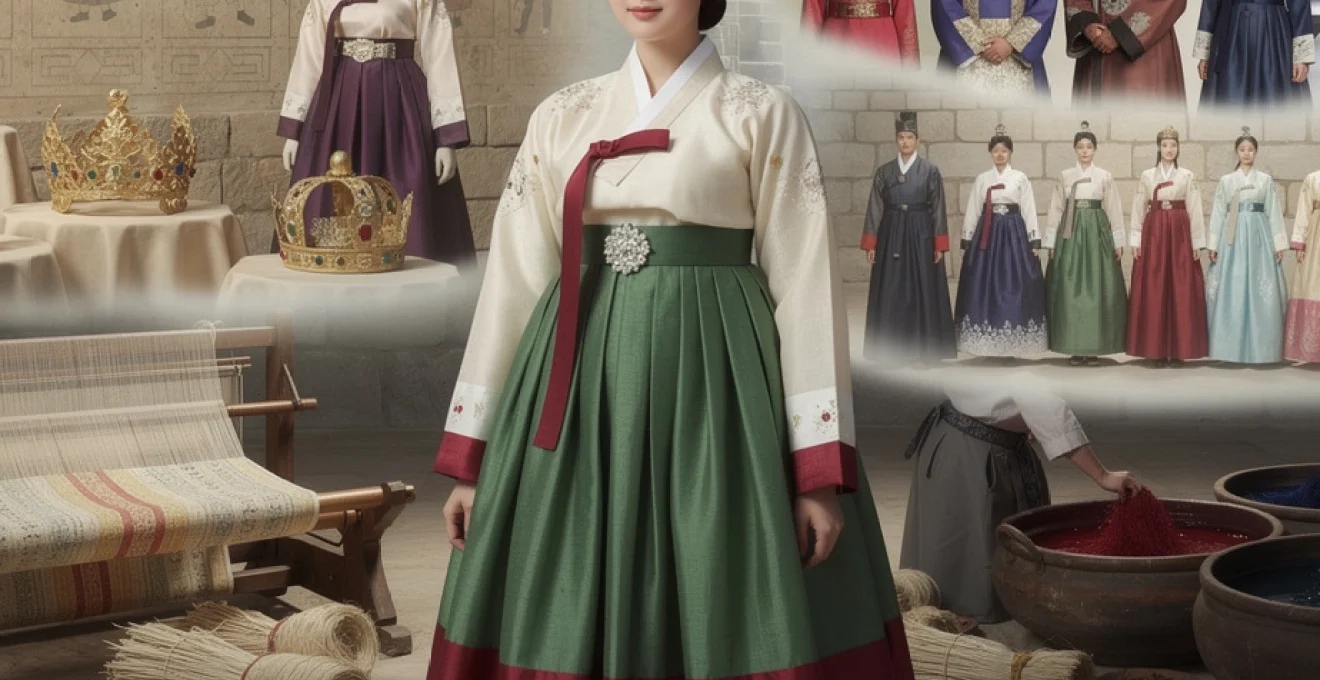
Korean hanbok represents one of the world’s most enduring and elegant traditional clothing systems, embodying centuries of cultural refinement, social hierarchy, and artistic expression. This distinctive garment, with its flowing lines and vibrant colours, has transcended its origins as everyday wear to become a powerful symbol of Korean identity and heritage. From the ancient kingdoms of Goguryeo, Baekje, and Silla to the modern revival spearheaded by contemporary designers, hanbok has continuously evolved while maintaining its essential character and cultural significance.
The term ‘hanbok’ literally translates to ‘Korean clothes’, yet this simple definition barely captures the garment’s profound impact on Korean society and its role in preserving cultural traditions across generations. Today, as Korean culture gains global recognition through the Korean Wave, hanbok has experienced a remarkable renaissance, inspiring fashion designers worldwide and finding new relevance in contemporary settings while honouring its traditional roots.
Origins and archaeological evidence of hanbok during the three kingdoms period
The earliest evidence of hanbok can be traced back to the Three Kingdoms period, spanning from approximately 57 BC to 668 AD. Archaeological discoveries and historical records from this era reveal a sophisticated understanding of textile production and garment construction that would form the foundation of Korean traditional dress for millennia to come.
Goguryeo tomb murals and early hanbok depictions in anak tomb no. 3
The tomb murals of Goguryeo provide the most vivid archaeological evidence of early hanbok styles. Anak Tomb No. 3, dating from the 4th century AD, contains remarkable wall paintings depicting figures wearing recognisably proto-hanbok garments. These murals show individuals dressed in jeogori (upper garments) and flowing lower garments, with the characteristic left-over-right closure that would become a defining feature of Korean traditional dress. The artistic quality of these depictions suggests that clothing was already considered an important marker of social status and cultural identity during this period.
Archaeological analysis of textile fragments found in Goguryeo tombs reveals sophisticated weaving techniques and the use of silk, hemp, and ramie fibres. The discovery of bronze belt ornaments and fabric remnants indicates that even common citizens had access to well-constructed garments, though the quality and decoration varied significantly according to social rank.
Baekje Gilt-Bronze crown ornaments and noble dress codes
The Baekje kingdom developed particularly elaborate dress codes for its nobility, as evidenced by the magnificent gilt-bronze crown ornaments discovered in royal tombs. These archaeological finds demonstrate that Baekje craftsmen had mastered complex metalworking techniques to create decorative elements for high-status garments. Historical records indicate that Baekje royalty wore violet garments with wide sleeves, complemented by blue silk trousers and elaborate accessories that proclaimed their elevated position in society.
The Baekje approach to hanbok emphasised flowing lines and generous proportions, with both men and women wearing looser-fitting garments that allowed for graceful movement. This aesthetic preference would influence Korean fashion sensibilities for centuries, establishing the foundation for hanbok’s characteristic emphasis on natural body lines rather than form-fitting silhouettes.
Silla gold crown textiles and ceremonial garment hierarchies
The Silla kingdom’s contributions to early hanbok development are perhaps most evident in the elaborate ceremonial garments associated with their famous gold crowns. Archaeological evidence from Silla tombs reveals a highly stratified society where clothing served as a clear indicator of rank and role within the kingdom’s complex hierarchy. The discovery of preserved textile fragments alongside gold and jade ornaments suggests that ceremonial hanbok incorporated precious materials and intricate decorative techniques.
Silla’s unique position as the eventual unifier of the Korean peninsula meant that their clothing traditions would have significant influence on subsequent Korean fashion development. The kingdom’s emphasis on ceremonial dress and symbolic ornamentation established precedents for the elaborate court hanbok that would characterise later dynasties.
Chinese historical records and tang dynasty influence on korean dress
Chinese historical chronicles from the Tang Dynasty period provide valuable external perspectives on early Korean clothing traditions. These records describe Korean
envoys as impeccably dressed, noting the use of wrapped jackets, layered skirts, and wide trousers that echoed but did not simply copy Chinese fashion. During the Unified Silla period, close diplomatic ties with the Tang court led to the adoption of certain Tang-inspired elements, such as longer outer robes, ornate belts, and more formalised court uniforms for officials. Yet even as these influences entered the peninsula, core hanbok features remained distinct: garments were still cut flat, wrapped left over right, and designed to accommodate Korea’s climate and seated floor culture. In this way, early hanbok emerged through a dialogue with neighbouring powers while retaining a clearly Korean identity.
Structural components and technical construction methods of traditional hanbok
To understand the history and meaning of Korean hanbok, we also need to understand how it is built. Traditional hanbok is not just “a dress” or “a robe” but a carefully engineered clothing system, refined over centuries for comfort, symbolism, and beauty. Each component—the jeogori, chima, baji, and durumagi—is constructed using specific cutting and sewing techniques that distinguish hanbok from Western tailored garments. While Western fashion often starts with three-dimensional draping on a mannequin, hanbok is designed almost like architectural plans, drafted and sewn on a flat surface.
Jeogori upper garment architecture and seam construction techniques
The jeogori, the upper garment worn by all genders, is the structural core of traditional Korean clothing. Its pattern is composed of straight lines and right angles—body panels, sleeves, side gores, and collar bands—that are joined to create gentle curves when worn. Most historical hanbok feature the characteristic left-over-right front closure secured by a fabric tie called goreum, with an additional inner tie to keep the layers flat against the torso. This method avoids bulky buttons or metal fastenings and preserves the clean, continuous line of the garment.
Seam construction in a traditional jeogori is highly economical with fabric. Narrow seam allowances and straight cuts maximise the use of woven cloth, a crucial consideration when silk and high-quality ramie were expensive luxury materials. Artisans used fine hand-stitches such as the hidden slip stitch and small backstitch to create secure but nearly invisible seams, ensuring durability without disturbing the garment’s elegant surface. The underarm gusset, known as mit-jori, allowed for freedom of movement despite the relatively fitted armhole, an ingenious solution that shows how engineering and comfort were always considered together.
Chima skirt pleating systems and waistband assembly methods
The women’s chima, or skirt, may look simple at first glance, but its volume and graceful drape are the result of careful planning. Traditional chima are usually made from wide rectangular panels that are gathered, pleated, or folded into a waistband. In earlier periods, skirts were often narrower and worn lower on the waist, but by the Joseon dynasty, high-waisted chima created the iconic bell-shaped silhouette that many people associate with hanbok today. This high waist visually lengthened the wearer’s legs while emphasising modesty by obscuring the body’s contours.
There are several traditional pleating systems used in chima construction. Knife pleats, box pleats, and finely gathered sections are distributed to balance fullness around the body while keeping the front relatively smooth for a clean line. The waistband, or heoritti, often features long ties that wrap around the torso and knot at the front or side, providing adjustability for different body sizes and allowing the same garment to be worn over many years. Because the skirt panels remain mostly uncut, a chima can also be altered or reused, illustrating how sustainability and practicality were woven into hanbok design long before modern fashion talked about circularity.
Durumagi overcoat engineering and seasonal fabric applications
The durumagi is a traditional overcoat worn over the basic hanbok ensemble, functioning as both a practical outer layer and a status marker. Structurally, it resembles an elongated jeogori with added skirt panels and side slits, allowing the wearer to walk and sit comfortably while maintaining a dignified silhouette. The front panels overlap generously, wrapped left over right and fastened with ties or, in later periods, decorative toggles. The straight-cut sleeves and simple neckline create a calm, vertical line that complements the more voluminous garments underneath.
Seasonal variations in durumagi construction reveal how carefully hanbok responds to Korea’s distinct climate. Summer durumagi were typically made from loosely woven ramie or thin hemp, allowing maximum breathability during humid months. Winter coats used lined or quilted cotton, wool, or padded silk to provide insulation, sometimes with an additional inner layer known as sok-durumagi for extra warmth. By switching fabrics and linings while preserving the same essential pattern, Korean tailors ensured that the same basic garment architecture could be adapted year-round, making hanbok a genuinely functional clothing system.
Traditional korean textile weaving patterns and ramie fiber processing
Behind every hanbok is a complex process of fibre preparation and weaving, particularly evident in the use of ramie, known in Korea as mosi. Ramie fibres are extracted from the bark of the ramie plant, then painstakingly split, scraped, and twisted by hand into fine threads. In regions such as Hansan, this work became a highly specialised craft, and Hansan mosi weaving is now recognised by UNESCO as an Intangible Cultural Heritage for its technical and cultural importance. The resulting fabric is lightweight, cool, and slightly lustrous, ideal for summer hanbok and ceremonial garments.
Traditional weaving patterns ranged from simple plain weaves to complex gauzes and damasks. Weavers used narrow looms that produced long strips of cloth, which were then joined invisibly to create wider panels for jeogori, chima, and durumagi. Subtle variations in weave density and pattern signalled the intended use of the textile: open, airy weaves for underlayers and summer wear; tighter, heavier weaves for outer garments and winter clothing. For elite hanbok, silk was woven into brocades featuring auspicious motifs—clouds, cranes, or lotus flowers—turning the fabric itself into a symbolic text that could be “read” by informed observers.
Natural dyeing techniques using safflower and indigo pigmentation
Colour has always been central to the history and meaning of Korean hanbok, and for most of that history, colours came from natural dyes. Safflower (honghwa) and indigo (jjok) were two of the most important sources of red and blue, which together form the classic red-and-blue combinations often seen in bridal hanbok and ceremonial attire. Safflower petals were fermented and processed to yield a spectrum from soft pink to deep crimson, while indigo leaves were composted and fermented to create dye vats capable of producing rich blues that developed in intensity with repeated dipping.
These natural dyeing techniques required patience and intimate knowledge of local water, climate, and plant materials—no two batches were ever exactly the same. Dyers managed complex chemical reactions using only organic ingredients, adjusting pH and temperature through experience rather than modern instruments. Because natural dyes bond differently to fibres than synthetic dyes, traditionally dyed hanbok often acquire a soft, lived-in patina over time, much like a cherished leather-bound book. For you as a modern wearer or collector, understanding these dyeing traditions can help you distinguish between mass-produced costumes and artisanal hanbok rooted in historical practice.
Confucian philosophy and social stratification through hanbok design
From the Joseon dynasty onward, Confucian philosophy profoundly shaped the design, colour, and use of hanbok. Clothing was not simply a matter of taste; it was a visual language that expressed one’s role within the family and the state. Neo-Confucian scholars argued that social harmony depended on everyone knowing, and showing, their proper place, and hanbok became a key tool for communicating gender, age, marital status, and class at a glance. When you look at a historical hanbok, you are seeing Confucian ethics quite literally stitched into fabric.
For example, everyday hanbok for commoners tended toward white or muted tones, reflecting ideals of simplicity, humility, and frugality. In contrast, members of the royal court and high officials wore garments in vivid reds, blues, and violets, with embroidered emblems identifying their rank—dragons for the king, phoenixes for the queen, and square animal badges for civil and military officials. Women’s hanbok also encoded Confucian gender expectations: long, voluminous skirts and relatively small jeogori concealed the body’s shape, signalling modesty and domestic virtue. Even hairstyles and accessories, such as the binyeo hairpin or specific hats, were regulated to reflect marital status and position.
These Confucian dress codes could be restrictive, but they also provided continuity and a sense of shared order during times of change. Interestingly, the same colour white that elites once associated with low status later became a symbol of resistance and national identity, especially during Japanese colonial rule when white hanbok were banned. This shift reminds us that while Confucian hierarchy used hanbok to reinforce social divisions, ordinary Koreans could also use the same clothing language to express solidarity and quiet defiance. Today, when designers play with these historical codes—mixing courtly colours with simple silhouettes, for instance—they are not only creating fashion but also reinterpreting centuries of social meaning.
Regional variations and dynastic evolution from goryeo to joseon
As Korean hanbok evolved from the Goryeo to the Joseon dynasty, it absorbed foreign influences and responded to internal reforms, all while developing subtle regional differences. If we think of hanbok as a living language, then each dynasty and province added its own accent and vocabulary. Understanding these shifts helps you see why a 14th-century court robe looks so different from a 19th-century wedding hanbok, even though both are recognisably Korean.
Goryeo dynasty mongolian influence and yuan court fashion integration
During the Goryeo dynasty (918–1392), repeated contact and conflict with the Mongol-led Yuan dynasty left a clear imprint on Korean dress. As Goryeo became a vassal state, royal marriages and diplomatic exchanges brought Mongolian styles into the Korean court. Women’s chima became shorter and more practical, while the jeogori gained a more fitted, structured look, echoing the tailored bodices popular among Mongol nobility. Long ribbons attached to the jeogori and curved sleeves appeared, softening the line of the arm while still reflecting foreign aesthetics.
Men’s clothing also absorbed elements from Yuan court fashion, particularly in official uniforms and riding garments. Trousers for horseback riding became roomier and more functional, and outer robes sometimes adopted Mongol-inspired collars and closures. Yet Goryeo artisans did not simply copy Yuan garments; they filtered these influences through existing Korean tastes for flowing silhouettes and layered outfits. The result was a hybrid style where Mongol practicality met Goryeo elegance, setting the stage for the more codified hanbok of the Joseon era.
Early joseon sumptuary laws and fabric restriction codifications
With the founding of the Joseon dynasty in 1392, rulers sought to distinguish their new order from Goryeo by tightening social discipline, and clothing regulation became a powerful tool. Early Joseon governments issued extensive sumptuary laws that dictated who could wear which fabrics, colours, and decorative motifs. Silk brocades, golden embroidery, and certain vibrant hues were reserved for royalty and the highest officials, while commoners were officially instructed to wear more subdued materials such as cotton or plain hemp. These laws aimed to prevent “excessive luxury” and reinforce Confucian ideals of modesty and thrift.
In practice, enforcement varied, and people often found ways to bend the rules, especially during weddings and festivals when brighter, more elaborate hanbok were socially tolerated. Still, the codification of dress had lasting effects on hanbok design. Court garments became increasingly standardised, with detailed regulations specifying sleeve width, skirt length, and even the number of embroidered dragons on a king’s robe. For you as a modern observer, these rules help explain why Joseon court hanbok looks so uniform in paintings and dramas—its appearance was literally written into law.
Late joseon period silhouette changes and western contact impact
By the late Joseon period (18th–19th centuries), internal social changes and external pressures began to reshape hanbok silhouettes. Women’s jeogori became noticeably shorter and more fitted, sometimes ending just below the bust, which in turn pushed the chima waistband higher to maintain coverage. This transformation created the extremely high-waisted, full-skirted look that many people today immediately associate with traditional Korean hanbok. It is a striking example of how a few pattern adjustments can dramatically change the perceived balance of a garment.
At the same time, Korea’s gradual opening to the West in the late 19th century introduced new materials, accessories, and ideas about fashion. The durumagi and other outer garments, once reserved for elites, became more widely worn as social distinctions softened through the Gabo Reform of the 1890s. Western-style jackets, shoes, and even hats began to appear alongside hanbok, creating hybrid outfits particularly among urban intellectuals and reformers. The abolition of the traditional male topknot (sangtu) in 1895 symbolised the break with old customs, and many men adopted short hair and Western suits, accelerating hanbok’s shift from daily wear to mainly ceremonial clothing.
Regional provincial styles from jeolla to gyeongsang provinces
Beyond dynastic trends, regional differences also contributed to the diversity of hanbok styles. Provinces such as Jeolla, Gyeongsang, and Gangwon developed distinct preferences in colour, fabric weight, and ornamentation, influenced by local climate, economy, and cultural traditions. In the warmer southern regions like Jeolla, lighter fabrics and brighter colours were popular, especially for festive hanbok. In contrast, colder northern and mountainous areas often favoured heavier weaves and layered garments, with more subdued palettes suited to harsher winters.
Folk costumes worn by farmers, fishermen, and artisans showed even more variation. Some coastal communities used persimmon-dyed cotton that resisted moisture and wear, while inland villages were known for specific embroidery styles or patterns of saekdong (multicoloured stripes) on children’s sleeves. These local signatures functioned almost like regional dialects within the broader “language” of hanbok. When you see modern designers referencing Jeolla or Gyeongsang styles, they are often drawing on these subtle differences in colour tone, fabric choice, and detailing that once allowed Koreans to recognise a person’s hometown at a glance.
Contemporary hanbok revival and modern interpretations by leading designers
In the 20th century, industrialisation, war, and rapid modernisation pushed hanbok to the margins of everyday life, but the story does not end there. Since the late 20th century, we have witnessed a robust hanbok revival driven by designers, cultural institutions, and the global popularity of Korean culture. Today, hanbok is no longer confined to dusty museum displays or rare family portraits; it appears on red carpets, in K-dramas, in K-pop music videos, and at multicultural weddings across the world. This contemporary movement shows how a historical garment can adapt without losing its soul.
Leading designers such as Lee Young-hee, Kim Young-jin (Tchai Kim), Park Seon-ok (Guiroe), and Kim Danha (Danha) have played crucial roles in reimagining hanbok for a new generation. They experiment with proportion, fabric, and detailing—introducing shorter jackets, simplified skirts, or unexpected materials like lace or denim—while keeping key elements like the curved git (collar band) and tied goreum. Collaborations with global brands and high-profile appearances, such as Karl Lagerfeld’s hanbok-inspired Chanel Cruise collection or hanbok costumes in blockbuster dramas, have introduced this traditional dress to audiences far beyond Korea. If you have discovered hanbok through a favourite idol group or series, you are part of this expanding story.
Alongside high fashion, there is a growing “daily hanbok” movement in Korea and the diaspora. Small brands create comfortable, machine-washable outfits that borrow hanbok’s lines—wrap tops, high-waisted skirts, roomy trousers—but adapt them for commuting, office work, or casual outings. For Korean Americans or other members of the Asian diaspora, these modern hanbok offer a way to weave cultural heritage into daily life without waiting for Lunar New Year or a wedding. When you choose a fusion hanbok for engagement photos or a contemporary jeogori-inspired blazer for a conference, you are using fashion as a bridge between past and present.
Of course, the hanbok revival also raises questions: How do we honour tradition while keeping designs inclusive and comfortable? How do non-Korean wearers participate respectfully? A useful rule of thumb is to treat hanbok not as a costume but as someone’s cultural heirloom. Learning basic terms (jeogori, chima, baji), respecting occasions where formality matters, and supporting artisans or reputable makers are all practical ways you can engage thoughtfully. In that sense, modern hanbok is more than a trend; it is an ongoing conversation about identity, memory, and global exchange.
Cultural preservation efforts and UNESCO intangible heritage recognition
As hanbok moves into global fashion conversations, Korea has also invested heavily in preserving the traditional knowledge that underpins it. Government agencies and cultural organisations support master artisans in weaving, dyeing, tailoring, and embroidery, designating some as “Intangible Cultural Heritage” holders. Techniques such as Hansan mosi weaving and natural indigo dyeing are documented, taught to apprentices, and showcased in exhibitions so they are not lost in the rush toward mass production. Hanbok Day, established in South Korea in 1996, further encourages citizens to wear traditional clothing and reflect on its cultural significance each October.
On an international level, UNESCO’s recognition of related crafts and rituals—like traditional ramie weaving, mask dances, and royal ancestral rites—helps situate hanbok within a broader ecosystem of Korean cultural heritage. While “hanbok” itself is not yet listed as a standalone UNESCO item, its components and associated practices are woven through several entries, underscoring how deeply clothing is tied to ritual, performance, and everyday life. Museums around the world now curate hanbok-focused exhibitions, and academic research continues to explore topics such as white hanbok as a symbol of resistance or the role of colour in Confucian society.
For you as a reader, cultural preservation is not just the work of governments and scholars. Every time you choose to commission a custom hanbok rather than a disposable costume, support a local artisan, or teach younger family members how to tie a goreum, you are participating in safeguarding this heritage. Diaspora communities, from Korean Americans in Los Angeles to Koryo-saram in Central Asia, have proven that hanbok can survive displacement and political upheaval, adapting to new climates and customs while keeping core meanings intact. In a world of fast fashion and fleeting trends, the enduring presence of hanbok—its colours, its lines, its stories—offers a reminder that what we wear can be both deeply personal and profoundly historical.