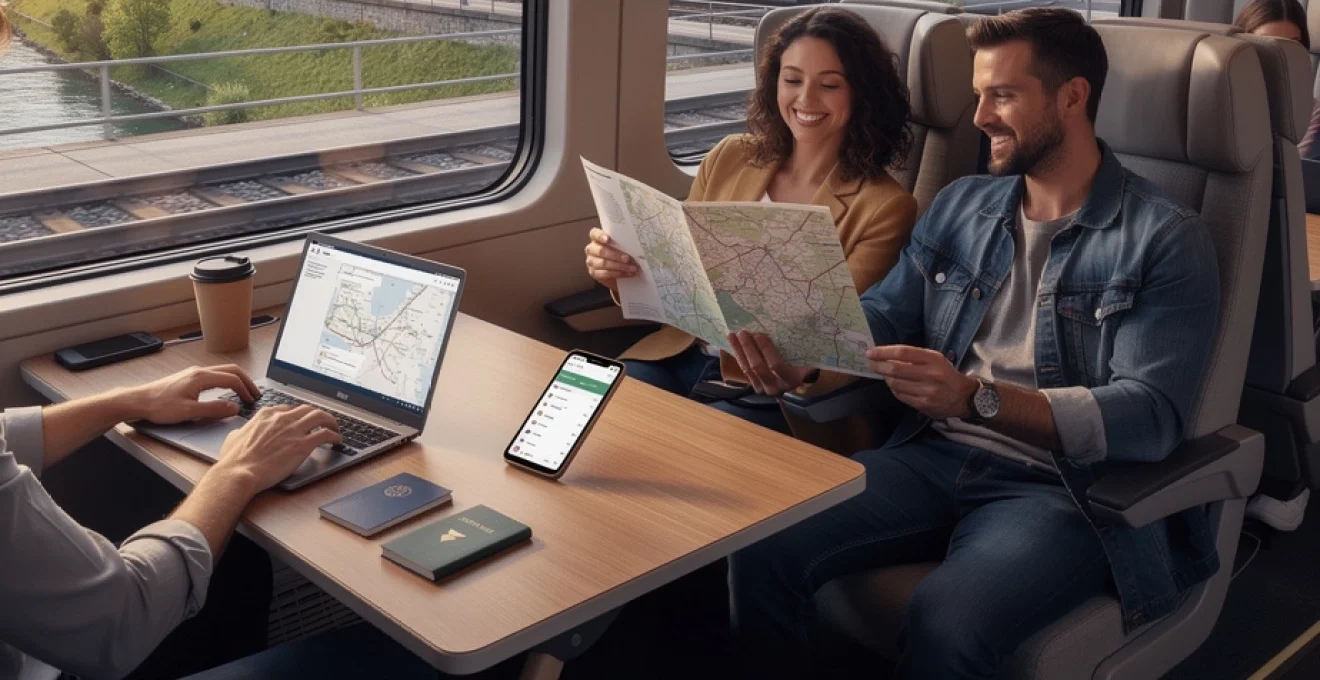
The travel industry is witnessing a remarkable transformation as passengers increasingly abandon the hurried pace of modern tourism for a more contemplative approach to exploration. Rail travel, once considered antiquated in the age of budget airlines, has emerged as the preferred choice for discerning travellers seeking meaningful connections with destinations rather than mere tick-box experiences. This renaissance of railway tourism represents more than a nostalgic yearning for bygone eras; it reflects fundamental shifts in traveller priorities, environmental consciousness, and the desire for authentic cultural immersion.
The statistics paint a compelling picture of this evolving landscape. European rail operators report passenger numbers reaching pre-pandemic levels whilst simultaneously experiencing unprecedented demand for premium services and extended journey experiences. This surge in popularity stems from multiple converging factors: heightened environmental awareness, the stress-free nature of station-to-station travel, and the unique opportunity to witness landscapes unfold gradually rather than viewing them from 30,000 feet.
European High-Speed rail networks revolutionising Long-Distance tourism
The expansion of European high-speed rail infrastructure has fundamentally altered the tourism equation, making previously distant destinations accessible within comfortable journey times whilst maintaining the leisurely pace that defines quality travel experiences. Modern high-speed networks now connect major European cities with journey times that rival air travel when airport transfers and security procedures are factored into the equation.
The transformation becomes particularly evident when examining specific routes. The journey from London to Paris via Eurostar takes just over two hours city centre to city centre, whilst the equivalent flight experience, including check-in, security, and airport transfers, often exceeds four hours total travel time. This efficiency advantage extends across continental Europe, where high-speed services connect Amsterdam to Brussels in under two hours, and Paris to Barcelona in approximately six and a half hours.
Eurail pass integration with premium slow travel packages
The evolution of rail pass systems has transformed from budget backpacking solutions into sophisticated tools for premium slow travel experiences. Modern Eurail passes now accommodate flexible itineraries that allow travellers to spend extended periods in fewer destinations rather than rushing through multiple cities. This shift reflects changing traveller preferences towards deeper cultural engagement over superficial sightseeing.
Premium pass holders increasingly utilise seat reservations on scenic routes, overnight sleeper services, and first-class compartments that transform the journey itself into a destination experience. The integration with luxury accommodation bookings and curated local experiences has elevated rail passes from transport tickets to comprehensive slow travel solutions.
Cross-border connectivity through thalys and TGV services
The seamless connectivity provided by international high-speed services has eliminated traditional barriers between European nations, creating fluid travel corridors that encourage extended stays and regional exploration. Thalys services connecting Paris, Brussels, Amsterdam, and German cities have established a northern European travel circuit that supports multi-week itineraries focused on cultural immersion rather than rapid city-hopping.
French TGV networks extend this connectivity southward, linking major cities with regional destinations that were previously difficult to access without private transportation. The ability to travel from Paris to Marseille in just over three hours, or to reach Lyon in two hours, has opened up opportunities for travellers to experience diverse French regions within single, extended trips.
Scenic route marketing: glacier express and bernina express success models
Switzerland’s approach to marketing scenic railway journeys as premium tourism products has established the template for successful slow travel rail marketing worldwide. The Glacier Express, promoted as “the slowest express train in the world,” deliberately emphasises journey duration as a selling point rather than a disadvantage. This counterintuitive marketing approach has proven remarkably successful, with advance bookings often required months ahead.
The Bernina Express demonstrates how technical railway achievements can become tourism attractions in their own right. The UNESCO World Heritage railway line traverses spectacular Alpine landscapes whilst showcasing engineering marvels that enhance rather than detract from the natural scenery. These routes prove that slow travel by rail can command premium pricing when positioned as exclusive experiences rather than mere transportation.
Intermodal transportation hubs facilitating Multi-Country itineraries
Modern transportation hubs have evolved beyond simple railway stations to become integrated travel centres that seamlessly connect rail services with local transportation networks, accommodation options, and tourist information services. Major stations in
cities such as Vienna, Zurich, and Milan now function as gateways to wider multi-country rail journeys, with coordinated timetables allowing smooth transfers between high-speed, regional, and local services. For travellers embracing slow travel by rail, this means it is increasingly realistic to plan complex itineraries – for example, combining the Rhine Valley, the Italian Lakes, and the Austrian Alps – without ever needing to hire a car or board a flight.
These hubs are also becoming more user-friendly for international visitors. Clear multilingual signage, integrated ticketing platforms, and real-time journey planning apps reduce the friction traditionally associated with cross-border rail travel. Many stations now include on-site luggage storage, bike rental facilities, and tourist information centres, encouraging travellers to treat the station area as a neighbourhood to explore rather than a mere transit point. In practice, this turns what used to be “dead time” between services into additional opportunities for local discovery.
Sustainable tourism economics and carbon footprint reduction metrics
The resurgence of slow travel by rail is not driven by romance alone; it is underpinned by measurable environmental benefits and shifting tourism economics. As governments and travellers alike grapple with climate targets, rail has emerged as one of the most effective ways to reduce the carbon footprint of long-distance tourism without sacrificing mobility. Understanding the numbers behind these claims helps explain why rail is increasingly central to sustainable tourism strategies.
From national tourism boards to multinational corporations, stakeholders are beginning to quantify the climate impact of travel choices using standardised metrics. Grams of CO₂-equivalent per passenger-kilometre, life cycle assessments of infrastructure, and carbon budgets for entire trips are moving from specialist reports into mainstream trip-planning tools. For travellers who want their holidays to align with their values, these figures offer a concrete way to compare options and justify choosing the train over short-haul flights.
Life cycle assessment comparisons: rail vs aviation transport
Life cycle assessment (LCA) provides a comprehensive method for comparing the environmental impact of different transport modes by considering not just fuel use, but also vehicle manufacture, infrastructure construction, and maintenance. When looked at through this broader lens, rail typically outperforms aviation by a substantial margin, especially on busy intercity routes powered by electricity from low-carbon grids.
For example, the European Environment Agency estimates that conventional domestic flights can emit more than 250 g CO₂e per passenger-kilometre, while modern electric rail can operate below 40–50 g on many routes. Over a 900 km journey, that difference often exceeds 150–200 kg of CO₂e per person. Even when high-speed rail construction is included in the calculation, break-even points are reached relatively quickly on heavily used corridors, sometimes after only a few years of operation. In other words, every full train replaces multiple planes or hundreds of cars, spreading the infrastructure footprint across millions of low-emission journeys.
What does this mean for the individual traveller planning a slow journey by rail? Using widely available online calculators, you can now estimate the emissions of a door-to-door rail itinerary and compare it with the equivalent flight. In many cases, swapping one short-haul flight for a high-speed train frees up enough “carbon budget” to extend your stay by several days without increasing your overall footprint. This is one reason why slow travel by rail pairs so naturally with longer, more immersive holidays.
Green travel certification standards and railway operator compliance
As demand for low-carbon holidays grows, certification schemes have emerged to help travellers distinguish between marketing claims and verifiable sustainability performance. Labels such as the EU Ecolabel, ISO 14001 environmental management certification, and various national “green tourism” marks increasingly feature in rail operator and station management strategies.
Many leading European railway companies now publish annual sustainability reports detailing their energy mix, efficiency improvements, and biodiversity initiatives along rail corridors. Some operators have committed to sourcing 100% renewable electricity for traction power on specific lines, while others are investing in hybrid, battery, or hydrogen-powered rolling stock for non-electrified routes. For travellers, this means that choosing a rail-based itinerary can support operators that are demonstrably reducing their environmental impact year on year, rather than merely offsetting emissions on paper.
Hotels and tour providers that specialise in slow travel by rail are also aligning with these standards. You will often find that curated rail itineraries bundle journeys with accommodation that holds recognised eco-certifications and partners with local suppliers. This creates an end-to-end chain of responsibility: from the train you board, to the guesthouse you sleep in, to the family-run restaurant where you eat, each link is working toward clear sustainability benchmarks.
Eco-tourism revenue streams and environmental impact monetisation
Slow travel by rail also reshapes where tourism revenue flows and how it can be used to protect the very landscapes that travellers come to enjoy. Because rail routes often pass through smaller towns and rural areas, they provide a natural spine for distributing visitor spending beyond overcrowded city centres and landmark attractions. This diffusion of demand can be the difference between fragile regions seeing tourism as a threat or as a source of long-term resilience.
In practice, many destinations are now experimenting with models that monetise environmental stewardship. Railway-linked national park passes, conservation surcharges on scenic trains, and community-based tourism ventures close to rail lines allow a portion of visitor spending to be channelled directly into habitat restoration, trail maintenance, and cultural heritage preservation. Rather than regarding sustainability as a cost, these initiatives treat it as a revenue-generating asset that enhances the appeal of slow travel experiences.
For the conscientious traveller, this offers a powerful proposition: by choosing a scenic regional train and staying a few nights in a nearby village, you are not only reducing your carbon footprint but also actively funding local conservation efforts. It is the economic equivalent of choosing to water a deep-rooted tree rather than a disposable bouquet – the benefits continue long after you have returned home.
Corporate travel policy shifts towards Low-Carbon transport solutions
It is not only leisure travellers who are embracing slow travel by rail. Corporate travel policies across Europe are being rewritten to favour rail over air on specific routes, often with explicit carbon-reduction targets. Large organisations increasingly track emissions from business trips and set thresholds above which flights must be justified or approved by senior management.
Many companies now specify that journeys under 700–800 km should be made by train wherever feasible, particularly when high-speed services provide a practical alternative. Some even factor travel time into working hours, recognising that a train journey with reliable Wi-Fi and comfortable seating can double as productive office time, while air travel often cannot. This reframing turns the traditional objection – “the train is slower” – on its head by valuing the quality, not just the raw speed, of travel time.
For employees, these policy changes can be an opportunity to experience the benefits of slow travel by rail first-hand: reduced airport stress, the ability to work or rest en route, and the option to combine business trips with short leisure extensions. Over time, this normalises rail as the default, not the exception, for regional mobility, further embedding low-carbon habits into everyday corporate culture.
Digital nomad infrastructure and remote work integration
The global rise of remote work has created a new type of traveller who blends professional obligations with extended stays in multiple destinations. For digital nomads and location-independent professionals, slow travel by rail offers a compelling balance between mobility and stability. The ability to move between cities at a human pace, with reliable connectivity and minimal disruption, is increasingly seen as a core component of a sustainable remote work lifestyle.
Modern European trains typically provide power outlets at every seat and, on many routes, stable Wi-Fi sufficient for email, cloud-based tools, and even video calls. When combined with co-working spaces near major stations and long-stay accommodation options, this infrastructure makes it possible to treat rail corridors as working corridors. Instead of losing a day to transit, you can think of a five-hour train ride as a mobile office with constantly changing views.
Of course, successful remote work on the rails requires planning. You may need to choose specific departures known for better connectivity, reserve quiet-zone seating, or schedule calls to avoid tunnels and border crossings where coverage can drop. Yet these constraints can be an advantage rather than a drawback. By creating natural periods of focused work and disconnection, slow travel by rail encourages a healthier rhythm than always-on connectivity. Much like the cadence of a train itself, your workday gains a clear structure: blocks of deep focus between stations, followed by breaks to stretch, eat, and take in the scenery.
For those considering a longer rail-based slow travel itinerary, one practical approach is to anchor your route around “work hubs” – cities with strong digital nomad ecosystems, affordable co-working, and good onward rail links. Spending two weeks in Vienna, then a fortnight in Ljubljana, followed by a month in Barcelona, all connected by daytime or overnight trains, can provide both professional continuity and rich local immersion. In this sense, the railway network becomes an extension of your workspace, giving you the freedom to change your surroundings without repeatedly enduring the stress of airports and long-haul flights.
Premium sleeper car services and luxury rail revival
At the upper end of the market, premium sleeper trains and luxury rail experiences are undergoing a renaissance that dovetails perfectly with the ethos of slow travel. Instead of treating overnight journeys as a necessary inconvenience, new and refurbished services present them as highlights in their own right – “hotels on wheels” where the journey becomes a central chapter of the trip’s narrative.
Across Europe, night trains are returning to routes that were once abandoned in favour of low-cost airlines. Operators such as ÖBB’s Nightjet, the European Sleeper, and forthcoming services from brands like Midnight Trains are reimagining the night train with comfortable private cabins, upgraded dining, and thoughtfully designed shared spaces. These services allow travellers to cover substantial distances while sleeping, effectively combining accommodation and transport into a single, low-carbon package.
At the ultra-luxury level, iconic trains such as the Venice Simplon-Orient-Express, the Royal Scotsman, and various national “cruise trains” offer curated itineraries that focus explicitly on slow, scenic travel. These journeys often include multi-course meals prepared by top chefs, live entertainment, and off-train excursions to vineyards, heritage sites, or remote landscapes. While these trips sit at a premium price point, their popularity illustrates a broader trend: when the experience is compelling enough, travellers are happy to trade raw speed for depth, comfort, and storytelling.
Even if you never plan to book a luxury rail journey, this revival has indirect benefits. As media attention and aspirational marketing highlight the appeal of slow travel by rail, more mainstream operators are incentivised to upgrade their own overnight and long-distance services. Improved bedding, better catering, and more family-friendly cabin layouts are filtering down into regular night trains, making them a realistic and attractive option for a wider audience. In effect, luxury rail acts as a laboratory for ideas that can later be adapted for everyday travellers.
Rail tourism infrastructure investment and government policy support
The momentum behind slow travel by rail is reinforced by substantial public investment and policy support. Recognising the dual benefits of decarbonising transport and strengthening domestic tourism, many European governments are allocating significant funds to rail infrastructure modernisation, new rolling stock, and cross-border coordination. These investments are not just about speed; they also focus on reliability, accessibility, and passenger experience.
High-profile examples include the expansion of high-speed networks in Spain and France, the modernisation of regional lines in Italy and Germany, and EU-backed projects to remove bottlenecks on key international corridors. At the same time, policy tools such as subsidised rail passes for young people, tax incentives for rail travel, and proposals to restrict short-haul flights where rail alternatives exist are sending a clear signal: rail is the backbone of future-proof tourism.
On a practical level, these policies make slow travel by rail more accessible and affordable. Integrated ticketing systems reduce the complexity of booking multi-leg journeys, while transparent compensation rules for delays increase traveller confidence. Some countries are also investing in station regeneration projects that transform underused railway land into mixed-use districts with hotels, cultural venues, and green spaces, turning stations into attractive urban gateways rather than anonymous transit zones.
Crucially, tourism boards are starting to align their marketing with these infrastructural changes. Instead of promoting only iconic city breaks, many now highlight rail-accessible regions, themed routes, and itineraries that encourage longer stays in fewer places. When you see an official campaign inviting you to explore wine regions, coastal villages, or mountain towns “all by train,” you are witnessing this policy shift in action. For travellers, the message is both simple and empowering: if you want your holidays to be slower, richer, and lighter on the planet, the rails are already being laid to make that choice easier.