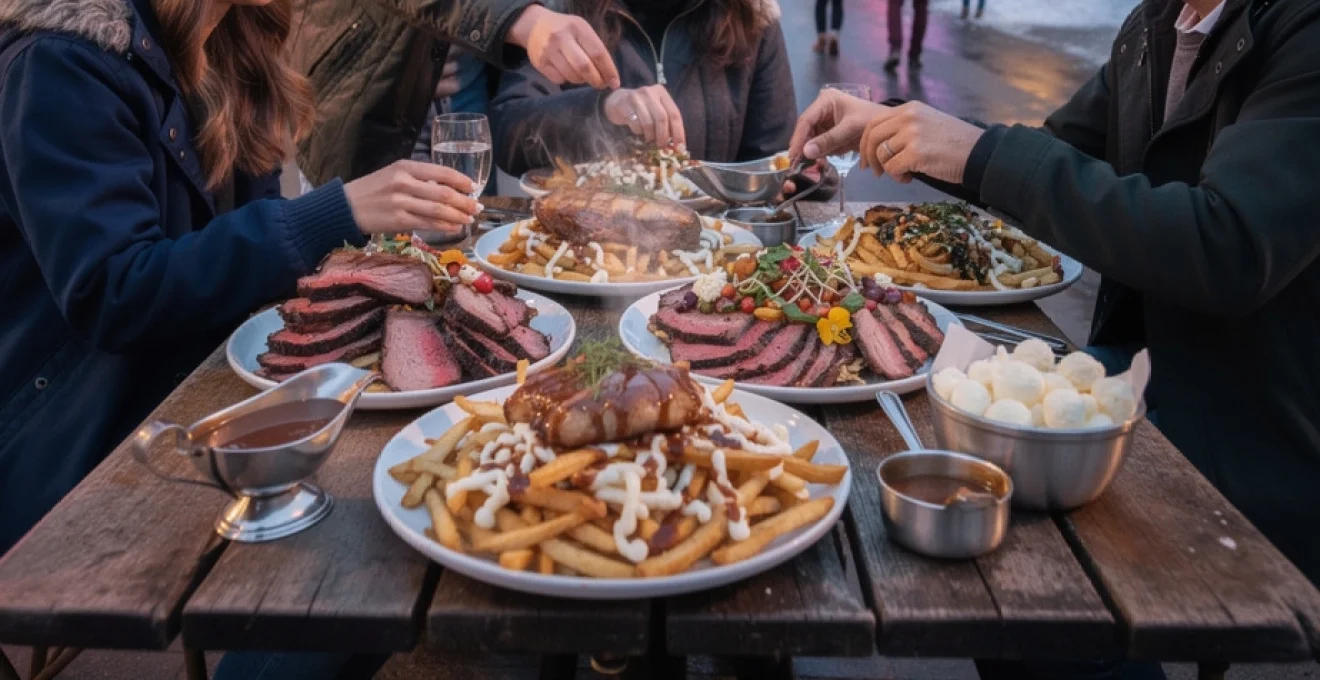
Montreal stands as the undisputed capital of poutine culture, where this iconic Québécois dish has evolved from humble roadside origins into a culinary phenomenon that defines Canadian comfort food. The city’s vibrant food scene embraces both traditional preparations and innovative interpretations of this beloved combination of crispy fries, squeaky cheese curds, and rich gravy. From legendary 24-hour establishments to high-end restaurants elevating the dish with premium ingredients, Montreal offers poutine enthusiasts an unparalleled gastronomic journey through authentic Québec cuisine.
Historical origins and cultural significance of poutine in québécois cuisine
The origins of poutine remain hotly debated among food historians and Québécois communities, with multiple towns claiming to be the birthplace of this iconic dish. The most widely accepted story traces back to Warwick, Quebec, in the late 1950s, when restaurateur Fernand Lachance at Le Café Idéal allegedly exclaimed “Ça va faire une maudite poutine!” (“It will make a damn mess!”) upon a customer’s request to add cheese curds to their takeaway fries. This spontaneous creation would eventually become Quebec’s most recognizable culinary export.
Alternative origin stories point to Drummondville, where Jean-Paul Roy of Le Roy Jucep claims to have invented the dish in the 1960s, earning official recognition from The Canadian Intellectual Property Council as the inventor of poutine. Another tale originates from Princeville, Quebec, where a customer at La P’tite Vache supposedly mixed cheese curds with French fries in 1966. Regardless of the exact origin, these competing narratives highlight poutine’s deep roots in rural Quebec’s casse-croûte culture, where simple ingredients combined to create extraordinary comfort food.
The cultural significance of poutine extends far beyond its humble ingredients. This dish represents Quebec’s distinct identity within Canada, embodying the province’s French heritage while embracing local ingredients and working-class sensibilities. The name itself derives from Quebec slang, possibly from the English “pudding” or the French “pouding,” reflecting the linguistic complexity of Québécois culture. By the 1990s, poutine had transcended regional boundaries to become a symbol of Canadian cuisine internationally, appearing on menus from Toronto to Vancouver and eventually gaining recognition in restaurants worldwide.
Montreal’s role in poutine’s evolution cannot be overstated. The city’s multicultural population has embraced and reimagined the dish, creating fusion variations that reflect diverse culinary traditions while respecting the core elements that make poutine authentic. This cultural melting pot approach has allowed poutine to remain both traditionally Québécois and globally accessible, making Montreal the perfect destination for experiencing the dish’s full spectrum of possibilities.
Montreal’s premier poutineries: from la banquise to chez claudette
Montreal’s poutine scene encompasses everything from neighbourhood institutions to innovative fine-dining establishments, each offering unique interpretations of the classic combination. The city’s poutineries range from traditional casse-croûtes serving unchanged recipes for decades to modern establishments pushing culinary boundaries while maintaining the dish’s essential character. Understanding where to find the best poutine requires appreciating both the traditional preparations that honour Quebec’s culinary heritage and the creative variations that showcase Montreal’s dynamic food culture.
La banquise’s 24-hour poutine selection and specialty variants
La Banquise stands as Montreal’s most famous poutinerie, serving an extensive menu of creative poutine variations around the clock since 1968. Located near Parc La Fontaine, this institution offers over 30 different poutine combinations, from the classic La Galvaude topped with grilled chicken and green peas to adventurous creations featuring exotic proteins and international flavours. The restaurant’s 24-hour operation makes it a favourite destination for late-night diners and post-party revellers seeking authentic Quebec comfort food.
The secret to La Banquise’s enduring popularity lies in their commitment to quality fundamentals while embracing culinary creativity. Their French fries maintain the perfect balance of crispy exterior and fluffy interior, achieved through careful potato selection and precise double-frying techniques.
The generous portion of fresh Québec cheese curds ensures that each bite delivers the signature squeak, while the house gravy is rich without overpowering the other ingredients. For those looking to explore beyond the classic poutine in Montreal, La Banquise also offers vegetarian and vegan gravies, making it an accessible destination for a wide range of dietary preferences. Whether you visit at noon or 3 a.m., the atmosphere is lively, informal, and distinctly Montreal, capturing the essence of the city’s late-night food culture.
Au pied de cochon’s foie gras poutine innovation
While many poutineries focus on affordability and nostalgia, Au Pied de Cochon represents the opposite end of the spectrum: high-end, indulgent poutine that borders on fine dining. Helmed by renowned chef Martin Picard in the Plateau-Mont-Royal neighbourhood, this restaurant has become famous for its foie gras poutine, a decadent interpretation that layers luxury ingredients onto Quebec’s most iconic comfort food. Here, hand-cut fries are fried in rendered duck fat, then topped with squeaky cheese curds, seared foie gras, and a velvety duck liver gravy.
This foie gras poutine exemplifies how Montreal’s culinary scene elevates traditional dishes without losing their soul. The dish maintains all the structural elements of a classic poutine—fries, curds, and gravy—yet the flavours are amplified through the richness of foie gras and the depth of duck-based sauce. For food travellers seeking a memorable dining experience, Au Pied de Cochon turns poutine into a tasting-menu-worthy course, showing how Québécois cuisine can be both rustic and refined at the same time.
Visiting Au Pied de Cochon requires a bit of planning, as reservations are often necessary, particularly during peak tourist seasons or Montreal’s poutine festivals. For many visitors, sharing this dish is the best approach, both from a budget and a richness standpoint, as the foie gras poutine is exceptionally filling. If you are exploring Canadian poutine in Montreal and want to see how far chefs can push the boundaries of this dish, this restaurant is an essential stop on your itinerary.
Schwartz’s deli smoked meat poutine fusion
No exploration of Montreal’s food scene is complete without mentioning smoked meat, and Schwartz’s Deli stands at the centre of that tradition. Established in 1928, this storied deli on Boulevard Saint-Laurent is best known for its smoked meat sandwiches, but it also offers a smoked meat poutine that brings together two of Montreal’s most beloved dishes. The base remains familiar—crispy fries, cheese curds, and gravy—but the addition of thick-cut smoked meat transforms the plate into a two-in-one classic.
The smoked meat itself is prepared using time-honoured methods brought by Eastern European Jewish immigrants, who used brining, dry-rubbing, and slow-smoking techniques to turn tough cuts like brisket into tender, flavourful delicacies. When layered over poutine, the smoky, salty notes of the meat integrate with the savoury gravy, creating a dish that is “ultra-decadent,” as many local chefs have described it. It is a perfect illustration of how Montreal’s multicultural influences shape the evolution of poutine without sacrificing its Québécois roots.
For travellers looking to maximize their time and budget, ordering smoked meat poutine at Schwartz’s offers excellent value: you experience both a legendary Montreal deli and a creative take on classic poutine in one sitting. Be prepared for lineups, especially at lunch and dinner, and consider splitting a smoked meat sandwich and a poutine with a companion. This approach lets you sample more dishes while still leaving room for additional poutine stops elsewhere in the city.
Poutineville’s gourmet approach to traditional québécois comfort food
Poutineville takes a more customizable, gourmet approach to traditional Québécois comfort food, appealing to diners who enjoy building their own dish from the ground up. With several locations across Montreal, this modern poutinerie allows guests to choose their preferred potato style—classic fries, smashed potatoes, or even sweet potato fries—before selecting cheese curds, gravies, and an extensive list of toppings. The result is a “design-your-own poutine” concept that mirrors the build-your-own pizza or burger trend found in other global food cities.
This level of customization is ideal for visitors who want to experiment beyond the standard recipe while still keeping an authentic Canadian poutine in Montreal as the foundation. You can opt for classic brown gravy and Saint-Guillaume or Saint-Albert cheese curds, then add braised beef, grilled vegetables, or even spicy sausages to tailor the dish to your preferences. For many locals, Poutineville serves as an introduction to how flexible poutine can be, offering both traditional and gourmet combinations under one roof.
From a practical standpoint, Poutineville is also a useful option for groups with varied tastes or dietary needs. The menu often includes vegetarian gravies and lighter topping choices, making it easier for everyone at the table to find a satisfying meal. If you are planning a self-guided poutine tour through Montreal, including a stop at Poutineville adds a contemporary, “chef-driven” dimension to your list, complementing the more old-school casse-croûtes you might visit earlier in the day.
Authentic québec cheese curds: Saint-Albert cooperative and fromagerie lemaire
At the heart of every great poutine lies one non-negotiable ingredient: authentic Québec cheese curds. While fries and gravy can be adapted in countless ways, true poutine demands fresh curds that squeak between your teeth, a texture that signals both quality and proper handling. In and around Montreal, many of the best poutineries source their curds from renowned regional producers, including cooperatives and family-owned fromageries that have perfected the craft over decades. Understanding where these curds come from—and how they should taste—helps you recognize an excellent poutine as soon as it hits the table.
Two of the most respected names in the world of Quebec cheese curds are the Saint-Albert cooperative and Fromagerie Lemaire, both of which have contributed to the rise of poutine as a cornerstone of Québécois cuisine. Their curds are widely distributed across the province and are often delivered to restaurants and specialty shops multiple times a week to maintain peak freshness. When you seek out Canadian poutine in Montreal that uses these producers, you are effectively tasting the backbone of the province’s dairy heritage.
Squeaky fresh curd texture and temperature requirements
The defining characteristic of authentic poutine cheese curds is the distinctive squeak you hear and feel when you bite into them. This squeak comes from the elastic protein structure of very fresh curds, which squeal slightly as they rub against the enamel of your teeth. For optimal texture, curds are typically enjoyed at room temperature, not straight from the refrigerator, because cold temperatures cause the fat to firm up and diminish both the squeak and flavour. That is why many seasoned poutine lovers in Montreal will let a handful of curds warm slightly before tasting them on their own.
From a technical perspective, curds begin losing their signature squeak within about 24 hours of production, which is why proximity to fromageries and frequent deliveries are so important. In practice, many top poutineries in Montreal receive fresh curds daily or several times per week, ensuring that their poutines maintain that hallmark texture. When you are assessing a poutine, ask yourself: do the curds hold their shape, maintain a mild milky flavour, and squeak lightly with each bite? If the answer is yes, you are likely enjoying a dish made with properly handled, high-quality curds.
Saint-albert cooperative’s traditional cheddar curd production methods
The Saint-Albert Cheese Cooperative, located in Eastern Ontario near the Quebec border, is one of the oldest dairy cooperatives in Canada and a major supplier of cheese curds for poutine across the region. Founded in 1894, the cooperative specializes in traditional cheddar curds made from local milk sourced from member farms. The process involves pasteurizing the milk, adding cultures and rennet, and then cutting and cooking the curd to achieve the desired firmness before it is cut into irregular, bite-sized pieces.
What sets Saint-Albert curds apart is their commitment to freshness and consistency. Curds are typically packaged and distributed within hours of production, allowing restaurants and retailers in Montreal to offer products that still possess the coveted squeak. Many poutine enthusiasts specifically seek out menus that reference Saint-Albert curds, regarding them as a hallmark of authenticity. When you see the cooperative’s name highlighted, you can be confident you are tasting a cheese that has shaped the identity of poutine well beyond Quebec.
Fromagerie victoria’s artisanal cheese curd varieties
Fromagerie Victoria represents a more artisanal side of the cheese curd world, combining traditional methods with a modern, branded restaurant concept. Originating in Quebec City and expanding through the province, this fromagerie produces fresh cheese curds daily and serves them in their own restaurants, often paired with house-made fries and gravies. While their core offering remains classic white cheddar curds, they also experiment with variations in size, salt levels, and even seasoning, catering to evolving consumer tastes.
For travellers exploring poutine in and around Montreal, stumbling upon a Fromagerie Victoria location offers a chance to compare different curd profiles side by side. You might notice, for example, that their curds are slightly firmer or carry a more pronounced dairy sweetness compared to other brands used in the city. Sampling poutine that features these curds can deepen your understanding of how cheese texture and flavour influence the overall balance of the dish. It is similar to tasting different coffee beans in the same espresso drink—subtle changes in one component can completely transform the experience.
Proper curd storage and handling techniques for optimal freshness
Even the best cheese curds can lose their appeal if stored or handled incorrectly, which is why proper technique is vital both in restaurants and at home. Curds should ideally be kept in breathable packaging at cool, but not ice-cold, temperatures—often around 4–10°C (39–50°F)—to maintain moisture without causing the fat to harden excessively. Storing them in airtight containers or keeping them in the fridge for several days can cause them to lose their squeak and develop a rubbery, less pleasant texture.
If you are purchasing curds to make Canadian poutine at home in Montreal, try to buy them the same day you plan to cook and serve your dish. Allow the curds to come closer to room temperature before assembling the poutine, so that the heat from the fries and gravy melts them slightly without turning them into a homogeneous, stringy cheese mass. In restaurants, attentive staff will rotate stock, use the freshest curds first, and avoid reheating them directly. These small but important details are what separate a good poutine from a truly memorable one.
Gravy preparation techniques: from beef drippings to vegetarian alternatives
While fries and curds provide structure, gravy acts as the flavour foundation of any great poutine. Traditionally, poutine gravy in Quebec is a brown sauce made from a blend of chicken and beef stocks, thickened with a roux and seasoned with pepper and aromatic spices. Many classic casse-croûtes rely on house recipes that have been refined over decades, often guarded as closely as family secrets. The ideal gravy is rich and savoury, with enough body to coat each fry without turning the plate into a soggy soup.
In traditional preparations, beef or poultry drippings are used to build depth of flavour, much like a pan sauce that accompanies a roast. The drippings are deglazed with stock, then simmered with flour and fat to develop a glossy, smooth consistency. Some modern restaurants add a splash of wine, beer, or even maple syrup to create unique flavour signatures, while still keeping within the bounds of what most locals consider an authentic Canadian poutine in Montreal. As a rule of thumb, you should be able to taste the roasted meat notes in the gravy, but not so strongly that they overshadow the fries and curds.
As dietary preferences have evolved, so too have poutine gravies. Many Montreal poutineries now offer vegetarian or even vegan gravies made from vegetable stock, mushrooms, soy sauce, or miso to replicate the umami depth of meat-based versions. These alternatives often rely on slow-cooked onions, roasted root vegetables, and dried mushrooms to build complexity, demonstrating that a satisfying poutine does not have to depend exclusively on animal products. If you follow a plant-based diet, look for menus that clearly label vegetarian or vegan gravy options; places like La Banquise and several Mile End eateries have become particularly adept at serving inclusive versions of the dish.
For home cooks keen to recreate restaurant-quality poutine, mastering gravy is both the biggest challenge and the greatest opportunity. Starting with a strong stock—homemade if possible—gives you a head start toward deep, rounded flavour. From there, a simple ratio of equal parts fat and flour for the roux, cooked to a light brown and gradually whisked with stock, can produce a glossy, lump-free sauce. Think of the gravy as the “orchestra conductor” of the plate: it brings harmony to the fries and curds, ensuring every bite feels cohesive rather than random.
Plateau-mont-royal and mile end neighbourhood poutine tours
For visitors determined to experience Canadian poutine in Montreal at its source, few activities are as rewarding as a self-guided tour through the Plateau-Mont-Royal and Mile End neighbourhoods. These adjacent districts are culinary hotspots, packed with poutineries, cafés, bakeries, and multicultural restaurants that reflect the city’s diverse population. Exploring them on foot allows you to appreciate not just the flavours of poutine, but the architecture, street art, and local culture that surround these beloved eateries.
A typical poutine tour might begin near Parc La Fontaine and wind its way up through the Plateau toward Mile End, with strategic stops at iconic and lesser-known establishments. Along the way, you will encounter everything from old-school diners with vinyl booths to minimalist, modern counters serving artisanal poutines with locally sourced ingredients. Planning your route in advance—perhaps focusing on two or three stops per meal period—helps you pace yourself and avoid poutine fatigue, which can be a very real concern when each serving is as hearty as a full entrée.
Saint-laurent boulevard’s concentrated poutinerie cluster
Boulevard Saint-Laurent, often called “The Main,” runs through the heart of Montreal and serves as a natural spine for any poutine-focused food crawl. Historically a dividing line between the city’s French- and English-speaking communities, it has evolved into a multicultural artery lined with restaurants, bars, and boutiques. Along this stretch, you will find a dense concentration of poutineries, burger joints, and delis that all feature poutine in some form, making it easy to sample multiple interpretations within a short walking distance.
Starting near Old Montreal and working your way north, you might stop at iconic delis for smoked meat poutine, then continue toward the Plateau and Mile End for more experimental takes. Because Saint-Laurent is so central, it is also simple to integrate non-poutine experiences into your tour—such as grabbing a coffee at a third-wave café or browsing independent shops between meals. Think of the boulevard as a culinary corridor where you can track how different communities have adopted and adapted poutine over time, from traditional Québécois recipes to global fusion creations.
Rue Saint-Denis traditional québécois food scene
Running roughly parallel to Saint-Laurent, Rue Saint-Denis offers a slightly different perspective on Montreal’s food culture, with a stronger emphasis on traditional French and Québécois restaurants. Here, bistros and brasseries often feature poutine alongside other regional specialties like tourtière, pea soup, and sugar pie, allowing you to situate the dish within the broader context of local cuisine. If you are interested in understanding how poutine fits into a full Québécois meal, rather than as a stand-alone snack, this street is an excellent area to explore.
Walking along Rue Saint-Denis, you will encounter a mix of casual eateries and more refined dining rooms, many with terraces that come alive in the summer months. Ordering poutine as an appetizer or shared plate gives you a chance to compare restaurant-style versions with those from dedicated poutineries. Are the fries thinner or thicker? Is the gravy closer to a classic French sauce or a rustic brown jus? Asking these questions as you taste helps you develop a more nuanced appreciation for the variations within authentic Canadian poutine in Montreal.
Mile end’s artisanal poutine movement and modern interpretations
Mile End, once a working-class neighbourhood and now one of Montreal’s trendiest districts, has become synonymous with artisanal food movements. Known for its bagel bakeries, micro-roaster cafés, and creative restaurants, it is also a fertile ground for modern poutine interpretations. Here, chefs often emphasize local, seasonal ingredients, sourcing potatoes from nearby farms, using organic or grass-fed stocks, and spotlighting small-scale cheese producers. The result is a wave of poutines that feel as at home on an Instagram feed as they do in a traditional casse-croûte.
In Mile End, you might encounter poutine topped with slow-braised lamb, roasted root vegetables, or even kimchi and gochujang-infused gravy, reflecting the neighbourhood’s global influences. While purists may raise an eyebrow at these innovations, they illustrate how flexible and resilient the poutine format can be. Much like how pizza evolved from Neapolitan origins into countless regional styles, poutine in Montreal is now a canvas for chefs to express creativity while still paying homage to its Québécois core. If you enjoy culinary experimentation, Mile End’s poutine scene offers some of the most exciting bites in the city.
Montreal’s annual poutine week festival and la poutine week competition
Every winter, Montrealers prove just how passionate they are about their favourite comfort food through La Poutine Week, an annual festival that has grown from a local event into a nationwide celebration. Typically held in early February, when cold temperatures make hearty dishes especially appealing, the festival invites restaurants across the city to create limited-time poutine specials. Diners are encouraged to taste as many as they can, then vote online for their favourites in various categories, from most creative to best classic poutine.
For visitors, timing a trip to coincide with La Poutine Week can transform a standard vacation into a full-fledged culinary adventure. You will find everything from traditional Canadian poutine in Montreal featuring Saint-Albert curds and house gravy to wildly inventive versions incorporating seafood, international spices, or plant-based proteins. Because many restaurants design poutines specifically for the competition, the festival acts as a snapshot of current food trends and a laboratory for future menu ideas. It is common for especially popular creations to graduate from limited-time specials to permanent fixtures.
Participating in La Poutine Week is straightforward: you browse the event’s website or app to see the list of competing restaurants, their locations, and their featured poutines, then plan your routes accordingly. Some locals treat it almost like a sport, setting personal goals for the number of poutines they will try and sharing their progress on social media. If you are new to Montreal, joining this annual ritual is a fun way to explore different neighbourhoods, support local businesses, and experience firsthand how deeply embedded poutine is in the city’s cultural identity.
Beyond the competition aspect, La Poutine Week also highlights important shifts in how the dish is perceived. Where poutine was once dismissed by some as “junk food,” the festival showcases its versatility and culinary potential, attracting participation from fine-dining restaurants, gastropubs, food trucks, and vegan cafés alike. In this sense, the event serves as both a celebration of tradition and a platform for innovation, reinforcing Montreal’s status as the ultimate destination for anyone eager to discover the full range of Canadian poutine in one vibrant, food-loving city.