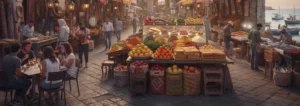
Palermo’s ancient markets represent far more than simple shopping destinations—they embody centuries of cultural fusion, architectural evolution, and gastronomic tradition. These bustling commercial hubs have survived Arab domination, Norman conquest, and countless regime changes, each era leaving its indelible mark on the city’s trading culture. Walking through their narrow alleyways today, you’ll encounter the same animated vendor chants that echoed through these streets during the Middle Ages, witness architectural styles that blend Byzantine grandeur with North African practicality, and taste culinary traditions that have been perfected over generations. The sensory experience is overwhelming: the pungent aroma of aged cheeses mingling with fresh basil, the sight of crimson blood oranges piled high beside glistening Mediterranean seafood, and the cacophony of Sicilian dialect negotiations creating an atmosphere that immediately transports visitors to another time. For anyone seeking an authentic encounter with Sicilian culture, these markets offer an unfiltered glimpse into the daily rhythms that have sustained this extraordinary city for over a millennium.
Vucciria market: palermo’s historic arabian souk experience
Vucciria Market stands as perhaps the most historically significant trading location in Palermo, its origins traced directly to the Arab occupation of Sicily during the 9th through 11th centuries. The market’s name derives from the French word “boucherie,” reflecting Norman influences, yet its layout and operational style remain distinctly North African in character. Located in the heart of the old city between Piazza San Domenico and Piazza Garraffello, Vucciria has weathered centuries of economic and social transformation while maintaining its essential character as a commercial and social gathering space. The market reaches its peak activity during morning hours when fishmongers display their overnight catches and produce vendors arrange pyramids of seasonal fruits with artistic precision.
What distinguishes Vucciria from Palermo’s other markets is its remarkable duality of purpose. By day, it functions as a traditional food market where locals negotiate prices for fresh seafood, vegetables, and pantry staples. As evening approaches, however, the market undergoes a dramatic metamorphosis, transforming into one of the city’s most vibrant aperitivo destinations. Young Palermitans and savvy tourists converge on the narrow streets, where makeshift bars serve inexpensive wine and beer alongside traditional street food. This nocturnal transformation has breathed new economic life into an area that faced decline during the late 20th century, when the nearby Cala harbour lost its commercial prominence and many traditional vendors relocated to more profitable locations.
Medieval architecture and baroque facades along via argenteria
The architectural framework surrounding Vucciria provides a tangible connection to Palermo’s layered history. Via Argenteria, one of the market’s principal arteries, takes its name from the medieval silversmiths who once dominated this commercial corridor. Walking along this street today, you’ll observe buildings that showcase multiple architectural periods coexisting in sometimes jarring juxtaposition. Ground-level structures often retain Norman-era stonework, their thick walls and narrow openings designed to provide cool respite from Sicily’s intense summer heat. Above these foundations, later additions display baroque ornamentation—elaborate cornices, decorative balconies, and religious statuary that reflect the Spanish influence during the 16th and 17th centuries.
Many buildings feature the characteristic balconi palermitani, small protruding balconies that allowed residents to observe street activity while maintaining privacy. These architectural elements serve practical purposes beyond aesthetics, creating shade for street-level vendors while providing natural ventilation to upper-floor residences. The colour palette throughout the market area tends toward ochres, siennas, and faded terracottas, with weathered plaster revealing underlying stonework that speaks to centuries of Mediterranean sun and sea air. Several structures display remnants of Art Nouveau tilework, evidence of early 20th-century prosperity, now cracked and faded but still beautiful in their decay.
Street food specialities: pani ca’ meusa and sfincione vendors
Vucciria’s culinary offerings represent the pinnacle of Palermitan street food culture, with certain vendors maintaining family recipes that span multiple generations. The market is particularly renowned for pani ca
ca’ meusa, a rich and surprisingly delicate spleen sandwich that has become synonymous with Palermo street food. Traditionally prepared in enormous copper pans, thin slices of spleen and lung are slowly simmered in fat, then piled into a soft sesame roll and finished either schietto (with a squeeze of lemon and salt) or maritato (with grated caciocavallo or ricotta). Alongside, you will find vendors selling thick slabs of sfincione, Palermo’s answer to pizza: a focaccia-like base topped with slow-cooked onions, tomato, anchovies, oregano, and sharp local cheese. Both dishes are inexpensive, typically costing just a few euros, making Vucciria an ideal stop if you want to sample authentic Palermitan flavours on a budget. If you’re unsure where to start, simply follow the aroma of fried dough and grilled offal—the busiest stalls are usually the ones locals trust most.
For visitors hesitant about offal-based dishes, many stalls also offer milder options such as grilled swordfish, fried calamari, and simple bruschetta topped with sun-ripened tomatoes and basil. Street food here is often eaten standing at tall metal tables or perched on low stools, echoing the informal atmosphere of an Arab souk. Do not be surprised if vendors encourage you loudly to taste their specialties; this performance-like salesmanship is part of the market’s charm and a tradition that dates back centuries. You can always ask for a small portion to try first—most stallholders are happy to cut a sandwich in half or offer a sample of sfincione before you commit. For the most immersive Palermo food tour experience, plan to visit Vucciria both at lunchtime and after dark to see how the food scene evolves.
Night market transformation: aperitivo culture and live music scene
As daylight fades, Vucciria undergoes one of the most dramatic transformations of any market in Palermo. The produce crates and fish stalls slowly disappear, replaced by makeshift bars, portable grills, and clusters of plastic chairs that spill into every alleyway. This is when the district becomes a hub of aperitivo culture: you can order a beer or a glass of local Nero d’Avola for just a few euros, often accompanied by complimentary snacks like olives, peanuts, or small sandwiches. The atmosphere is informal and convivial, with locals, students, and travellers mixing shoulder to shoulder in the narrow streets.
Live music is another defining feature of Vucciria at night. Depending on the evening, you might encounter everything from impromptu acoustic performances to DJ sets echoing off the weathered facades. Rather than a polished nightlife district, think of it as an open-air living room for the city, where conversations flow as freely as the drinks. If you are wondering where to experience Palermo nightlife without spending a fortune, this is one of the best places to start. Just remember that the party can run late into the night, so if you are staying nearby, pack some earplugs.
While the vibe is generally relaxed, it is wise to follow basic urban safety practices. Keep valuables out of sight, use a cross-body bag, and avoid bringing unnecessary documents or large sums of cash. Crowded spaces can attract pickpockets, as in any major European city, but a bit of awareness goes a long way. If you prefer a quieter experience, consider arriving at the beginning of the evening, around 7–8 p.m., when the bars are just opening and the streets are not yet packed.
Navigating the labyrinth: from piazza caracciolo to via coltellieri
First-time visitors to Vucciria often describe it as a labyrinth, and that is part of its appeal. The market does not unfold in a straight line but rather in a network of narrow alleys spreading outward from key squares. A practical way to orient yourself is to start at Piazza Caracciolo, one of the traditional entrances to the market area, and then wander towards Via Argenteria and Piazza Garraffello. From here, you can continue along Via Coltellieri, a small street lined with bars and eateries, some of which stay open until the early hours of the morning.
Do you need a strict route to enjoy Vucciria? Not at all—half the joy lies in getting pleasantly lost among stalls, murals, and laundry-strung balconies. Still, having a rough mental map helps if you are on a tight schedule or want to combine the market with nearby attractions like Piazza San Domenico or the waterfront at La Cala. Signage can be minimal, and GPS sometimes struggles in the narrowest lanes, so it is often easier to navigate by landmarks: colourful street art, the statue of the Genius of Palermo at Garraffo, or the distinctive façades of surrounding palazzi. If you feel disoriented, do what locals do—ask a vendor or bar owner for directions; Sicilians are famously generous with advice.
One final tip: wear comfortable shoes. The cobbled streets, occasional puddles from fish-cleaning operations, and uneven paving stones can make thin-soled footwear a poor choice. Think of Vucciria as an outdoor museum of living culture; you will want to take your time, stop for photos, and double back to revisit stalls that catch your eye. Building in this flexibility will ensure you absorb the full atmosphere rather than rushing through like you are crossing a busy intersection.
Ballarò market: north africa’s culinary influence in albergheria quarter
Ballarò Market, located in the historic Albergheria quarter just south of Palermo Cathedral, is widely regarded as the city’s most vibrant and multicultural marketplace. Its origins stretch back at least to the 10th century, when Arab traders first established permanent stalls near what was then a bustling caravan route. Today, Ballarò remains a crucial artery in Palermo’s daily life, supplying residents with fresh fruit, vegetables, meat, and fish, as well as inexpensive household goods. Compared with Vucciria, Ballarò feels more utilitarian and less polished, but this is exactly what gives it such authenticity.
The market sprawls along Via Ballarò and several adjoining alleyways, creating a continuous ribbon of awnings, tarps, and hand-painted signs. Vendors advertise their goods through abbanniate—the traditional sing-song shouts in Sicilian dialect that function as both marketing and performance. You will hear Arabic, French, and English alongside Italian, reflecting the presence of migrant communities from North Africa and sub-Saharan Africa who now call Palermo home. This living mosaic makes Ballarò one of the best places in the city to see how centuries of cultural exchange still shape everyday food habits.
Seasonal produce stalls: sicilian blood oranges and cassatelle di agira
One of the great pleasures of visiting Ballarò is witnessing how the offerings change with the seasons. In winter and early spring, stalls overflow with Sicilian blood oranges—tarocco, sanguinello, and moro varieties—stacked in pyramids that glow under the morning light. These citrus fruits, prized for their intense colour and balanced sweetness, are often sold by the kilo for far less than you would pay in northern Europe or North America. You can ask vendors to juice them on the spot for a quick vitamin boost as you wander.
As temperatures rise, the displays shift to glossy eggplants, vine-ripened tomatoes, and basil bunches so fragrant you can smell them metres away. Among these staples, you will also find traditional sweets such as cassatelle di Agira, crescent-shaped pastries filled with cocoa, almond, and chickpea flour, originally from the town of Agira in central Sicily. Although not every stall sells them, dedicated pastry vendors often carry an assortment of regional desserts, from cassatelle to cannoli and marzipan fruits. If you are planning to cook at your accommodation, Ballarò is arguably the best market in Palermo to stock up on seasonal produce and herbs at local prices.
For travellers concerned about food quality, it is worth noting that much of the produce at Ballarò is sourced from farms in the fertile Conca d’Oro plain around Palermo. Ask where the goods come from, and many vendors will proudly identify their village or family cooperative. Buying fruit and vegetables here is not only a budget-friendly choice; it also supports small-scale agriculture that has sustained the region for generations. As with any market, inspect goods before purchasing and do not hesitate to refuse items that look damaged or overripe.
Antique trade and vintage textiles along via ballarò
While Ballarò is primarily known as a food market, parts of Via Ballarò and surrounding lanes host a small but intriguing ecosystem of antique dealers and second-hand vendors. These stalls may appear chaotic at first glance, with boxes of mismatched cutlery, stacks of vinyl records, and tangled heaps of costume jewellery spilling onto the pavement. Yet for patient treasure-hunters, this area can be a rewarding stop during a Palermo market tour. You might uncover vintage postcards, religious icons, or hand-embroidered linens that tell their own stories about Sicilian domestic life.
Textiles are particularly worth examining, as older Sicilian households often held onto high-quality tablecloths, lace, and bed linens for decades. When estates are liquidated or families move, these heirlooms occasionally find their way to the market. Prices are usually negotiable, especially if you are buying multiple items, so do not be afraid to politely haggle. Think of it as part of the theatre of the market rather than a confrontation—smiles and a few words of Italian, such as “possiamo fare un po’ di sconto?” (can we do a small discount?), go a long way. Just remember that vendors make their living from these sales, so aim for fairness rather than rock-bottom bargains.
If you are short on luggage space, consider smaller, easily packable items like embroidered napkins or vintage scarves as souvenirs. Not only do they weigh little, but they also carry a tangible connection to Palermitan homes and traditions. In this sense, Ballarò offers more than just food; it becomes a bridge between past and present, between the private world of family rituals and the public sphere of the street.
Multicultural gastronomy: tunisian spices and maghrebi dried goods
Perhaps the most distinctive feature of Ballarò today is its overtly multicultural food landscape. Walking through the market, you will notice North African grocers selling sacks of couscous, cumin, coriander, and harissa paste alongside traditional Sicilian staples like oregano and dried tomatoes. Shelves display tins of preserved lemons, jars of date syrup, and large bags of dried chickpeas and lentils, mirroring the grocery stores you might find in Tunis or Algiers. This coexistence of ingredients reflects centuries-old trade routes that connected Sicily with the Maghreb, now renewed through migration and diaspora communities.
Curious how to integrate these flavours into your meals while staying in Palermo? Many guesthouses and rental apartments include small kitchens, making it easy to experiment with simple dishes: couscous with local vegetables, lentil stews enriched with Sicilian olive oil, or grilled fish rubbed with Tunisian spices. You can also find prepared North African dishes at some takeaway counters, including tagines and flatbreads, offering a welcome alternative if you have already sampled your fill of arancini and sfincione. Ballarò thus becomes a living classroom for understanding how Palermo’s food culture is still evolving.
At the same time, classic Palermitan street foods remain omnipresent: panelle (chickpea fritters), crocchè (potato croquettes), and stigghiola (grilled lamb intestines) sizzle away on large metal griddles. You might even see a vendor preparing couscous one moment and frying panelle the next, a visual metaphor for the city’s layered identity. If you are interested in food photography, Ballarò’s multicultural gastronomy provides endless opportunities—just remember to ask permission before taking close-up shots of people. In doing so, you will engage respectfully with the very communities that keep this market so dynamic.
Capo market: byzantine-era trading routes through seralcadio district
Capo Market, or Mercato del Capo, stretches behind Teatro Massimo in the historic Seralcadio district, an area whose name recalls the Arabic term Shar al Qadi (the Judge’s Quarter). Although the current layout dates mostly from the 16th to 19th centuries, the market sits along routes that have been used for trade since Byzantine and even Roman times. Today, Capo offers a slightly more compact and navigable experience than Ballarò, making it ideal if you want a dense concentration of stalls without feeling overwhelmed. Covered awnings create welcome shade, and the narrower streets give the impression of walking through a cinematic set.
Fresh fish, butchered meats, and heaping displays of fruit and vegetables dominate the scene, interspersed with small eateries frying panelle and serving inexpensive pasta dishes. Compared with the more rough-and-ready feel of Ballarò, Capo can seem marginally tidier, though it still retains the joyful chaos typical of Palermo markets. You will notice the same rhythmic abbanniate echoing off walls, but here they mingle with the bells of nearby churches and the hum of scooters squeezing past crates. For many visitors, Capo strikes the perfect balance between authenticity and accessibility.
One of the distinctive aspects of Capo is its proximity to significant monuments. The ornate Church of the Immaculate Conception, with its marble inlays and Baroque altarpieces, rises almost unexpectedly from the middle of the market. Nearby, Porta Carini, one of Palermo’s historic city gates, serves as a symbolic entrance. This juxtaposition of sacred architecture and everyday commerce encapsulates the city’s character: here, religion, trade, and social life intertwine in the same narrow streets. If you are planning to visit Teatro Massimo, you can easily pair it with a detour through Capo for lunch or a mid-morning snack.
Mercato del pesce: cala’s dawn fish auction and mediterranean seafood
For travellers particularly interested in seafood, the area around La Cala and the old Mercato del Pesce (Fish Market) offers a fascinating glimpse into Palermo’s maritime heritage. While the traditional wholesale fish auction has diminished compared with its heyday in the 20th century, early mornings near the harbour still bring scenes reminiscent of older times. Small fishing boats unload crates of sardines, anchovies, and squid, which are quickly sorted and sold to restaurant buyers and local vendors. Arriving around sunrise, you can watch this choreography unfold against the backdrop of bobbing masts and pastel-coloured buildings.
What kind of seafood can you expect to see? Depending on the season, stalls and trucks may display Mediterranean staples such as red prawns from Mazara del Vallo, swordfish, octopus, mackerel, and sea bream, often laid out on crushed ice in gleaming rows. Prices vary daily based on supply and demand, but even premium products are often more affordable here than in inland European cities. If you have access to a kitchen, buying fresh fish directly from the source can turn a simple dinner into a restaurant-quality meal. Many vendors are happy to clean and fillet your purchase on the spot—just ask “può pulirlo, per favore?”
Visiting the fish market area also helps you understand how closely Palermo’s economy and food culture remain tied to the sea. Historically, connections with North Africa, Spain, and southern Italy were mediated through ports like La Cala, and the legacy of those routes still appears in the diversity of seafood preparations you will find across the city. Grilled sardines with breadcrumbs, pasta with sea urchin, and fried anchovies are just a few of the dishes that owe their existence to this daily influx from the Mediterranean. Think of the fish market as the city’s lungs, inhaling the sea’s bounty each morning so that restaurants and households can exhale it later as unforgettable meals.
Mercato delle pulci: papireto’s sunday antique and collectibles fair
Northwest of the historic centre, near Piazza Peranni and the former Papireto riverbed, Palermo’s Mercato delle Pulci (flea market) offers a completely different kind of browsing experience. Rather than food, this market focuses on antiques, collectibles, and curiosities, ranging from furniture and mirrors to vintage cameras and old postcards. It operates most visibly on weekends—especially Sundays—when vendors expand their displays onto the surrounding streets. If you have ever wondered where the city’s old wardrobes, chandeliers, and gramophones ended up, this is where many of them reside, waiting for a second life.
Walking through Mercato delle Pulci feels a bit like stepping into an attic that belongs to an entire city. You might spot art deco lamps sitting next to baroque-style picture frames, or 1960s vinyl records stacked atop carved wooden chests. Prices can vary significantly depending on the rarity and condition of each item; some stalls clearly target serious collectors, while others specialise in more affordable bric-a-brac. As with any antique market, authenticity can be difficult to verify, so it is wise to buy only what you genuinely like rather than chasing investment pieces. If a seller claims a particular item is from a specific period, you can always ask how they know—knowledgeable dealers are usually happy to explain.
Negotiation is common here, but the goal is to reach a mutually satisfactory price rather than to “win” at all costs. Think of bargaining as a small ritual of respect: by engaging, you acknowledge the vendor’s expertise while also asserting your role as an informed buyer. Bring cash in small denominations, as not all sellers accept cards, and consider taking a reusable bag or even a small foldable trolley if you intend to purchase heavier objects. For design enthusiasts and history buffs alike, Mercato delle Pulci adds an extra dimension to a Palermo itinerary focused on local markets.
Borgo vecchio market: artisanal ceramics and caltagirone pottery traditions
Located between the port area and the modern city centre, Borgo Vecchio has long been a working-class neighbourhood rather than a polished tourist attraction. Its market, operating mainly in the mornings and some evenings, is smaller and more local than Ballarò or Capo, focusing on everyday groceries, cheap clothing, and household goods. However, in recent years Borgo Vecchio has also gained attention for its street art initiatives and for small shops that occasionally showcase Sicilian crafts, including ceramics inspired by the renowned pottery traditions of Caltagirone. While you will not find a large, dedicated ceramics market here, you may encounter stalls or boutiques selling hand-painted plates, tiles, and teste di moro (Moorish head vases).
These ceramics, often characterised by bright glazes and intricate patterns, are deeply rooted in central and eastern Sicily, particularly the town of Caltagirone, a UNESCO-listed centre of ceramic production. When artisans or resellers bring pieces to Borgo Vecchio, they effectively bridge the island’s regional differences, making it possible to discover unique decorative objects without leaving Palermo. If you are interested in purchasing ceramics, examine the base for signatures or stamps indicating origin, and ask the seller whether the item is hand-painted or mass-produced. Handcrafted pieces will naturally cost more but reward you with individuality and higher artistic value.
Beyond shopping, Borgo Vecchio offers a glimpse of everyday life that many visitors miss. Children play football in small squares, neighbours chat from balconies, and simple trattorie serve honest, no-frills meals. In the evenings, especially in warmer months, basic street bars set up plastic tables where locals gather over inexpensive drinks and snacks. While this is not the most scenic or carefully curated market in Palermo, it does provide insight into how working-class communities use public space. If you choose to explore Borgo Vecchio after dark, stay on well-lit main streets and consider going with a companion, as some areas can feel isolated.
For travellers who appreciate seeing both the celebrated and the understated sides of a city, adding Borgo Vecchio to your Palermo market circuit can be enlightening. Think of it as the “B-side” of a favourite record: less polished, perhaps, but sometimes more revealing. Whether you come home with a piece of Caltagirone pottery or simply with mental snapshots of daily neighbourhood life, this district underscores a central truth about Palermo’s markets—they are not stage sets for tourism, but living organisms that continue to evolve with the city itself.