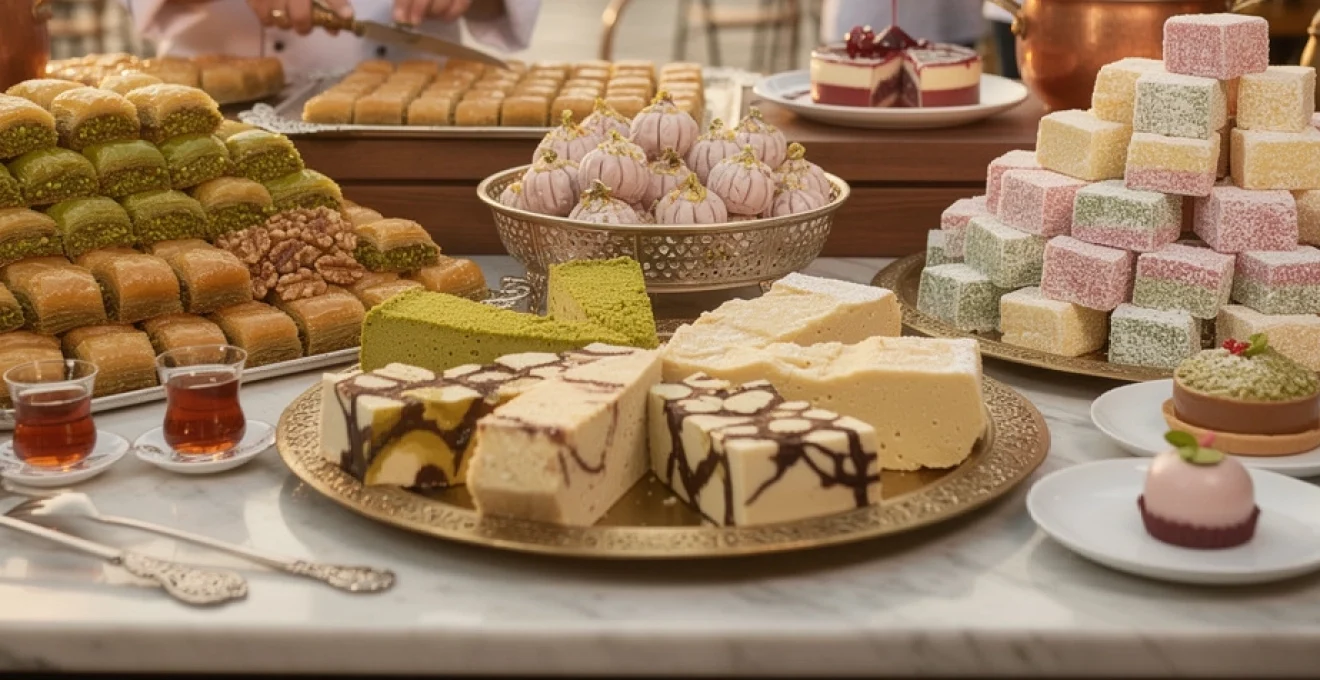
Istanbul stands as a magnificent bridge between East and West, where centuries of culinary traditions have created one of the world’s most extraordinary dessert cultures. The city’s confectionery heritage spans from the opulent Ottoman palaces to bustling street markets, offering visitors an unparalleled journey through flavours that have captivated sweet enthusiasts for over five hundred years. Each neighbourhood tells its own sugary story, from the refined patisseries of Beyoğlu to the traditional workshops hidden within the Grand Bazaar’s labyrinthine passages.
The Turkish approach to sweets goes far beyond mere indulgence; it represents a sophisticated culinary art form that has evolved through generations of master confectioners. Pastane culture in Istanbul encompasses everything from delicate milk-based puddings to intricate pastry creations that require days of preparation. This comprehensive exploration reveals the city’s most exceptional sweet treasures, from time-honoured recipes preserved in family workshops to contemporary interpretations that honour tradition while embracing innovation.
Traditional ottoman palace desserts and imperial confectionery heritage
The Ottoman Empire’s culinary legacy continues to influence Istanbul’s dessert landscape, with palace recipes that once graced imperial tables now available throughout the city. Imperial kitchens employed hundreds of confectioners who developed sophisticated techniques for creating sweets that reflected the empire’s vast territorial reach and cultural diversity. These saray tatlıları (palace sweets) represented the pinnacle of Ottoman gastronomy, combining influences from Persian, Arabic, and Byzantine traditions.
Palace confectionery required extraordinary skill and precision, with recipes closely guarded by imperial chefs. The Sultan’s kitchens produced elaborate sweet displays for state occasions, religious festivals, and diplomatic receptions. Many of these traditional preparations survive today, though often simplified for contemporary production methods whilst maintaining their essential character and flavour profiles.
Topkapı palace helva varieties and royal recipe authenticity
Topkapı Palace archives reveal numerous helva varieties that adorned imperial tables, including rare preparations using imported spices and premium nuts. The palace kitchens produced semolina helva enriched with clarified butter, pine nuts, and rosewater, creating textures and flavours that differed significantly from standard street preparations. Master confectioners developed techniques for achieving perfect consistency whilst incorporating delicate aromatics that enhanced rather than overwhelmed the base ingredients.
Contemporary artisans continue producing authentic palace-style helva using traditional copper vessels and time-honoured stirring methods. These preparations require constant attention during cooking, with experienced confectioners determining doneness through subtle changes in aroma and texture. The result differs markedly from mass-produced versions, offering complex flavour development and silky textures that justify the additional time and skill required.
Sultana’s delight (hünkar beğendi) sweet preparation techniques
Though primarily known as a savoury dish, Hünkar Beğendi inspired numerous sweet adaptations within palace kitchens, particularly variations incorporating milk, sugar, and exotic spices. These dessert interpretations utilised similar thickening techniques whilst substituting aubergine with ingredients like ground rice or semolina. Palace confectioners created versions featuring pistachios, almonds, and dried fruits that transformed the concept into elegant pudding-style desserts.
Modern interpretations of these sweet Hünkar Beğendi variations appear in upscale restaurants and speciality dessert shops throughout Istanbul. Contemporary chefs adapt traditional preparation methods to create innovative desserts that honour the original concept whilst appealing to modern palates. These creations demonstrate how Ottoman culinary principles continue influencing contemporary Turkish confectionery.
Marzipan artistry in dolmabahçe palace ceremonial events
Dolmabahçe Palace confectioners elevated marzipan craftsmanship to extraordinary heights, creating elaborate sculptural pieces for state banquets and ceremonial occasions. These creations went far beyond simple sweet treats, becoming edible works of art that demonstrated the empire’s sophistication and wealth. Palace records describe marzipan gardens, architectural models, and intricate figurines that required weeks of preparation by skilled artisans.</p
Today, marzipan artistry survives in select Istanbul confectioners that trace their methods back to palace traditions. In districts like Beşiktaş and Nişantaşı, you will find boutique shops shaping almond paste into miniature fruits, flowers, and calligraphic motifs for weddings and religious holidays. While contemporary displays are more modest than imperial banquets, the same emphasis on precision, proportion, and natural colourings remains. For travellers interested in culinary history, these patisseries offer a rare glimpse into techniques once reserved for sultans and foreign dignitaries.
Rose water and pomegranate molasses integration methods
Two of the most distinctive flavouring agents in Ottoman palace desserts were rose water and pomegranate molasses. Far from being used indiscriminately, these aromatics were integrated with remarkable restraint to balance sweetness and acidity. Palace confectioners often added rose water only at the final stage of cooking or even after the dessert had cooled, preserving its volatile floral notes that would otherwise evaporate with prolonged heat exposure.
Pomegranate molasses, by contrast, served as a natural acidifier and colour enhancer, particularly in fruit-based puddings and sherbet-style drinks. When folded into helva, rice puddings, or wheat-based desserts like aşure, it cut through richness and added a deep ruby hue that signalled luxury. In modern Istanbul dessert shops, you can still taste these integration methods in carefully balanced syrups: rose water lifted at the top of the flavour profile, and pomegranate molasses anchoring the palate with gentle tartness, much like a perfumer layers base and top notes in a fragrance.
If you are experimenting at home, think of rose water as you would vanilla extract and pomegranate molasses as a culinary equivalent of balsamic reduction. A few drops too many can overwhelm your preparation, so start conservatively, taste as you go, and remember that flavours will intensify slightly as the dessert cools. Many Istanbul chefs recommend combining both ingredients in milk-based puddings or semolina cakes, where the fat and starch provide a neutral canvas that allows their complex profiles to shine without becoming cloying.
Iconic turkish delight craftsmanship in historic beyoğlu districts
The historic Beyoğlu district, stretching from Galata to Taksim and Pera, remains at the heart of Istanbul’s Turkish delight craftsmanship. Narrow streets lined with century-old shops still echo with the traditions of imperial confectioners who once supplied the palace. Here, lokum is not treated as a generic candy but as a technical craft, where texture, aroma, and clarity of flavour determine quality just as much as sweetness.
For visitors eager to sample authentic Turkish delight in Istanbul, Beyoğlu offers a living museum of styles and methods. You will encounter everything from classic rose and lemon cubes dusted in powdered sugar to premium nut-filled varieties bound with grape must. The best workshops rely on slow-cooked starch and sugar mixtures rather than industrial gelatine shortcuts, resulting in a distinctive, elastic chew that defines true artisan lokum. Paying attention to these subtle differences transforms a simple tasting into a deeper appreciation of Istanbul’s confectionery heritage.
Hacı bekir’s traditional lokum production since 1777
No discussion of Turkish delight in Istanbul is complete without mentioning Hacı Bekir, widely regarded as the pioneer of modern lokum production. Established in 1777, this historic confectioner helped standardise the use of starch and refined sugar, replacing the older honey-and-flour mixtures that produced heavier sweets. The result was the lighter, translucent cubes we now recognise as classic Turkish delight, a transformation so influential that early 19th-century travellers wrote extensively about it in their diaries.
Visiting one of Hacı Bekir’s branches in Beyoğlu allows you to see how tradition and modernity coexist. Although contemporary equipment ensures consistency and hygiene, the core steps—slowly cooking the starch-sugar base, testing the mixture by hand for optimal elasticity, and cutting and dusting the cooled mass—remain much the same. You will notice that flavours like rose, mastic, and bergamot are never overly intense; rather, they are layered gently, allowing the natural sweetness of the base to come through. If you are searching for where to buy authentic Turkish delight in Istanbul, this historic brand is an essential reference point.
From a practical standpoint, discerning travellers often compare Hacı Bekir’s products with neighbouring shops to understand what defines top-tier lokum. Texture should be soft yet resilient, holding its shape without becoming rubbery. The surface dusting must be light—enough to prevent sticking, but not so heavy that it masks flavour. By paying attention to these markers, you equip yourself to identify quality Turkish delight across the city, whether in Beyoğlu or beyond.
Galata tower quarter artisanal confectionery workshops
The streets around Galata Tower host a growing number of small-batch confectionery workshops that reinterpret classic Turkish sweets for a new generation. Unlike large-scale producers, these studios often work with limited daily batches, adjusting recipes according to seasonal ingredients and customer feedback. Many focus on single-origin nuts, organic citrus, or natural colourings, reflecting a broader global trend towards transparency in artisan food production.
When you step into one of these workshops, do not be surprised if you see copper pans simmering on open flames or confectioners stretching and cutting still-warm lokum. This almost theatrical process has strong roots in Ottoman şekercilik (sugarcraft), where visual appeal was considered as important as taste. Some ateliers near Galata have begun offering short demonstrations or tasting flights, allowing visitors to compare, for example, a classic pistachio Turkish delight with a modern twist featuring sea salt or roasted sesame. It is an ideal way to understand how Istanbul combines heritage with innovation in the dessert scene.
Artisanal shops in the Galata quarter are also at the forefront of sustainability and ethical sourcing within Istanbul confectionery. Several highlight direct relationships with growers in Gaziantep, Antakya, or the Black Sea region, publishing harvest dates and roasting methods alongside tasting notes. This approach treats Turkish delight with the same seriousness that specialty coffee roasters apply to beans, inviting you to think about terroir, freshness, and processing rather than just sweetness. For food-focused travellers, these details turn a simple purchase into a meaningful gastronomic experience.
Karaköy mastic and bergamot flavouring techniques
Across the Golden Horn from Galata, Karaköy has emerged as a hub for experimental flavour work, particularly with mastic and bergamot. Mastic, a resin from the mastic tree traditionally harvested on the Greek island of Chios, lends a subtle pine-and-vanilla note that pairs beautifully with the chewy texture of Turkish delight. However, it is notoriously difficult to handle: add too much, and the dessert becomes medicinal; add too little, and the nuance disappears. Skilled confectioners in Karaköy solve this by pre-dissolving mastic crystals in warm fat or alcohol-based carriers before introducing them into the sugar-starch base.
Bergamot, best known as the defining aroma in Earl Grey tea, appears in Istanbul sweets as both an essential oil and candied peel. In Turkish delight production, Karaköy artisans often blend bergamot with lemon or orange to create a layered citrus profile that feels bright rather than sharp. You may encounter lokum where tiny flecks of candied peel punctuate the translucent cubes, offering bursts of bitterness that contrast with the sugar syrup. For travellers seeking unique Turkish delight flavours in Istanbul, mastic and bergamot varieties from Karaköy are an excellent starting point.
If you are sensitive to strong aromas, it is wise to ask for a small tasting cube before committing to a full box. Many Karaköy confectioners will gladly explain their flavouring techniques and even show you the raw mastic tears or bergamot fruits. This transparency not only builds trust but also reinforces the educational dimension of Istanbul’s dessert culture, where customers are encouraged to understand what they are eating rather than simply consuming it.
Pera district premium rose and lemon turkish delight varieties
The Pera district, historically associated with European embassies and grand hotels, has long favoured more refined expressions of Turkish delight, especially rose and lemon varieties. Here, shops often source high-grade rose water distilled from Isparta or Afyon petals, resulting in a cleaner, less perfumey aroma. Premium rose Turkish delight from Pera usually has a pale pink hue derived from natural sources, avoiding the intense artificial colouring seen in lower-quality products.
Lemon varieties in this area are equally distinctive, with confectioners relying on fresh zest and juice rather than synthetic flavourings. The aim is to achieve a precise balance: bright enough to refresh the palate after a heavy meal, but not so acidic that it clashes with the sweetness. Many patisseries in Pera offer beautifully packaged assortments that pair rose and lemon pieces, a combination that has appealed to travellers for more than a century. If you are choosing gifts to bring home from Istanbul, these assortments offer both visual elegance and dependable flavour quality.
To maximise freshness, we recommend purchasing Turkish delight towards the middle or end of your stay rather than the first day. Store it in a cool, dry place, and avoid refrigeration, which can alter texture. When you finally open the box back home, allow the pieces to come to room temperature before serving; as with fine chocolate, this simple step will release the full aromatic potential of rose, lemon, or other delicate flavours.
Baklava mastery across sultanahmet and fatih neighbourhoods
Moving from jelly-like confections to layered pastries, baklava represents perhaps the most iconic sweet in Istanbul, and the historic districts of Sultanahmet and Fatih are prime territories for exploration. Here, generations-old bakeries operate side by side with modern chains, each claiming a unique approach to layering yufka (phyllo dough), clarifying butter, and roasting nuts. Walking through these neighbourhoods, you may notice how the aroma changes from shop to shop—sometimes more buttery, sometimes more nutty, sometimes dominated by spice—offering a sensory map of technique and tradition.
Mastery of baklava in Istanbul is not only about taste; it is about sound and structure as well. A well-executed tray should produce a delicate crackle when cut, and individual pieces should hold their form without collapsing under syrup. Achieving this balance requires rigorous control over oven temperature, dough thickness, and syrup density. By learning to recognise these details, you will quickly distinguish truly exceptional baklava from the merely adequate options that inevitably appear in highly touristic areas.
Karaköy güllüoğlu multi-generational phyllo pastry methods
Karaköy Güllüoğlu is often cited as Istanbul’s benchmark for baklava, and its reputation rests heavily on the mastery of ultra-thin phyllo pastry. Family records describe how early generations of bakers trained their hands to roll dough until individual sheets were almost translucent—sometimes fewer than 40 microns thick. While modern rolling machines assist with uniformity, the final stretching and layering still depend on skilled artisans who can feel when the dough is right, much as a musician senses when an instrument is properly tuned.
Visiting the flagship shop in Karaköy, you can observe trays stacked with dozens of layers, alternating between pastry and finely chopped pistachios or walnuts. What makes this baklava stand out in Istanbul is the even distribution of nuts and the absence of soggy patches, a common flaw in lesser examples. The clarified butter is carefully strained to remove milk solids, reducing the risk of burning and lending a clean, nutty flavour that permeates rather than overwhelms. For anyone planning a baklava tasting tour in Istanbul, starting here provides a useful benchmark against which to measure other neighbourhood favourites.
Beyond the classic pistachio slice, Karaköy Güllüoğlu offers regional variations such as havuç dilimi (carrot-shaped baklava) and fıstıklı sarma (rolled pistachio cylinders). Sampling across these styles reveals how changes in geometry—triangles, rolls, squares—affect the balance of crunch, filling, and syrup. It is a reminder that in Ottoman and modern Turkish pastry culture alike, form and function are inseparable.
Pistachio gaziantep sourcing and nut preparation standards
High-quality pistachios are the backbone of many Istanbul desserts, and most top baklava producers insist on nuts from the Gaziantep region in southeastern Turkey. These Antep fıstığı are prized for their intense flavour, bright green colour, and higher natural oil content, all of which contribute to a richer, more aromatic result. According to recent agricultural data, Gaziantep and its surroundings account for more than 40 percent of Turkey’s pistachio output, yet only a portion of that meets the strict specifications demanded by premium confectioners.
In baklava workshops across Sultanahmet and Fatih, you will see pistachios arriving in large sacks, often accompanied by documentation of origin and harvest year. The nuts are typically roasted in-house at carefully controlled temperatures to intensify flavour without scorching the delicate oils. Once cooled, they are either ground very finely for silky fillings or chopped coarsely to create textural contrast on the surface of pastries. Some bakeries even separate pistachios by size and colour, reserving the deepest green kernels for top layers where visual impact matters most.
As a visitor, you can gauge pistachio quality in baklava by examining both colour and aroma. Nuts should look vibrant rather than dull brown and emit a fresh, almost fruity scent. If the pistachios taste flat or rancid, it is a sign of poor storage or lower-grade sourcing. Asking staff about their pistachio suppliers might feel unusual, but in Istanbul’s best dessert shops, it is a perfectly normal and welcome question.
Şerbetli tatlılar syrup infusion and crystallisation processes
Baklava belongs to a broader family of syrup-soaked pastries known as şerbetli tatlılar, which includes şekerpare, tulumba, and various semolina cakes. The success of these desserts depends as much on the chemistry of sugar syrups as on the quality of the dough itself. In Istanbul’s traditional bakeries, syrup is usually prepared from a precise ratio of sugar to water, sometimes enriched with lemon juice, rose water, or orange blossom. It is then cooled to a specific temperature before being poured over freshly baked, still-hot pastries, ensuring optimal absorption.
Controlling crystallisation is a key challenge. If the syrup is boiled too long or agitated excessively, sugar crystals may form as it cools, leaving the surface grainy rather than glossy. To prevent this, master confectioners often use copper pots for even heat distribution, avoid stirring once the sugar has dissolved, and skim impurities that rise to the surface. The result is a clear, viscous syrup that saturates pastries evenly without pooling at the bottom of the tray. When you bite into a piece of baklava or revani in Istanbul and notice that the sweetness is distributed evenly from top to bottom, you are tasting the result of this meticulous control.
For those curious about recreating Istanbul-style syrup desserts at home, think of syrup management as similar to tempering chocolate: small variations in temperature and handling can drastically alter the final texture. Using a thermometer helps, but experienced Istanbul bakers also rely on visual cues like bubble size and the way syrup sheets off a spoon. Watching them work, you understand why such desserts continue to be made by specialists rather than industrial machines alone.
Antep fıstığı quality grading and authenticity verification
Given the premium placed on Antep pistachios, issues of grading and authenticity have become increasingly important, both for Istanbul’s confectioners and for consumers. High demand and fluctuating harvests occasionally lead to lower-grade nuts or imports being passed off as Gaziantep-origin. To mitigate this, some top baklava houses now insist on pistachios with geographical indication (GI) certification, which verifies that the nuts were grown and processed in registered regions under specific standards.
From a grading perspective, pistachios are typically classified by kernel colour, size, and defect rate. The most sought-after grades feature a deep, natural green tone and minimal shell fragments or broken pieces. In Istanbul, reputable dessert shops often purchase several grades: the most visually appealing for garnishes and surfaces, and slightly lower grades for interior layers where appearance matters less than flavour. This approach helps manage cost without compromising the sensory impact of the finished dessert.
As a visitor, how can you verify authenticity? While you cannot run laboratory tests, you can look for signs of transparency: clear labelling of pistachio origin, staff who can confidently speak about sourcing, and pricing that reflects the reality of premium nuts. Extremely cheap pistachio baklava in tourist-heavy areas is often a red flag. In contrast, bakeries in Sultanahmet and Fatih that emphasise Gaziantep fıstığı and explain their supply chains are more likely to deliver the rich, complex flavours that have made Istanbul’s baklava famous worldwide.
Contemporary patisserie innovation in nişantaşı and bebek
While historic quarters safeguard Ottoman dessert traditions, neighbourhoods like Nişantaşı and Bebek showcase Istanbul’s contemporary patisserie scene. Here, stylish cafés and dessert bars reinterpret classic flavours through French techniques, Japanese minimalism, or Scandinavian-style presentation. You might encounter a kazandibi-inspired crème brûlée, a baklava cheesecake, or a lokum-filled entremet, each demonstrating how local ingredients can be reframed without losing their cultural roots.
Nişantaşı, known for its fashion boutiques and galleries, has become particularly fertile ground for pastry experimentation. Many patisseries here are led by chefs trained in Paris or London who return to Istanbul with advanced skills in lamination, mousse work, and chocolate tempering. Rather than simply importing foreign trends, they often incorporate Turkish produce—Anatolian honey, Black Sea hazelnuts, Thracian cream—into croissants, mille-feuille, and éclairs. For dessert lovers asking where to find the best modern pastries in Istanbul, Nişantaşı is an obvious starting point.
Bebek, perched along the Bosphorus, offers a different kind of innovation, one shaped by leisurely waterfront brunches and evening dessert rituals. Cafés here tend to favour lighter, fruit-forward creations that pair well with Turkish tea, filter coffee, or speciality brews. You may see tarts topped with local figs and grapes, yogurt-based cheesecakes using strained süzme yoğurt, or gluten-free almond cakes scented with orange blossom. The combination of sea views and refined sweets makes Bebek a favourite stop for both residents and visitors seeking a more relaxed, upscale dessert experience.
From a practical perspective, visiting these districts can also reveal how Istanbul’s pastry chefs are responding to global trends such as plant-based diets, reduced sugar, or alternative grains. Many menus highlight vegan sütlaç, dairy-free sorbets, or pastries made with buckwheat and spelt, showing that respect for tradition does not preclude innovation. If you have dietary restrictions but still want to enjoy authentic Turkish flavours, Nişantaşı and Bebek offer some of the city’s most accommodating dessert menus.
Street food sweet specialities in eminönü and kadıköy markets
At the other end of the spectrum from polished patisseries, the street markets of Eminönü and Kadıköy capture Istanbul’s everyday dessert culture. Here, sweets are woven into the rhythm of commuting, shopping, and conversation. Vendors push carts laden with golden tulumba, lokma, and sesame-crusted simits, while tiny stalls near ferry terminals sell cups of boza, slices of revani, or hot halva sandwiches. If palace desserts represent the formal side of Turkish confectionery, these streetside offerings reveal its spontaneous, communal heart.
Eminönü, near the Spice Bazaar and Galata Bridge, is particularly rich in traditional street sweets. You can watch vendors pipe batter directly into vats of shimmering oil to create tulumba, which are then doused in cold syrup to produce an immediate temperature contrast in each bite. Nearby, stands specialising in tahin helvası offer thick slices of sesame halva served warm between pieces of bread, a beloved winter treat that offers both sweetness and substantial nourishment. These experiences are as much about atmosphere—the call of seagulls, the hum of ferries—as they are about flavour.
Across the water, Kadıköy on the Asian side of Istanbul offers a slightly different take on sweet street food. Its market streets are dotted with muhallebici (milk pudding shops) as well as stands selling trileçe, supangle, and fruit-topped tavuk göğsü. You might find yourself enjoying a slice of kazandibi at a standing-only counter before wandering into a nearby tea house. Because Kadıköy caters heavily to locals, prices are often more modest than in tourist centres, and portions generous.
For travellers, one of the joys of these markets is the ability to sample widely with minimal commitment. Why not share a portion of syrup-soaked lokma among friends, then follow it with a small portion of rice pudding or a handful of roasted chestnuts? As with tapas culture in Spain, the emphasis here is on variety and sociability rather than formal courses. Just remember that most street sweets are quite rich; pacing yourself throughout the day will help you appreciate each flavour more fully.
Seasonal festival confections and religious holiday pastries
Istanbul’s dessert culture reaches its most expressive peak during religious holidays and seasonal festivals, when special confections appear that you may not encounter at other times of year. During Ramazan (Ramadan), for instance, bakeries extend their opening hours, and the evening iftar meal often concludes with trays of baklava, güllaç (a delicate milk-and-pomegranate dessert made with wafer-thin starch sheets), and spiced compotes. Many families maintain long-standing relationships with specific neighbourhood bakeries, placing orders days in advance to secure their preferred sweets.
The three-day festival following Ramadan, known as Şeker Bayramı or the Sugar Feast, places particular emphasis on gifting and sharing sweets. Children visit relatives and neighbours to receive candies and chocolates, while hosts prepare plates of lokum, şekerpare, and assorted biscuits. If you visit Istanbul during this time, you will notice an almost tangible rise in the city’s overall sugar consumption: according to recent Turkish market reports, confectionery sales can spike by 30–40 percent in the weeks surrounding major religious holidays.
Another key moment in the sweet calendar is Kurban Bayramı, when the focus shifts slightly towards pastries that complement savoury feasts, such as kadayıf, ekmek kadayıfı with clotted cream, and dense walnut cakes. Meanwhile, Aşure Günü, linked to the month of Muharram, is marked by the preparation and communal sharing of aşure, or Noah’s pudding. Households across Istanbul prepare large pots of this grain-and-fruit-based dessert, then distribute bowls to neighbours, friends, and local mosques as an act of charity and remembrance.
Seasonal fruits also shape Istanbul’s festival sweets. In late spring and summer, cherry and apricot jams feature prominently in tarts and layered pastries, while autumn brings quince desserts poached in sugar syrup and served with kaymak. Winter, in turn, is the season of boza and roasted chestnuts, both of which provide warmth and energy during cold evenings. For travellers planning when to visit Istanbul for desserts, aligning your trip with one of these festive periods offers the richest and most diverse range of traditional sweets.
Experiencing these confections in context—whether at a family table, a mosque courtyard, or a neighbourhood bakery—reveals something essential about Istanbul’s relationship with sugar. Desserts here are not just end-of-meal indulgences; they are vehicles for hospitality, memory, and cultural continuity. By timing your visit carefully and remaining open to local invitations, you can move beyond simply tasting pastries and sweets in Istanbul to understanding the deeper stories they tell.